naturebriefs
9:38in productionCh. 1 · Global genus/ 9:38 · ceiling 15 min
Birds

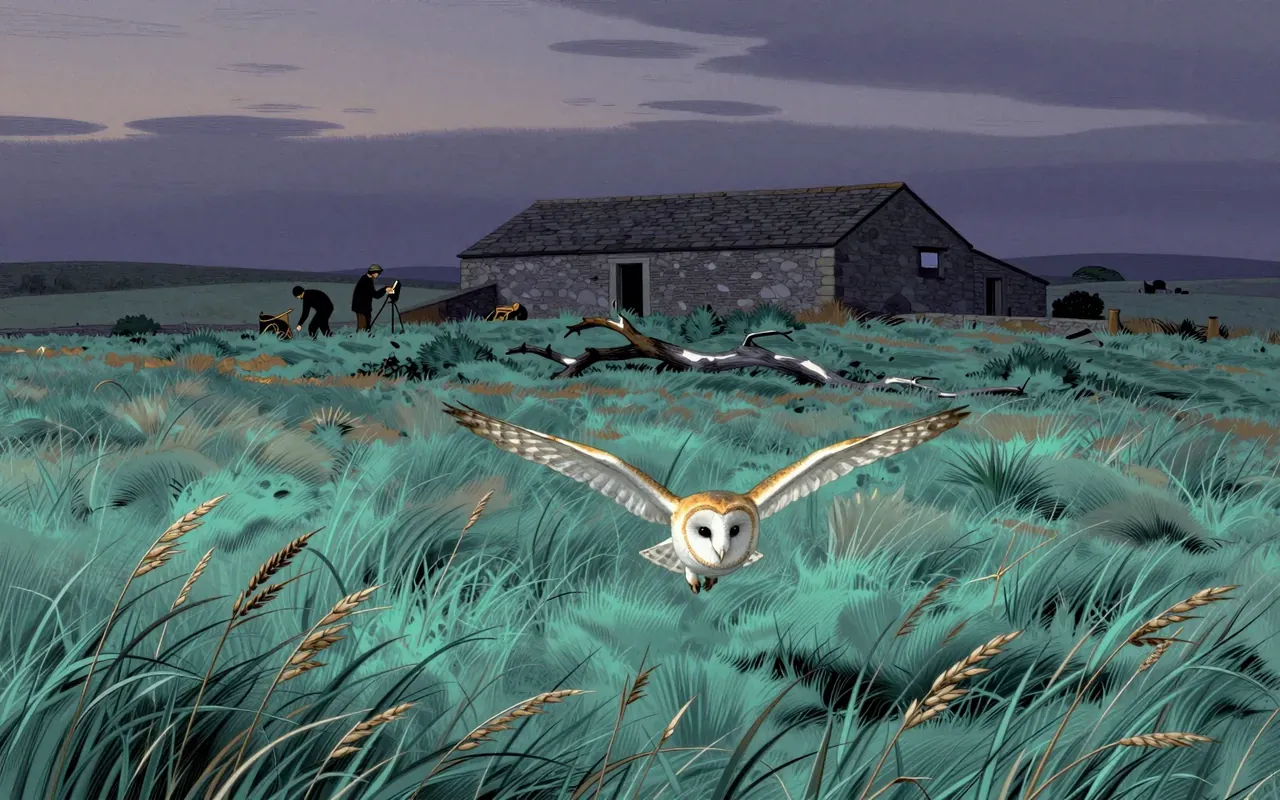
Barn owl

It’s not one bird — it’s a global genus defined by a heart-shaped face and legs built for killing.

Barn owl is not a species but a taxonomic umbrella — the genus Tyto, found worldwide, defined by morphology, not behaviour.

Chapters & takeaways4
  1. 1:16
    Global genus

    Tyto is the most widely distributed owl genus on Earth.

  2. 3:13
    Built to hunt

    A heart-shaped face and long, strong legs with powerful talons define its form.

  3. 4:38
    Name confusion

    ‘Barn owl’ can mean the whole Tytonidae family — including bay owls.

  4. 6:22
    Taxonomic rank

    Tyto is the largest genus within Tytonidae.

Worth your time?

Yes. See the whole thing.

3.5/ 5
What works
  • clarifies genus-level distribution
  • anchors physical traits to function
  • exposes naming ambiguity
What does not
  • establish lifespan
  • state clutch size
  • give population figures
  • describe hunting success rate
See it if
  • taxonomists
  • birdwatchers needing ID cues
  • students learning owl classification
Skip it if
  • conservation practitioners
  • behavioural ecologists
  • field ornithologists seeking behavioural protocols
The written brief1 min read

What the species is and where it came from

Barn owl refers to birds in the genus Tyto — not a single species but a group including Tyto alba and others — native across every continent except Antarctica.

How it works, in terms someone would actually use

It hunts in open habitats at night using silent flight and acute hearing. It nests in cavities — barns, ruins, tree hollows — and breeds year-round where prey is abundant.

What it gets right

It correctly identifies Tyto as the largest genus in Tytonidae and the most widely distributed owl genus globally. It specifies diagnostic traits: medium size, large head, heart-shaped face, long strong legs, powerful talons.

What it does not

It does not establish population trends, lifespan, clutch size, migration patterns, vocal repertoire, or conservation status for most Tyto species. It names ranges but gives no habitat specificity beyond ‘open country’ or ‘woodland edge’.

What it changed

It expanded the definition of ‘barn owl’ from one species to an entire family — Tytonidae — including bay owls in Phodilus.

Who it is for, and who it is not

It is for readers who need taxonomic clarity and morphological distinction among owls. It is not for readers seeking ecology, behaviour, or conservation guidance.

Is it worth your time

Yes, if you want to see a globally distributed predator whose face shape and leg structure are unique among owls. No, if you expect behavioural detail beyond morphology or range.

Same habitat · Birds4 of 43
Up next in Nature

Bioluminescence

· 7:36

Light made by life isn’t magic — it’s chemistry that evolved 94 times, starting in corals half a billion years ago.

7:36