What the species is and where it came from
The Borneo lowland rain forests is an ecoregion — not a species — within the tropical and subtropical moist broadleaf forests biome. It covers 428,438 km² across Indonesia, Malaysia and Brunei.
How it works, in terms someone would actually use
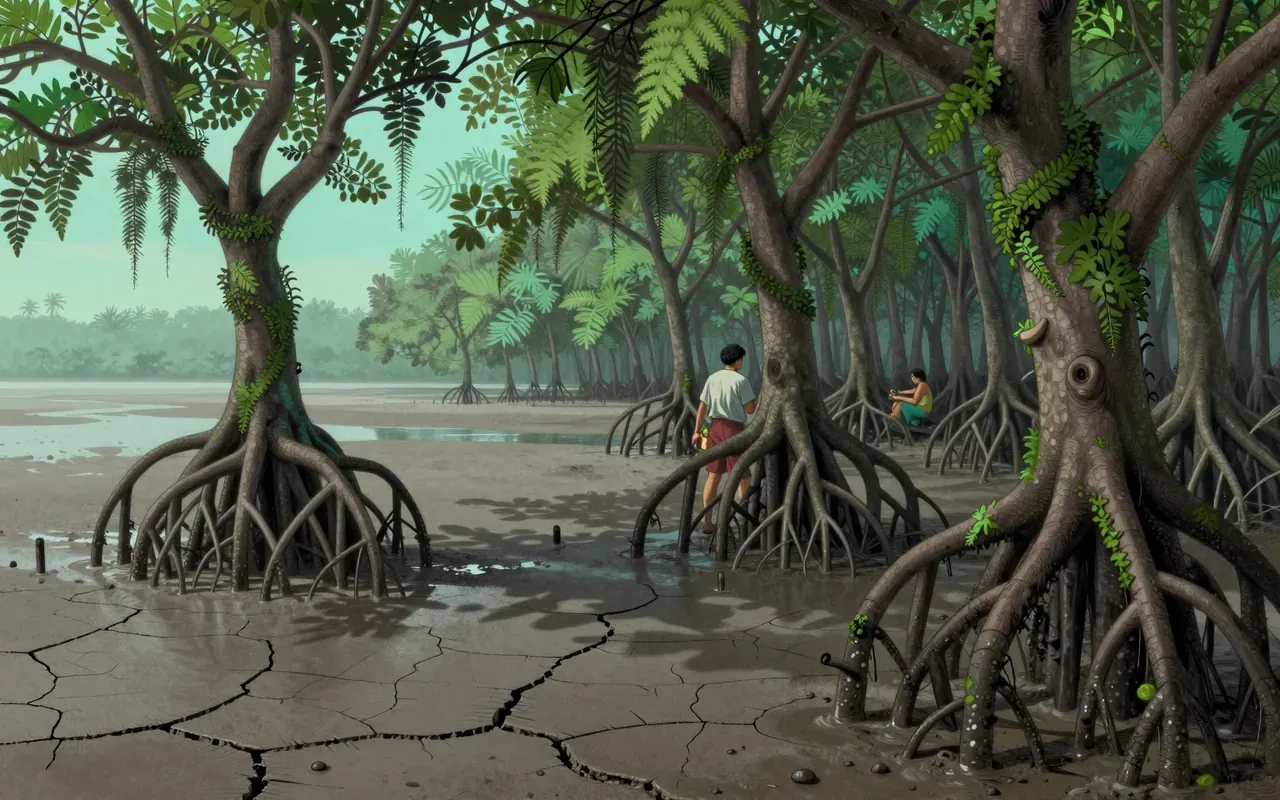
It works as a continuous, humid, low-elevation forest layer across Borneo — below 1000 m — where rainfall exceeds 200 mm every month and temperature stays stable within a 10°C band.
What it gets right
It gets right the density and specificity of life: 15,000 plant species, 380 bird species, and several mammal species — including the Bornean orangutan — all sustained in one climatically stable, lowland zone.
What it does not
It does not buffer fire or drought. It does not regenerate quickly after commercial clearance. It does not support large-scale human settlement without rapid ecological degradation.
What it changed
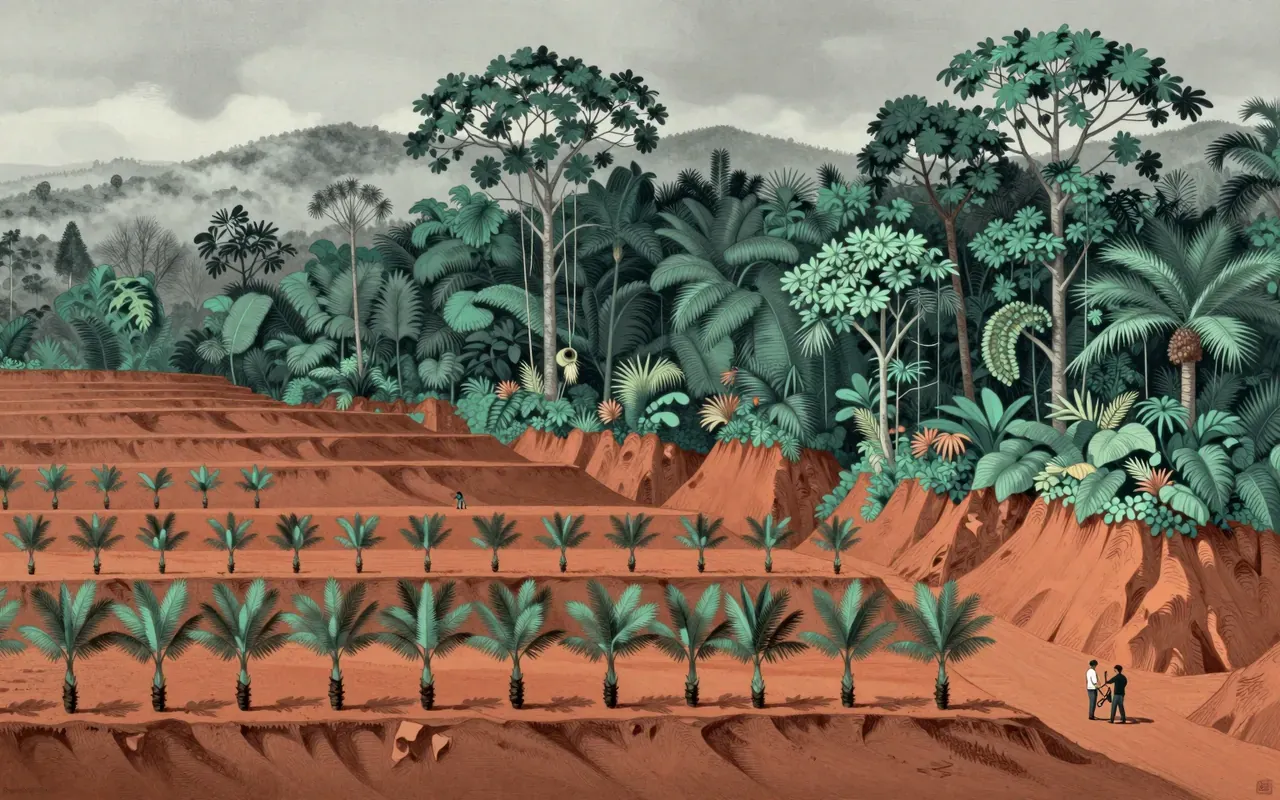
It changed conservation priorities by concentrating global attention on Southeast Asian deforestation drivers: oil palm, rubber, logging and infrastructure.
Who it is for, and who it is not
It is for field ecologists, land-use planners, and policy makers tracking habitat loss in Southeast Asia. It is not for general nature tourists seeking intact, accessible wilderness — over half its forest cover is already gone.
Is it worth your time
Yes, if you need to understand where the world’s richest rainforest stands today — and why its collapse matters biologically and politically.