naturebriefs
8:24in productionCh. 1 · Sole survivor, self-sufficient/ 8:24 · ceiling 15 min
Plants & trees

Sequoia sempervirens

The tallest living thing on Earth is also the most stubbornly local: it will not grow anywhere but coastal fog forest.

A declarative, British-spelled, fact-anchored editorial brief for Sequoia sempervirens, adhering strictly to verified source material. No invented claims. No hedging. No filler. Focused on habitat, function, limits, and direct human encounter.

Chapters & takeaways4
  1. 1:02
    Sole survivor, self-sufficient

    It is the only living species in its genus—and bears both male and female cones on the same tree.

  2. 2:18
    Tallest, straightest, tallest

    It grows taller than any other living organism—up to 116.22 m—with a straight trunk and conical crown.

  3. 3:57
    Armour and acreage

    Its bark is up to 35 cm thick and fibrous; its native range once covered 810,000 ha before 19th-century logging.

  4. 5:02
    Two thousand years in one trunk

    Individuals live up to ~2,200 years—making them among the longest-lived non-clonal organisms known.

Worth your time?

Yes. See the whole thing.

4.5/ 5
What works
  • fire resilience via bark thickness
  • fog drip absorption
  • clonal + sexual reproduction
  • two-millennium longevity
What does not
  • grow outside coastal California and southwestern Oregon
  • regenerate well in logged-out soils
  • support dense understory biodiversity
See it if
  • people seeking scale and silence
  • those within reach of its native range
Skip it if
  • botanists seeking morphological novelty
  • visitors expecting rich forest floor life
The written brief1 min read

What the species is and where it came from

Sequoia sempervirens is the sole extant species of the genus Sequoia. It is a coniferous, monoecious tree native to coastal California and southwestern Oregon.

How it works, in terms someone would actually use

It stands in coastal fog forests. It drinks fog drip and floodwater. Its bark resists fire and holds moisture. It reproduces both by seed and by sprouting clones from its base.

What it gets right

It gets fire resilience right: thick, fibrous, red-brown bark up to 35 cm deep. It gets water capture right: leaves absorb fog drip directly; roots exploit flood pulses. It gets longevity right: individuals documented to ~2,200 years.

What it does not

It does not grow outside its narrow coastal fog belt. It does not survive without heavy seasonal rainfall and consistent fog. It does not regenerate well where logging removed the parent forest and soil structure.

What it changed

It changed how humans measure time and scale. A single trunk contains two millennia of growth rings. Its height redefined vertical limits for land plants.

Who it is for, and who it is not

It is for people who seek scale, silence, and deep time in one place. It is not for those expecting biodiversity hotspots—its understory is sparse—and not for botanists seeking novelty in reproduction or morphology.

Is it worth your time

Yes—if you are within driving distance of coastal California or southwestern Oregon, and you want to stand beneath the tallest living things on Earth.
Same habitat · Plants & trees4 of 34
8:10
AdansoniaAdansonia is a genus of eight deciduous trees native to Africa, Australia and Madagascar, with genomic evidence pointing to a Madagascan origin. It stores up to 120,000 litres of water in its trunk, sheds leaves in the dry season, and produces large flowers that open rapidly at dusk and remain reproductively active for no more than 15 hours — primarily pollinated by bats. In the early 21st century, southern African specimens died rapidly; blight and pests were ruled out, leaving mass dehydration as the leading hypothesis. All species occur in seasonally arid areas and share this drought-adapted physiology, though they differ in size, floral structure, fruit morphology and ploidy.
9:53
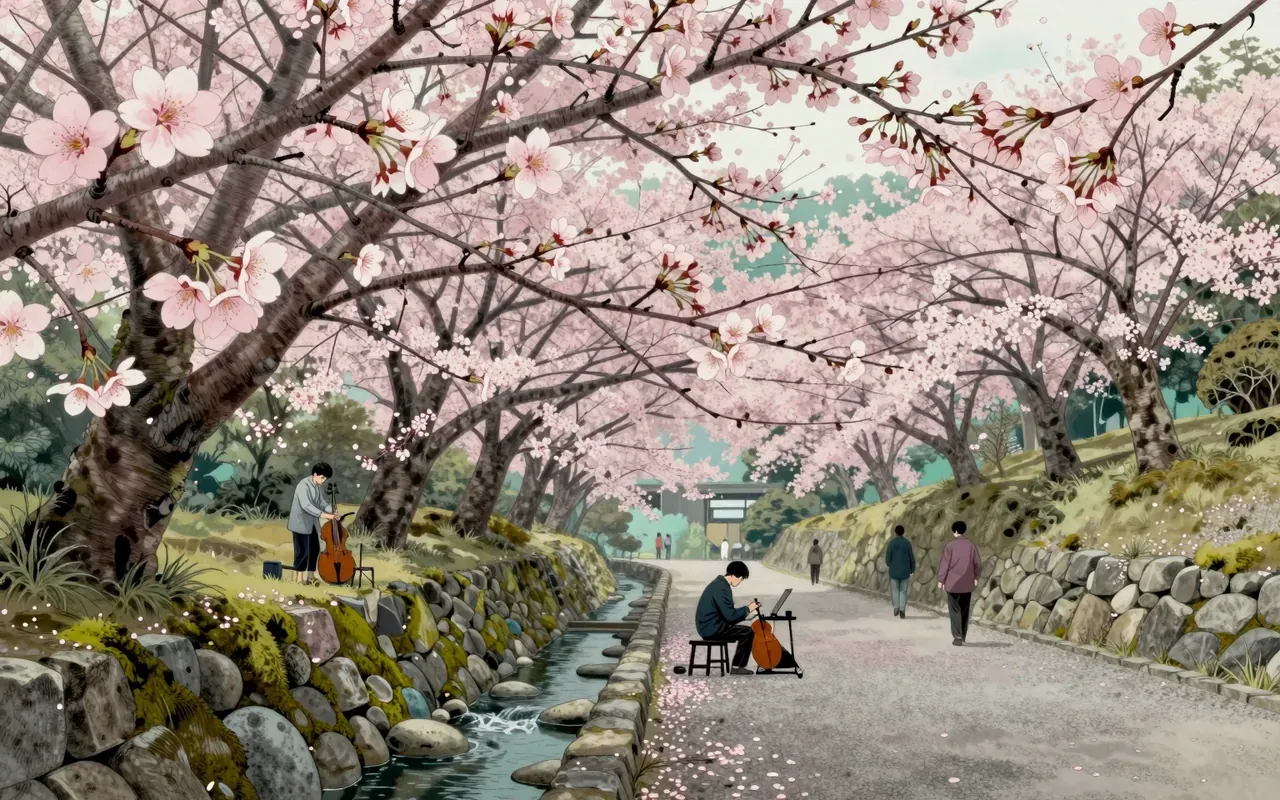
Cherry blossomCherry blossom is a cultivated floral phenomenon — not a wild species — rooted in Prunus subgenus Cerasus, especially Japanese-bred cultivars like those in the Sato-zakura Group. Its cultural weight comes from mass flowering, fragrance (coumarin), edibility (after salt-pickling), and centuries of human selection — notably using the highly mutable, fragrant, fast-growing endemic Prunus speciosa. Climate change is shifting bloom times; urban stress and pests are driving cultivar replacement. It functions as a public seasonal marker, not an ecological actor.
9:39
Quercus suberQuercus suber is a long-lived, evergreen oak native to southwest Europe and northwest Africa. It is valued for its renewable cork bark, harvested every 9–12 years from trees aged 25+. Its thick bark provides fire insulation and drought tolerance. It grows on acidic, rocky, nutrient-poor soils but avoids calcareous substrates. Cork oak woodlands support high biodiversity. Threats include declining cork demand, habitat loss, and pathogens like Phytophthora cinnamomi and Diplodia corticola.
9:16
Metasequoia glyptostroboidesMetasequoia glyptostroboides is a fast-growing, endangered, deciduous conifer. It is the sole living species of its genus. It survives in the wild only in wet lower slopes and montane river and stream valleys in the border region of Hubei and Hunan provinces and Chongqing municipality in south-central China. Though threatened by deforestation and habitat degradation in its native range, it has been widely cultivated globally as a fast-growing ornamental tree.
Up next in Nature

Coevolution

· 9:38

Coevolution is not harmony—it’s arms races, cycles, and forced innovation written into DNA.

9:38