8:36in productionCh. 1 · Range/ 8:36 · ceiling 15 min
Mammals
Cougar
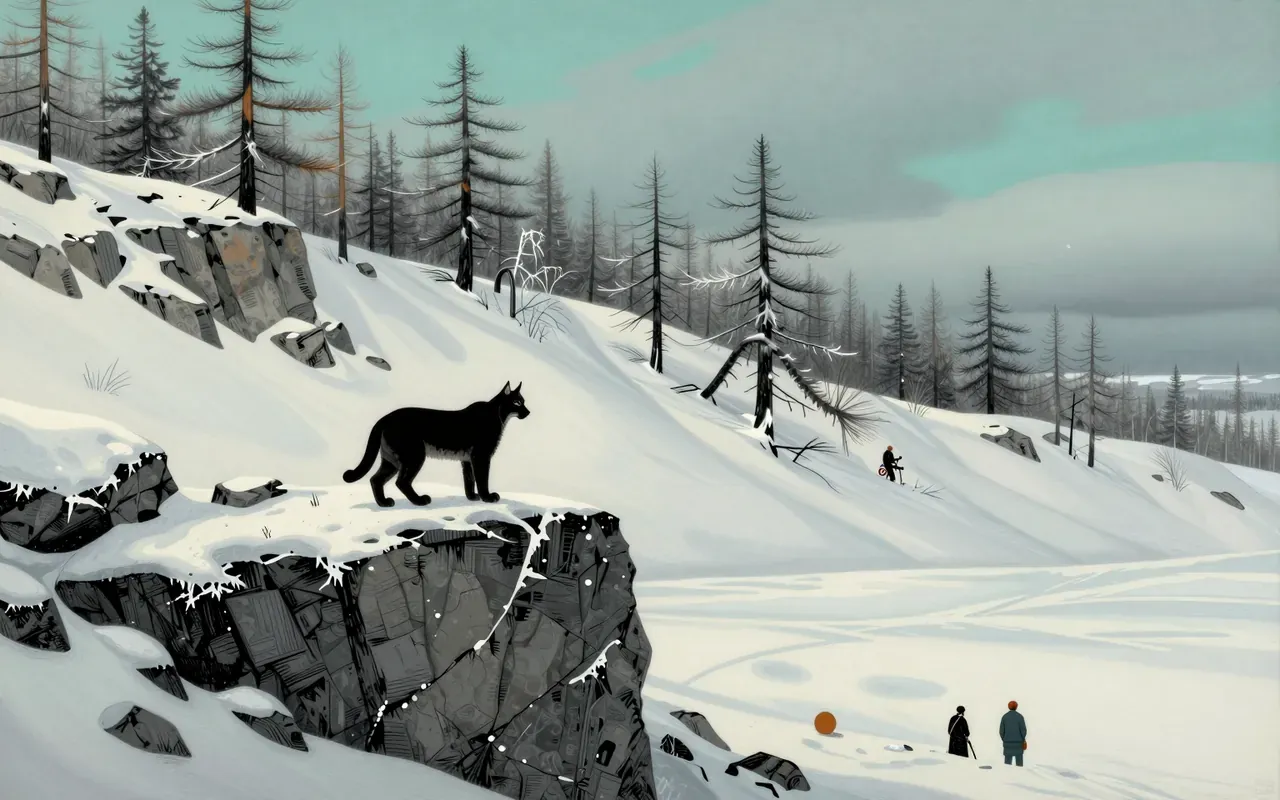
The cougar doesn’t rule the landscape—it reads it, then vanishes.
The cougar is a large, solitary feline native to the Americas. Its range spans Yukon, British Columbia and Alberta in Canada; the Rocky Mountains and western US; Mexico; the Amazon rainforest; and the southern Andes in Patagonia. It prefers habitats with dense underbrush and rocky areas for stalking but also lives in open areas. It is an adaptable generalist species, occurring in most American habitat types. It is largely solitary. Its activity pattern varies from diurnality and cathemerality to crepuscularity and nocturnality between protected and non-protected areas, and is apparently correlated with the presence of other predators, prey species, livestock and humans. It is an ambush predator that pursues a wide variety of prey.
It is the only wild cat with continuous range from Yukon to Patagonia.
2:16
Habitat
It thrives in forests, mountains, deserts and swamps—but always uses cover to stalk.
3:52
Behaviour
It hunts alone and changes its active hours daily based on who else is around.
5:29
Hunting
It kills by ambush—not pursuit—and takes deer, rodents and anything in between.
Worth your time?
Yes. See the whole thing.
4.5/ 5
What works
ambush-hunting-from-cover
shifting-activity-by-threat-context
occupying-all-major-american-habitats
What does not
form groups
vocalise loudly
survive in fully urbanised landscapes
See it if
field-biologists
land-managers
naturalists
Skip it if
casual-wildlife-watchers
The written brief1 min read
What the species is and where it came from
The cougar is a large, solitary feline native to the Americas. Its range spans Yukon, British Columbia and Alberta in Canada; the Rocky Mountains and western US; Mexico; the Amazon rainforest; and the southern Andes in Patagonia.
How it works, in terms someone would actually use
It ambushes prey from cover or rocky terrain. It adjusts activity to avoid humans, livestock and other predators. It leaps with hind legs larger than any other cat’s.
What it gets right
It occupies every major habitat type in the Americas. It exploits rocky terrain and dense underbrush better than any other New World cat. It shifts activity precisely to match local threats—humans, wolves, prey abundance—without abandoning core hunting strategy.
What it does not
It does not form prides or packs. It does not vocalise like lions or tigers. It does not hold territory year-round without overlap. It does not survive in fully urbanised or intensively farmed landscapes without severe population decline.
What it changed
It reshaped predator-prey dynamics across the Americas by persisting where other large carnivores vanished. Its adaptability redefined what a solitary felid can occupy—from Yukon forests to Patagonian steppe.
Who it is for, and who it is not
It is for field biologists tracking movement corridors, land managers assessing habitat connectivity, and naturalists seeking cryptic apex predators. It is not for casual wildlife watchers expecting reliable daytime encounters or visible social structure.
Is it worth your time
Yes—if you’re in its range and want to know where, when and how to spot it. No—if you expect predictable behaviour, group sightings or daytime visibility on demand.