Saved
Mammals

Arctic wolf

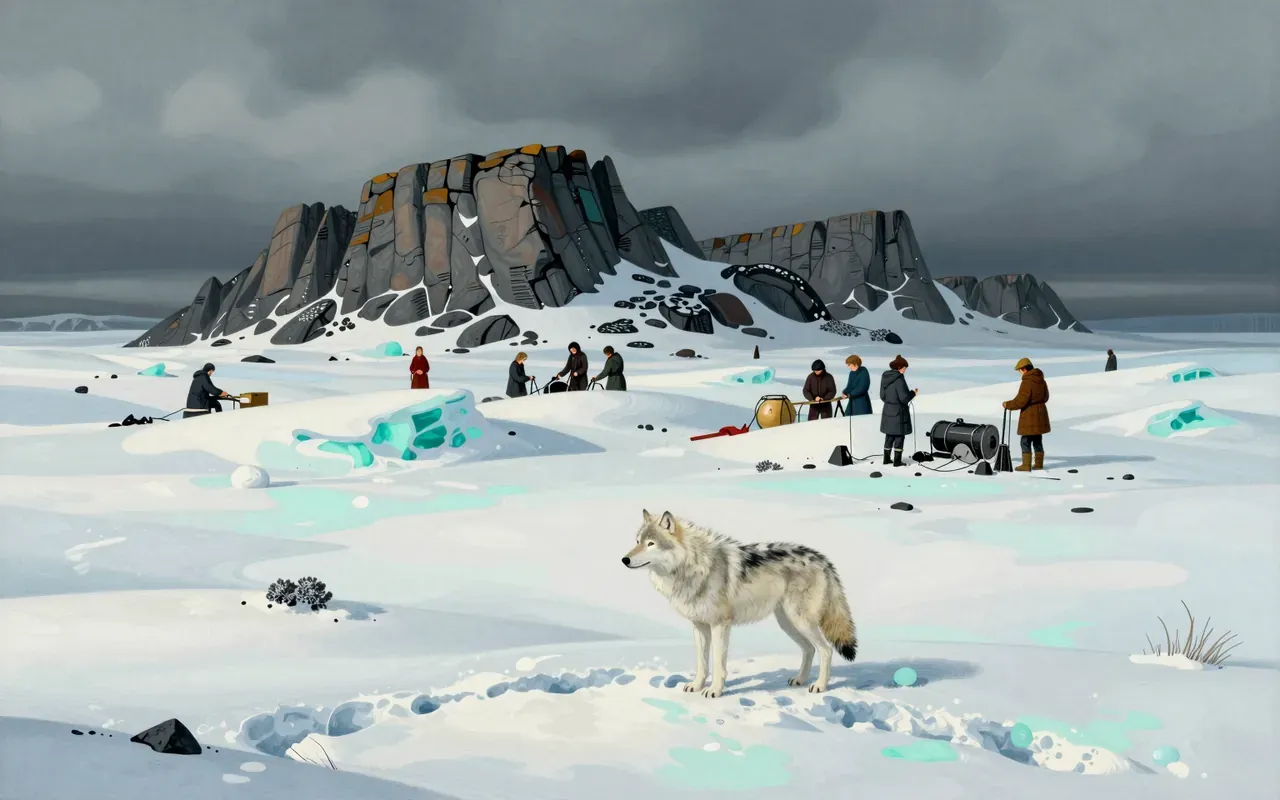
A wolf that doesn’t run—but also isn’t quite a subspecies.

Worth your time?3.5/5Yes.See the whole thing.What works, what does not, who it is for ↓
9:53in productionCh. 1 · Where it came from/ 9:53 · ceiling 15 min
5 chapters · 9:53Ceiling 15:00

The brief is written and checked. The video joins this page when it is cut.5 chapters · 1 min read · 9:53 planned

Read the brief

Arctic wolf

Chapters & takeaways5
  1. 1:11
    Where it came from

    It is defined by geography—not genetics—and named from a single Melville Island specimen.

  2. 2:36
    Where it stays

    It never leaves the tundra: its range stops at the northern treeline and extends only to southern Prince of Wales and Somerset Islands.

  3. 3:46
    What it looks like

    It is smaller, whiter, and has a narrower braincase—but its skulls have shrunk since 1930, likely from dog hybridisation.

  4. 5:20
    What it isn’t

    Genetic analysis found no unique haplotypes—so it may not be a valid subspecies at all.

  5. 6:44
    How it behaves

    It approaches people in some areas—unlike most wolves.

2 more chaptersFewer chapters
Worth your time?

Yes. See the whole thing.

3.5/ 5
What works
  • whiter colouration
  • narrower braincase
  • larger carnassials
  • year-round tundra residence
What does not
  • has no unique haplotypes
  • does not cross the treeline
  • does not avoid humans
See it if
  • field biologists in the High Arctic
  • wildlife photographers north of the treeline
  • taxonomists reviewing subspecies definitions
Skip it if
  • conservation planners needing population metrics
  • behavioural ecologists seeking data on pack structure or prey selection
Who should see it, and who should skipHide who it is for
The written brief1 min read

What the species is and where it came from

The Arctic wolf (Canis lupus arctos) is a grey wolf subspecies native to the High Arctic tundra of Canada’s Queen Elizabeth Islands—from Melville Island to Ellesmere Island—and was named by Reginald Pocock in 1935 from a Melville Island specimen.

How it works, in terms someone would actually use

It lives year-round on the High Arctic tundra, north of the treeline, where it hunts muskoxen and Arctic hares across snow and ice.

What it gets right

It gets colour, skull shape, and habitat fidelity right: whiter than northwestern wolves, with narrower braincases and larger carnassials, and it never crosses the treeline.

What it does not

It does not range beyond the northern fringes of the Middle Arctic tundra on Prince of Wales and Somerset Islands. It does not avoid humans.

What it changed

It changed how we classify grey wolves: genetic evidence shows it lacks unique haplotypes, undermining its formal subspecies status.

Who it is for, and who it is not

It is for field biologists working in the High Arctic, wildlife photographers operating north of the treeline, and taxonomists reviewing subspecies definitions. It is not for conservation planners needing population metrics or behavioural ecologists seeking data on pack structure or prey selection.

Is it worth your time

Yes—if you are in the Queen Elizabeth Islands and want to see a wolf that does not flee from people.
Same habitat · Mammals4 of 61
8:40
NarwhalThe narwhal is a toothed whale native to the Arctic. It is the only member of the genus Monodon and one of two living representatives of the family Monodontidae. Males have a spiralled tusk 1.5–3.0 m long, a protruding left canine thought to function in sensing water salinity, attracting mates, feeding, and combat. Specially adapted slow-twitch muscles, jointed neck vertebrae, and a shallow dorsal ridge enable movement under sea ice and deep diving. Narwhals dive to at least 2,370 m—the greatest recorded depth for any cetacean. Their range includes Arctic waters of Canada, Greenland, and Russia. Genetic and fossil evidence confirms interbreeding with belugas; a 1990 West Greenland specimen with intermediate features was confirmed by 2019 DNA analysis as a narwhal–beluga hybrid. The IUCN lists the species as 'least concern', though climate change and hunting pose threats.
10:40
Polar bearThe polar bear is a seal-specialist predator adapted to Arctic sea ice. Its verified traits — size, dimorphism, fur, skin, fat, paws, teeth, skull shape — all serve ice-based hunting. Nothing in the material describes denning, maternal behaviour, vocalisations, migration routes, lifespan, population trends, or interactions beyond interbreeding with brown bears. It is not a generalist. It is not terrestrial. It is not tropical. It is not ambiguous.
9:54
JaguarThe jaguar is the only living Panthera species native to the Americas. It kills by biting through the skulls of mammals — a method unique among New World carnivores. Its range stretches from the Southwestern United States to northern Argentina, but only where tropical and subtropical moist broadleaf forests, wetlands or wooded regions persist. It is Near Threatened due to habitat loss, fragmentation, poaching and human–wildlife conflict.
9:56
ReindeerReindeer are the only deer with routinely antlered females — and the only one we’ve ever farmed at scale.
Up next in Nature

Asian elephant

· 8:59

The only living Elephas—and the only elephant that shaped civilisation before it was pushed to the edge of extinction.

8:59