naturebriefs
9:01in productionCh. 1 · No data, no model/ 9:01 · ceiling 15 min
Systems

Ball lightning

Ball lightning isn’t weather — it’s a warning that our instruments still miss what the sky actually does.

Ball lightning is not an organism. It is a transient, unexplained luminous phenomenon occurring in thunderstorm conditions. Verified observations are sparse. One optical spectrum and one high-frame-rate video exist (2014). A 1972 literature review catalogued typical reports while cautioning against eyewitness reliability. It explodes with sulfur odours in some reports. Lab analogues exist but their relevance is unclear. It remains outside predictive physical models.

Chapters & takeaways4
  1. 0:48
    No data, no model

    It is rare, unexplained, and scientifically underserved — not mysterious by design, but by data scarcity.

  2. 2:11
    Not lightning, but lightning-adjacent

    It arrives with lightning, but outlives it — drifting, hovering, or passing through solid matter before vanishing or exploding.

  3. 3:35
    Two real clues, decades apart

    A sulfur odour on explosion and a 2014 optical spectrum are the only verified physical traces — both singular, unrepeated, and uncorroborated.

  4. 5:21
    Looks can mislead

    Lab versions look alike but may be unrelated; eyewitness reports shaped early understanding — then warned us away from trusting them.

Worth your time?

Yes. See the whole thing.

2.5/ 5
What works
  • signals gaps in measurement
  • challenges assumptions about plasma stability
  • exposes limits of eyewitness-based taxonomy
What does not
  • explain
  • predict
  • reproduce reliably
  • integrate into atmospheric models
See it if
  • atmospheric physicists
  • historians of science
  • anomaly hunters
Skip it if
  • engineers
  • forecasters
  • conservationists
The written brief1 min read

What the species is and where it came from

Ball lightning is not a species. It is a rare, unexplained natural phenomenon: luminous spherical objects, pea-sized to several metres wide, reported during thunderstorms.

How it works, in terms someone would actually use

Ball lightning appears as a luminous sphere during thunderstorms, often right after cloud-to-ground lightning. It floats, drifts, or moves independently — sometimes through walls or windows — and lasts seconds to minutes before vanishing or exploding with a sulfur smell.

What it gets right

It correctly signals that something luminous, spherical, and persistent occurs in thunderstorm environments — distinct enough from other electrical phenomena to warrant separate attention.

What it does not

It does not behave like ordinary lightning, St. Elmo’s fire, or will-o’-the-wisp. It does not yield consistent spectral data. It does not follow known plasma or combustion dynamics in any verified way.

What it changed

Nothing yet. It has not changed instrumentation, theory, or practice in atmospheric physics. No model of ball lightning has been confirmed by reproducible observation or experiment.

Who it is for, and who it is not

It is for observers who track anomalies, physicists who test atmospheric models against outliers, and historians of science who study how uncertain evidence shapes inquiry. It is not for anyone needing certainty, utility, or consensus.

Is it worth your time

Yes — if you are willing to watch rare, unexplained phenomena with no settled explanation, no predictive model, and no reliable way to trigger or capture it in the wild.
Same habitat · Systems4 of 81
8:09
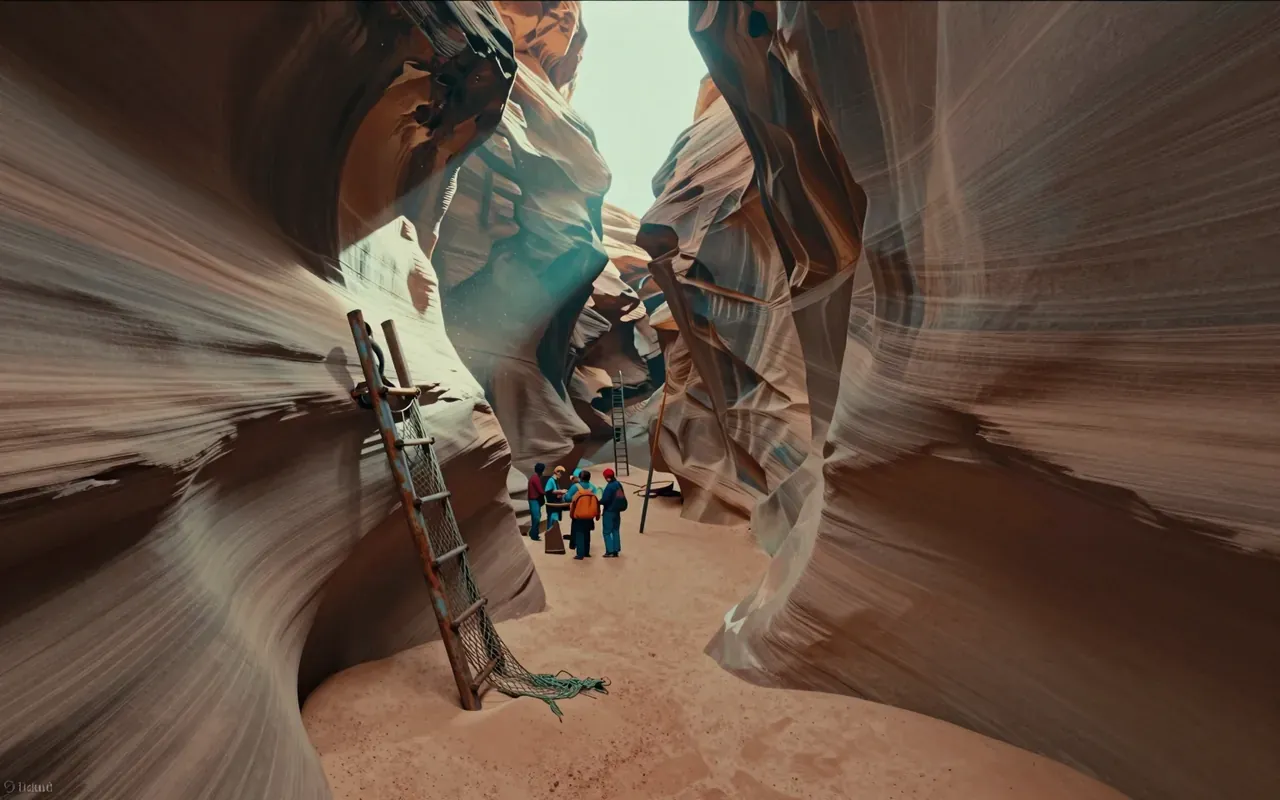
Antelope CanyonAntelope Canyon is a slot canyon on Navajo land in the American Southwest, formed by flash flood erosion of Navajo Sandstone. Monsoon rainwater carries sand into narrow passageways, deepening corridors and smoothing edges into flowing shapes. A flash flood on August 12, 1997 killed eleven tourists in Lower Antelope Canyon — triggered by an upstream thunderstorm 7 miles away. That event replaced amateur wood ladders with bolted systems and cargo nets. Today, a NOAA Weather Radio and alarm horn stand at the fee booth to warn of incoming floods. The canyon remains dangerous, managed, and visually singular.
9:40
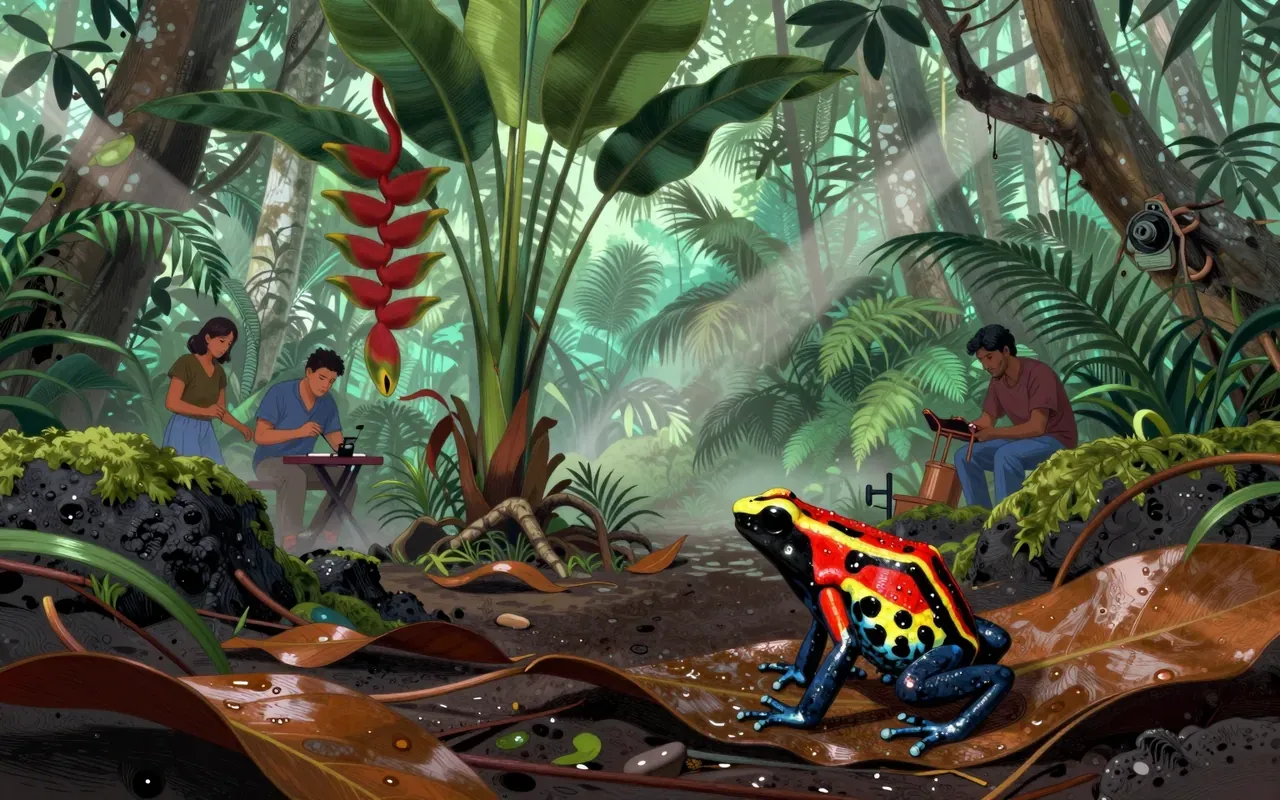
AposematismAposematism is a functional, empirically tested strategy — not metaphor, not speculation. It is defined by honesty, observability, and consequence.
10:00
TundraThe tundra is a biome defined by frigid temperatures and short growing seasons that inhibit tree growth. It occurs in three regional forms — Arctic, Alpine, and Antarctic. Its vegetation comprises low-growing plants such as dwarf shrubs, sedges, grasses, mosses, and lichens. Soils are nutrient-rich (nitrogen, phosphorus) and store vast amounts of carbon in permafrost, acting as a carbon sink — but warming-induced thaw releases greenhouse gases, creating a climate feedback loop.
9:16
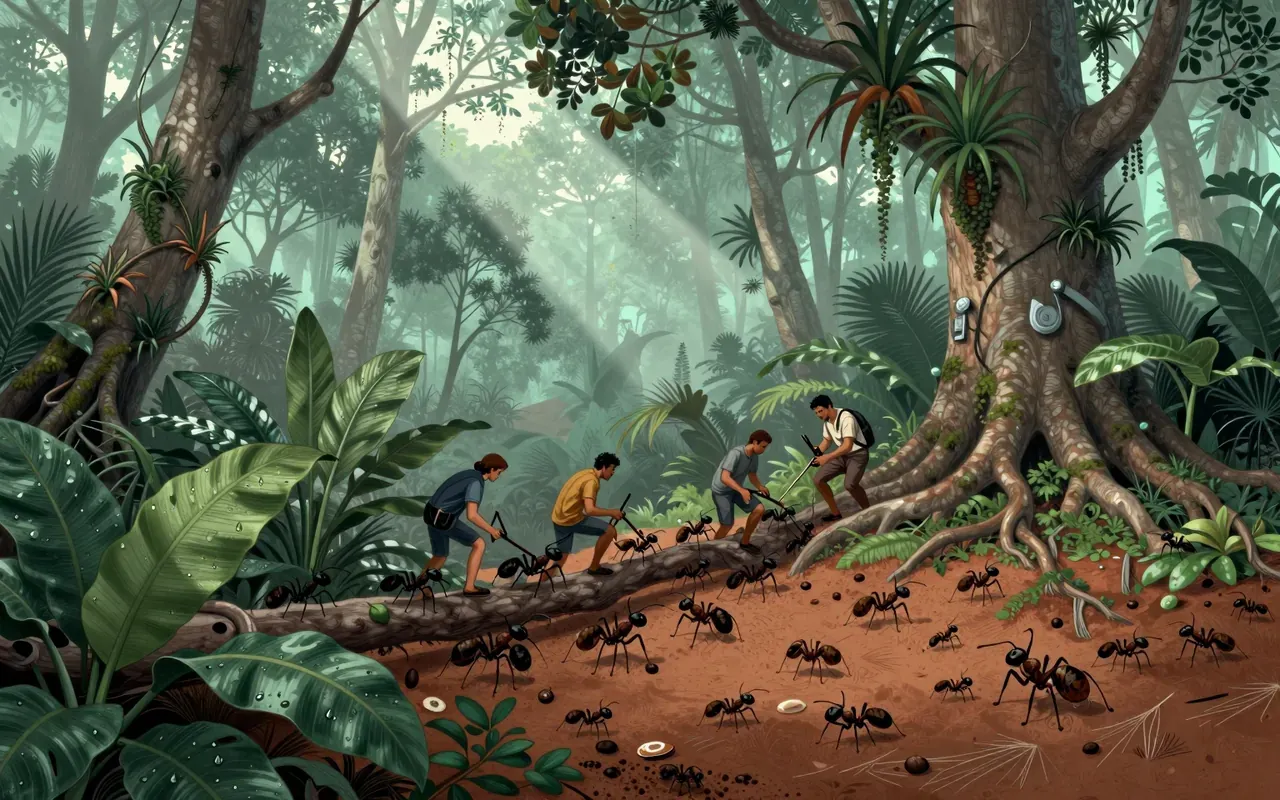
Army antArmy ants are a functional category—not a taxon—defined by nomadism, mass raiding, and monogynous, wingless queens. Genetic evidence from 2003 shows some lineages share deep ancestry; others converged. Their raids drive ecosystem dynamics across tropical forests. They offer no compromise: no stillness, no shared queens, no permanent home.
Up next in Nature

Adansonia

· 8:10

A Madagascar-born genus that drinks like a camel, blooms like a flashbulb, and dies when the drought deepens — even in Africa.

8:10