naturebriefs
8:52in productionCh. 1 · Two Genera, One Desert/ 8:52 · ceiling 15 min
Plants & trees

Barrel cactus

A desert plant that waits years to bloom—then does it twice, once for spring sun and once for monsoon rain.

Barrel cactus is a group of slow-maturing, desert-adapted cacti in the genera Echinocactus and Ferocactus. They grow up to three metres tall. Their spines range from yellow to red. They flower only after many years—first in April, then again if monsoon rains follow a hurricane. Their fruit is greenish and pineapple-shaped. They orient growth southward to avoid sunburn. No lifespan, population, or conservation status is given.

Chapters & takeaways4
  1. 0:52
    Two Genera, One Desert

    Barrel cacti belong to two distinct genera—Echinocactus and Ferocactus—and are endemic to Southwestern North America and north central Mexico.

  2. 2:55
    Spines, Ribs, and Scale

    They grow up to three metres tall, with spines ranging from yellow to red depending on age and species.

  3. 3:59
    Years to Bloom, Days to Fade

    Flowers appear only after many years, usually in April, and shift colour as they wilt in early May.

  4. 5:13
    Storm Bloom, Pineapple Fruit

    A hurricane-triggered monsoon can force a second bloom in late summer—and greenish pineapple-shaped fruit follows wilting.

Worth your time?

Yes. See the whole thing.

3.5/ 5
What works
  • stores water efficiently
  • times flowering to rainfall cues
  • reduces solar damage via orientation
What does not
  • establish a fast reproductive cycle
  • provide immediate visual reward
  • function outside arid habitats
See it if
  • desert field observers
  • phenology trackers
  • botanists studying delayed flowering
Skip it if
  • urban gardeners
  • horticulturalists seeking rapid yield
  • conservation practitioners without location-specific data
The written brief1 min read

What the species is and where it came from

Barrel cactus is not a single species but a group of plants in the genera Echinocactus and Ferocactus, native to the deserts of Southwestern North America and north central Mexico.

How it works, in terms someone would actually use

It stores water in a rigid, ribbed stem. It grows slowly. It flowers only after many years. It blooms in April with bright yellow or orange flowers. It may bloom again after monsoon rains. Its fruit is greenish and pineapple-shaped.

What it gets right

It establishes a drought-tolerant form with pronounced ribs and long spines. It times flowering to coincide with seasonal rain and monsoon pulses. It orients growth southward to reduce solar exposure.

What it does not

It does not flower early. It does not produce fruit before wilting. It does not bloom reliably outside seasonal or storm-triggered windows. It does not grow quickly.

What it changed

Nothing is stated in the sources about what the barrel cactus changed—no ecological, cultural, or historical impact is documented.

Who it is for, and who it is not

It is for desert hikers, botanists, and natural history observers who recognise slow growth and storm-triggered phenology as meaningful signals. It is not for gardeners seeking fast-flowering ornamentals or urban landscapers needing shade or rapid coverage.

Is it worth your time

Yes—if you are in the Sonoran or Chihuahuan Desert in April or after summer storms, and want to see a slow-growing cactus that aligns its growth southward to avoid sunburn.
Same habitat · Plants & trees4 of 51
11:26
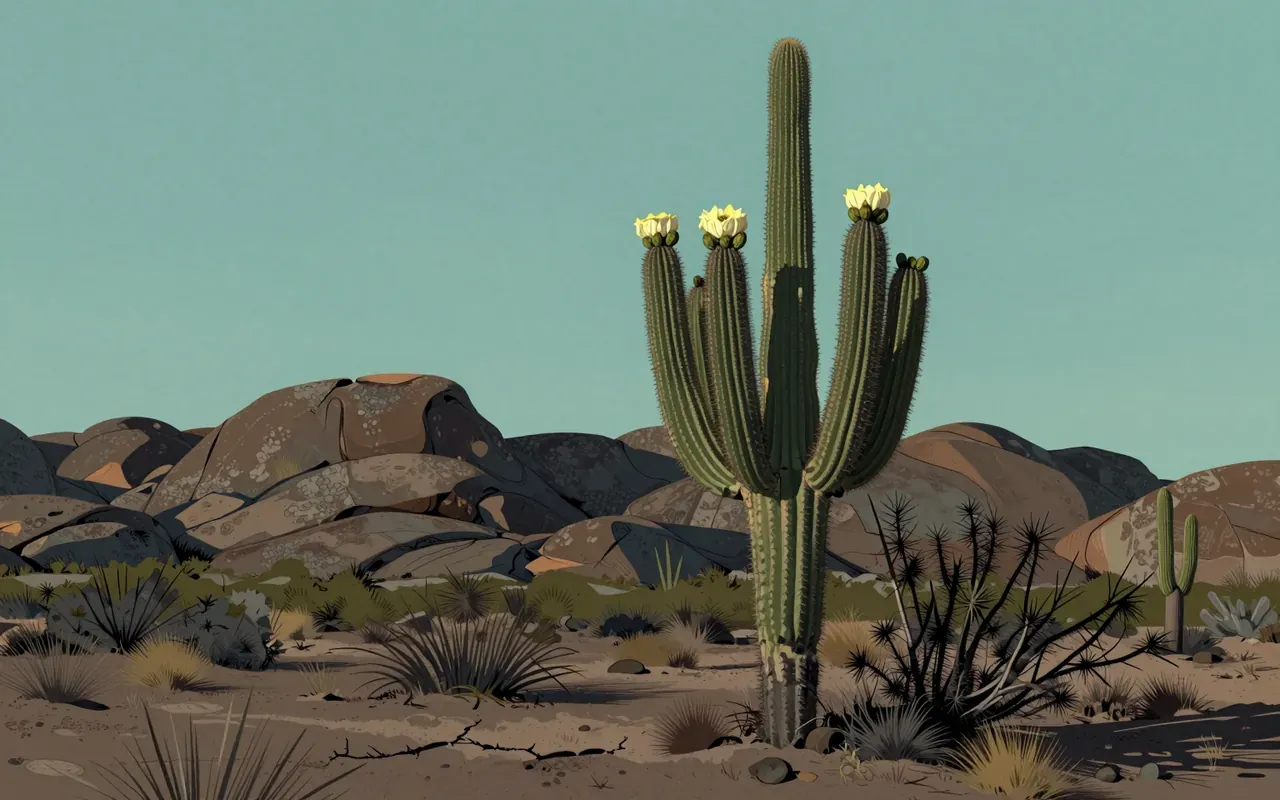
Saguaro2017The saguaro is a tree-like cactus endemic to the Sonoran Desert. It stores large amounts of rainwater, uses crassulacean acid metabolism photosynthesis, has an extensive root system, and serves as a keystone species. It requires cross-pollination, exhibits slow growth and extreme longevity at the cellular level, and faces conservation threats from invasive species, fire, and climate change.
8:19
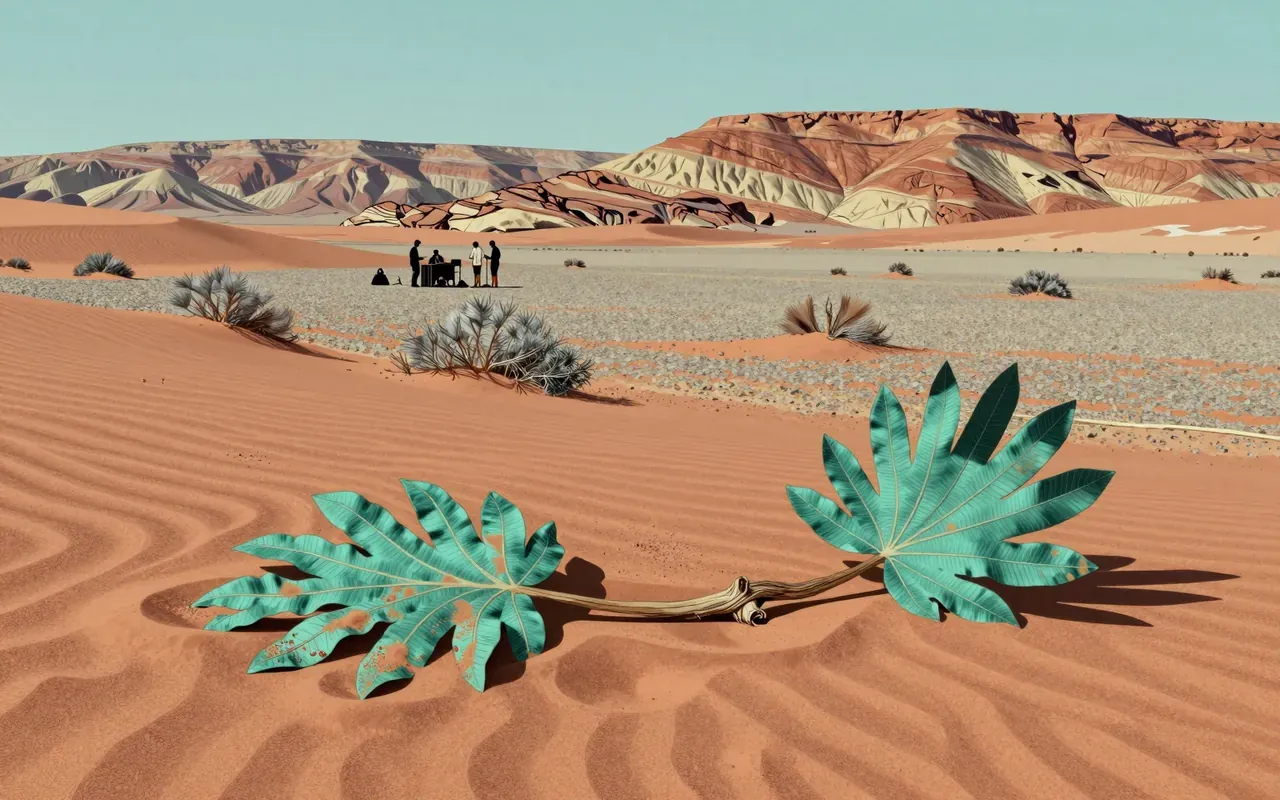
WelwitschiaWelwitschia mirabilis is a monotypic gnetophyte endemic to the Namib desert of Angola and Namibia. It has only two persistent leaves growing from a woody crown. It reproduces via cones, both sexes producing nectar to attract insect pollinators. Its genome shows ancient duplication and recent retrotransposon expansion under drought stress. Its conservation status is reasonably stable but vulnerable to fungal infection, overgrazing, and habitat disturbance.
9:36
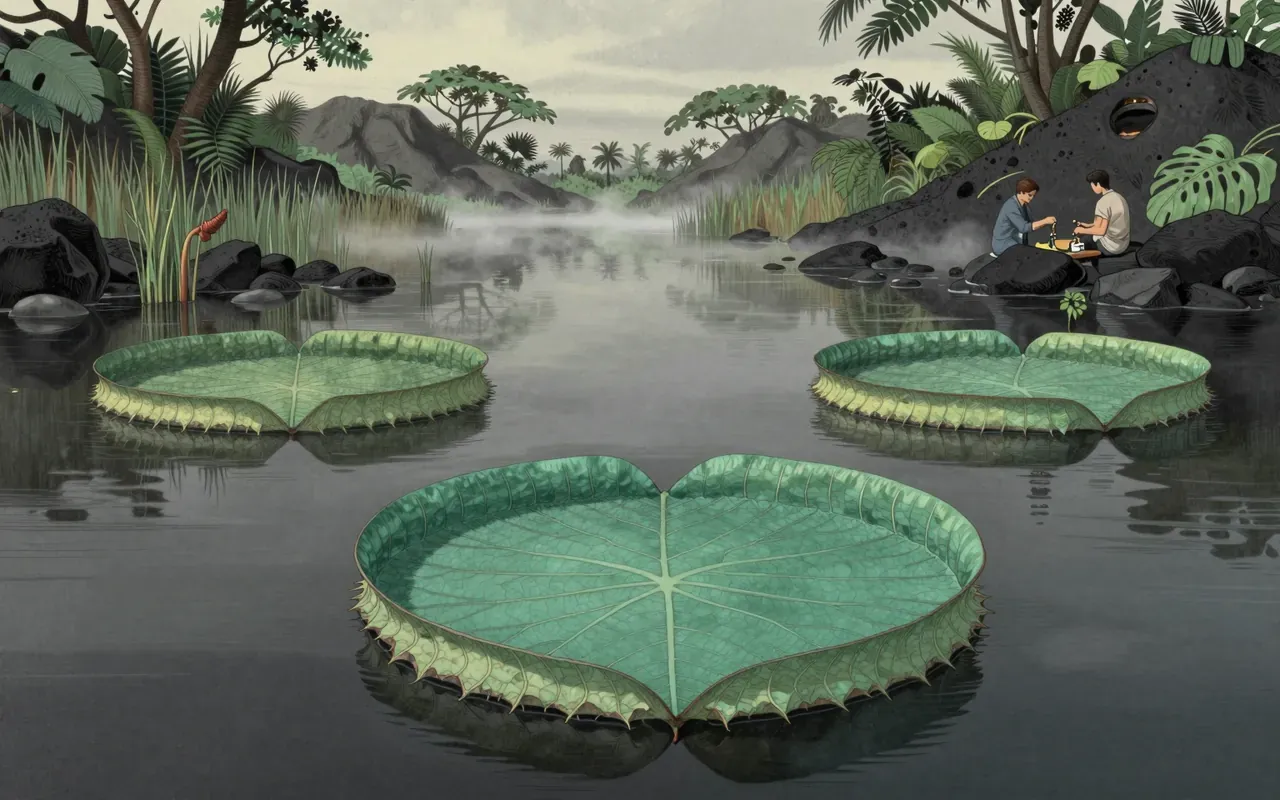
Victoria (plant)Victoria is a genus of aquatic herbs in the Nymphaeaceae family, characterised by enormous floating peltate leaves with raised rims and stomatodes for rainwater drainage; it includes species such as V. boliviana, V. amazonica, and V. cruziana, differing in leaf texture, spine hardness, underside colour, and rim shape; its flowers are nocturnal, thermogenic, beetle-pollinated, and morphologically complex; it grows in lakes and streams, and its parts are used for food and dye.
9:06
Seed dispersalSeed dispersal is the movement of seeds away from parent plants in spermatophytes. It relies on abiotic (wind, water, gravity) and biotic (birds, mammals, ants) vectors. It occurs individually or collectively, across space and time. Mechanism determines patterns affecting genetics, migration and species interactions. Modes include gravity, ballistic ejection, wind, water and animal-mediated forms — including serotiny. Inferences from morphological traits like wings or fleshy fruit are common but often misleading: plants disperse without classic adaptations, and traits are multifunctional.
Up next in Nature

Polar desert

· 8:41

A desert without sand, a biome without biology—polar deserts break every rule except the one that matters: cold overrides dry.

8:41