Discovered in 2009 in Madagascar’s Andasibe-Mantadia National Park — a single location anchors its entire known range.
2:14
How it builds
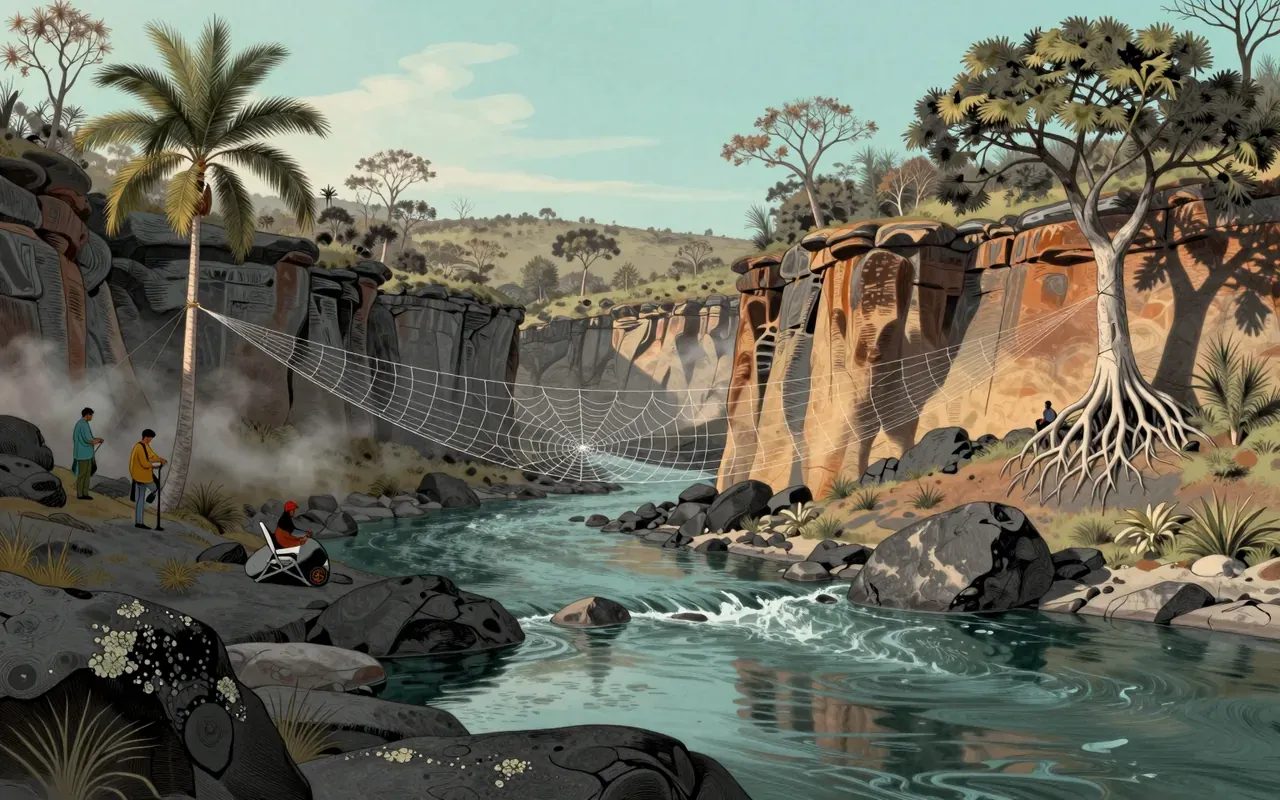
It builds the largest orb webs known — up to 2.8 m² — using behaviours unseen in any other spider.
3:32
Where it lives
It suspends its orb directly above rivers or lakes — a microhabitat no other spider occupies.
4:30
What it makes
Its silk is the toughest biological material ever studied — averaging 350 MJ/m³, peaking at 520 MJ/m³.
5:39
How it fits together
Behaviour, habitat use, and silk biomechanics coevolved — enabling a unique niche no other spider can enter.
Worth your time?
Yes. See the whole thing.
4.5/ 5
What works
occupies a microhabitat no other spider uses
produces the toughest biological material ever studied
coevolves behaviour, habitat use, and silk biomechanics
What does not
build webs away from water
use known web-building behaviours
produce silk less tough than 350 MJ/m³ on average
See it if
field biologists
materials scientists
evolutionary ecologists
Skip it if
casual garden observers
general wildlife tourists
The written brief1 min read
What the species is and where it came from
Darwin’s bark spider (Caerostris darwini) is an orb-weaver spider discovered in 2009 in Madagascar’s Andasibe-Mantadia National Park.
How it works, in terms someone would actually use
It builds orb webs up to 2.8 m² with bridge lines spanning up to 25 m — suspended directly above rivers or lakes.
What it gets right
It gets right the integration of silk biomechanics, web architecture, and habitat selection — producing the toughest biological material known while occupying a microhabitat no other spider uses.
What it does not
It does not build webs in forests, on trees away from water, or in dry terrestrial microhabitats — its niche is strictly aquatic-adjacent.
What it changed
It changed how we define ecological specialisation in spiders — showing coevolution of behaviour, habitat use, and biomaterials in one species.
Who it is for, and who it is not
It is for field biologists, materials scientists, and evolutionary ecologists. It is not for casual garden observers or general wildlife tourists.
Is it worth your time
Yes, if you want to see a spider exploiting a niche no other spider can use — by combining extreme silk toughness, unique web-building behaviour, and precise microhabitat choice.