Saved
Habitats

Everglades

A drowned prairie held together by limestone, water, and decades of argument over what ‘restoration’ really means.

Worth your time?3.5/5Yes.See the whole thing.What works, what does not, who it is for ↓
10:21in productionCh. 1 · What it is/ 10:21 · ceiling 15 min
5 chapters · 10:21Ceiling 15:00

The brief is written and checked. The video joins this page when it is cut.5 chapters · 1 min read · 10:21 planned

Read the brief

The Everglades is a flooded grassland ecosystem shaped by limestone, climate, and seasonal water movement. Human intervention—especially the Central and Southern Florida Flood Control Project—disrupted its hydrology, converting half its area to agriculture and urban use. Restoration efforts since the 1980s, culminating in the 2000 Comprehensive Everglades Restoration Plan, aim to reverse that damage. It remains a working example of large-scale ecological repair—and its limits.

Chapters & takeaways5
  1. 1:00
    What it is

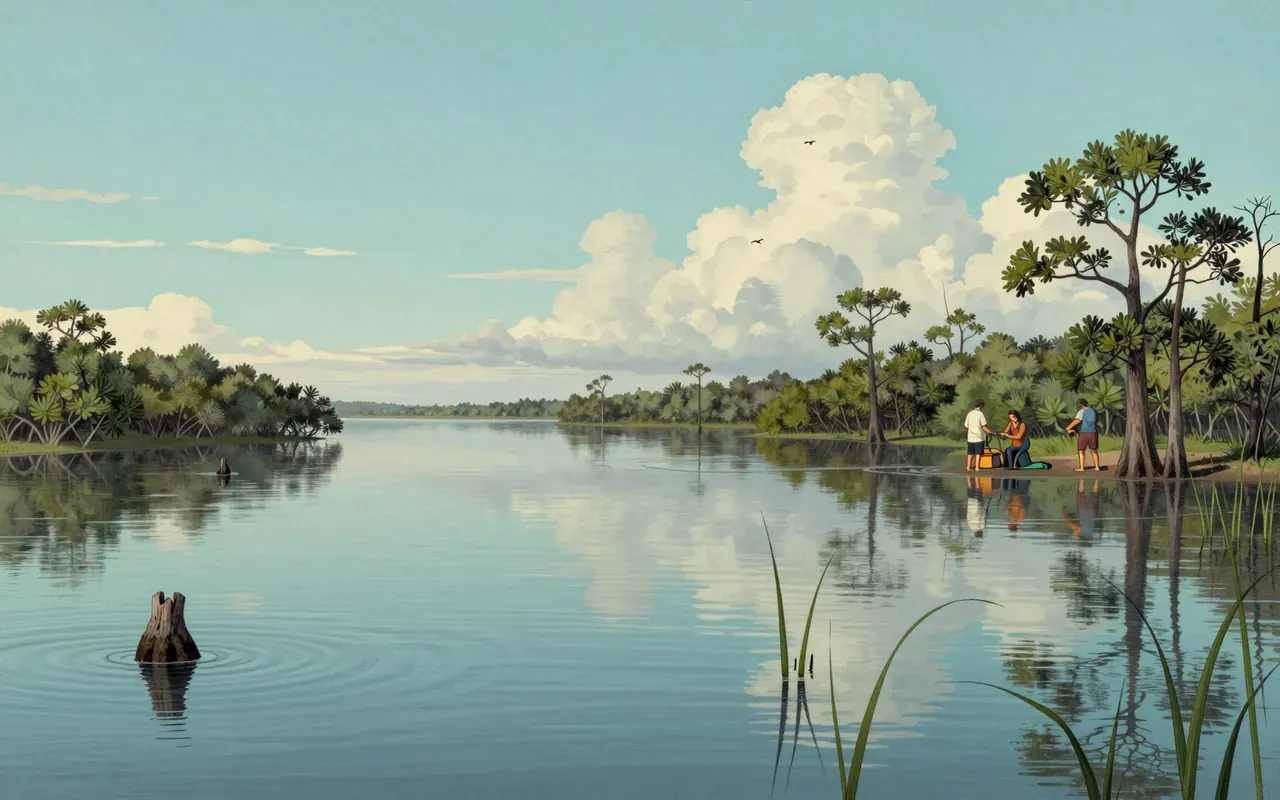
    The Everglades is a flooded grassland ecosystem—not a swamp or forest—but a river of grass flowing across limestone.

  2. 1:54
    How it moves

    Its rhythm is set by seasonal flooding and drought, driven by water moving slowly south from Lake Okeechobee.

  3. 2:59
    How it was broken

    Half the original area is gone; 1,400 miles of canals and levees replaced natural flow with engineered control.

  4. 4:25
    How it is being fixed

    Restoration began in the 1980s with the Kissimmee River and scaled up in 2000 into the most expensive environmental effort in U.S. history.

  5. 6:10
    When it held the line

    An environmental study blocked a jetport—proof that science can halt development when evidence is clear and local.

2 more chaptersFewer chapters
Worth your time?

Yes. See the whole thing.

3.5/ 5
What works
  • as a demonstration of how geology and climate co-create habitat
  • as evidence that infrastructure can be redesigned to serve ecology
  • as a test case for whether massive public investment can restore degraded systems
What does not
  • function as an intact, self-regulating ecosystem across its original range
  • maintain natural flooding-drought cycles without active human management
  • support all native species at pre-drainage population levels
See it if
  • hydrologists
  • conservation practitioners
  • policy researchers studying large-scale environmental governance
Skip it if
  • those seeking undisturbed wilderness
  • casual wildlife watchers expecting high-density, easy-to-see fauna
Who should see it, and who should skipHide who it is for
The written brief1 min read

What the species is and where it came from

The Everglades is not a species. It is a natural region of flooded grasslands in southern Florida, within the Neotropical realm.

How it works, in terms someone would actually use

The Everglades works as a slow-moving, shallow river—60 miles wide—flowing south from Lake Okeechobee across porous limestone to Florida Bay. It floods in the wet season and dries in the dry season.

What it gets right

It gets right the power of geology and climate to create a vast, flat, water-driven habitat. Its limestone shelf and subtropical weather still define where water pools, moves, and recedes.

What it does not

It does not function as a self-sustaining flooded grassland ecosystem across its original extent. Its seasonal flooding-drought rhythm is disrupted. Its water chemistry is altered by nutrient pollution.

What it changed

It changed southern Florida’s water flow, ecology, and land use. Half the original flooded grasslands are gone. Canals now move water faster and drier than nature intended.

Who it is for, and who it is not

It is for hydrologists, restoration practitioners, and ecologists who study how water movement sustains biodiversity. It is not for those seeking intact, unaltered wilderness—it is a managed, contested, partially restored system.

Is it worth your time

Yes—if you want to see how hydrology shapes life on a landscape scale, and how human engineering has undone and then attempted to reverse that shaping.
Same habitat · Habitats4 of 130
Up next in Nature

Fairy ring

· 9:11

A fairy ring is fungal geometry—not magic, but enzyme-driven hunger made visible.

9:11