naturebriefs
8:14in productionCh. 1 · Three ways to die/ 8:14 · ceiling 15 min
Systems · Habitats

Harmful algal bloom

A harmful algal bloom is not red, not tide, not always toxic—and never safe to ignore just because it looks harmless.

Harmful algal blooms are not organisms but ecological events—transient, variable, and dangerous in multiple ways. They expose the limits of observation and the necessity of lab confirmation. Their rise reflects intersecting pressures: nutrients, warming, and human infrastructure.

Chapters & takeaways5
  1. 1:02
    Three ways to die

    HABs kill through toxins, suffocation, or physical harm—not just one mechanism.

  2. 1:46
    No single definition

    There is no universal definition—some experts demand toxins, others accept hypoxia alone.

  3. 2:48
    Nutrients, not villains

    Nitrogen and phosphate drive most blooms—but some occur without human input.

  4. 4:07
    Blind to the bloom

    You cannot see the danger. Microscopy fails. Only toxin assays or gene tests confirm harm.

  5. 4:59
    Warming waters, worsening blooms

    They are growing larger and more frequent—and climate change is a key driver.

Worth your time?

Yes. See the whole thing.

4.5/ 5
What works
  • identifies three discrete harm mechanisms
  • rejects visual identification as sufficient
  • acknowledges ambiguity in causation
What does not
  • confuse correlation with causation
  • overstate natural causes
  • understate detection difficulty
See it if
  • water-resource-managers
  • public-health-officers
  • coastal-planners
Skip it if
  • casual-recreational-users
  • visual-monitoring-only-practitioners
The written brief1 min read

What the species is and where it came from

HABs are not a species. They are transient, context-dependent events—excessive growths of diverse algae—triggered by nutrient surges, natural or anthropogenic.

How it works, in terms someone would actually use

HABs work by overgrowing water with algae—cyanobacteria, dinoflagellates, or diatoms—that poison, suffocate, or physically harm other organisms.

What it gets right

It correctly identifies three distinct mechanisms of harm: toxin production, deoxygenation, and mechanical damage.

What it does not

It does not reliably signal danger by colour, smell, or taste. It does not always stem from human activity. It does not yield to microscopy alone.

What it changed

HABs have changed how water quality is monitored: visual checks are obsolete; toxin assays or genetic tests are now required to confirm harm.

Who it is for, and who it is not

It is for water managers, fisheries biologists, public health officers, and coastal planners. It is not for casual observers relying on sight or smell.

Is it worth your time

Yes—if you manage water, harvest shellfish, operate a coastal business, or swim in lakes and seas where blooms occur. No—if you treat algal colour as a reliable warning sign.
Same habitat · Systems4 of 81
8:09
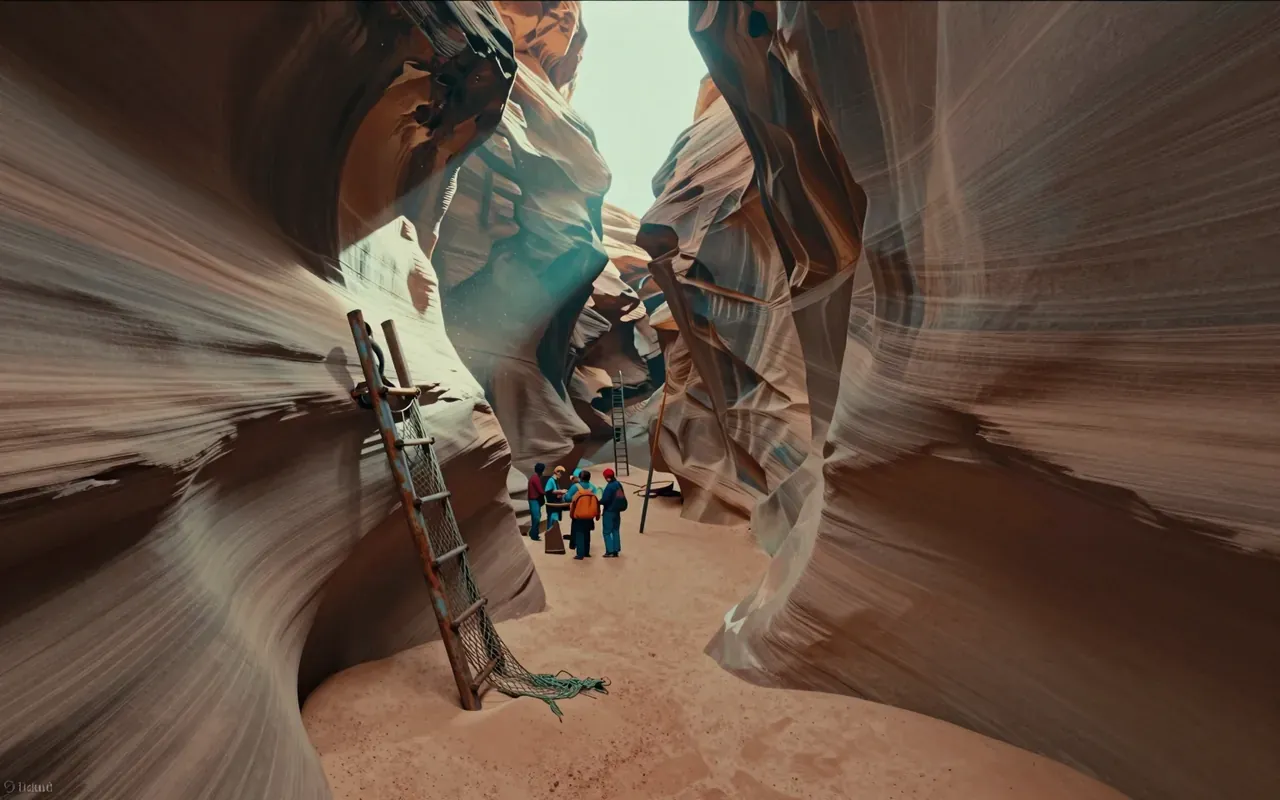
Antelope CanyonAntelope Canyon is a slot canyon on Navajo land in the American Southwest, formed by flash flood erosion of Navajo Sandstone. Monsoon rainwater carries sand into narrow passageways, deepening corridors and smoothing edges into flowing shapes. A flash flood on August 12, 1997 killed eleven tourists in Lower Antelope Canyon — triggered by an upstream thunderstorm 7 miles away. That event replaced amateur wood ladders with bolted systems and cargo nets. Today, a NOAA Weather Radio and alarm horn stand at the fee booth to warn of incoming floods. The canyon remains dangerous, managed, and visually singular.
9:40
AposematismAposematism is a functional, empirically tested strategy — not metaphor, not speculation. It is defined by honesty, observability, and consequence.
10:00
TundraThe tundra is a biome defined by frigid temperatures and short growing seasons that inhibit tree growth. It occurs in three regional forms — Arctic, Alpine, and Antarctic. Its vegetation comprises low-growing plants such as dwarf shrubs, sedges, grasses, mosses, and lichens. Soils are nutrient-rich (nitrogen, phosphorus) and store vast amounts of carbon in permafrost, acting as a carbon sink — but warming-induced thaw releases greenhouse gases, creating a climate feedback loop.
9:16
Army antArmy ants are a functional category—not a taxon—defined by nomadism, mass raiding, and monogynous, wingless queens. Genetic evidence from 2003 shows some lineages share deep ancestry; others converged. Their raids drive ecosystem dynamics across tropical forests. They offer no compromise: no stillness, no shared queens, no permanent home.
Up next in Nature

Lingzhi (mushroom)

· 8:28

A bracket fungus that looks like lacquered leather—and tells you nothing about forests unless you already know where to look.

8:28