Saved
Mammals · Evolution

Giant panda

A bear that evolved a false thumb just to hold bamboo—and still barely digests it.

Worth your time?4/5Yes.See the whole thing.What works, what does not, who it is for ↓
9:46in productionCh. 1 · What it is/ 9:46 · ceiling 15 min
6 chapters · 9:46Ceiling 15:00

The brief is written and checked. The video joins this page when it is cut.6 chapters · 1 min read · 9:46 planned

Read the brief

The giant panda is a bear endemic to China. It eats almost only bamboo. It lives in six montane regions. It has a thumb-like digit, large molars, and digests starch—not cellulose. Since 2016, it is IUCN Vulnerable.

Chapters & takeaways6
  1. 0:59
    What it is

    It is a bear—endemic to China, and found nowhere else.

  2. 1:53
    How it looks

    White coat, black patches, rotund body, and sexual dimorphism define its form.

  3. 3:06
    How it eats

    A thumb-like digit, large molars, and starch digestion make bamboo feeding possible—but inefficient.

  4. 4:14
    Where it lives

    It lives only in six montane regions across a few Chinese provinces, up to 3,000 m.

  5. 5:05
    What it eats

    Its diet is almost entirely bamboo and bamboo shoots—no meat, no variety.

  6. 6:14
    Why it’s vulnerable

    Endemic means confined: no wild populations exist outside those six Chinese mountain zones.

3 more chaptersFewer chapters
Worth your time?

Yes. See the whole thing.

4/ 5
What works
  • thumb-like digit for bamboo grip
  • large molars and expanded temporal fossae for chewing
  • starch digestion supporting herbivory
What does not
  • digest cellulose
  • live outside six montane regions in China
  • eat meat regularly
See it if
  • people who want to observe a bamboo-specialist bear in high-elevation Chinese forests
Skip it if
  • people expecting carnivory, wide-ranging behaviour, or lowland habitat
Who should see it, and who should skipHide who it is for
The written brief1 min read

What the species is and where it came from

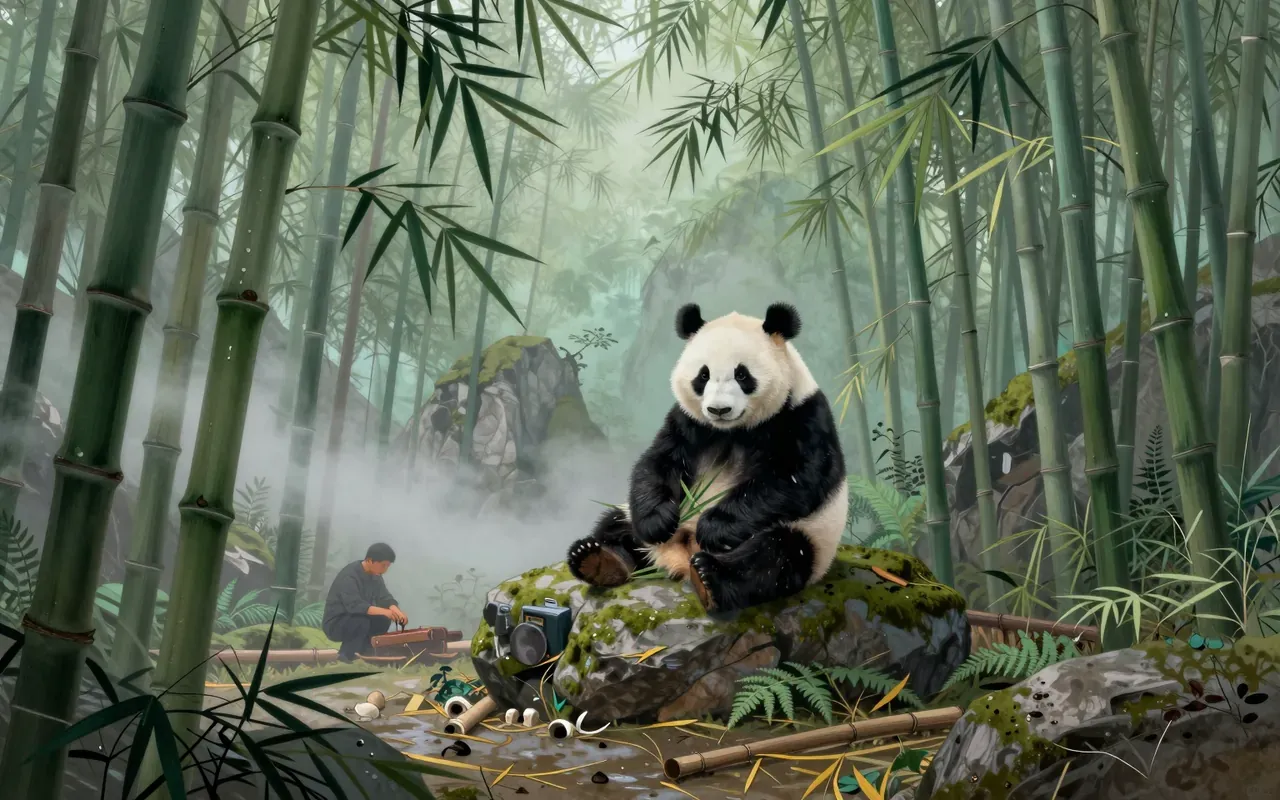
The giant panda is a bear species endemic to China. It has a white coat with black patches around the eyes, ears, legs and shoulders. Adults weigh 100–115 kg and are 1.2–1.9 m long. Males are 10–20% larger than females.

How it works, in terms someone would actually use

It holds bamboo with a thumb-like digit. It chews with large molars. It lives in six montane regions in China, up to 3,000 m elevation.

What it gets right

It gets bamboo feeding right: thumb-like digit, large molars, expanded temporal fossae, and starch digestion all support a near-exclusive bamboo diet.

What it does not

It does not eat meat regularly. It does not live outside six montane regions in China. It does not digest cellulose efficiently—it relies on starch digestion despite being herbivorous.

What it changed

Nothing in the material. The document does not state what the giant panda changed.

Who it is for, and who it is not

It is for people who want to observe a sexually dimorphic bear adapted to bamboo in high-elevation Chinese forests. It is not for people expecting carnivory, wide-ranging behaviour, or lowland habitat.

Is it worth your time

Yes—if you want to see a bear that eats almost nothing but bamboo, lives only in those six Chinese mountain zones, and has a false thumb built for gripping stalks.
Same habitat · Mammals4 of 61
9:55
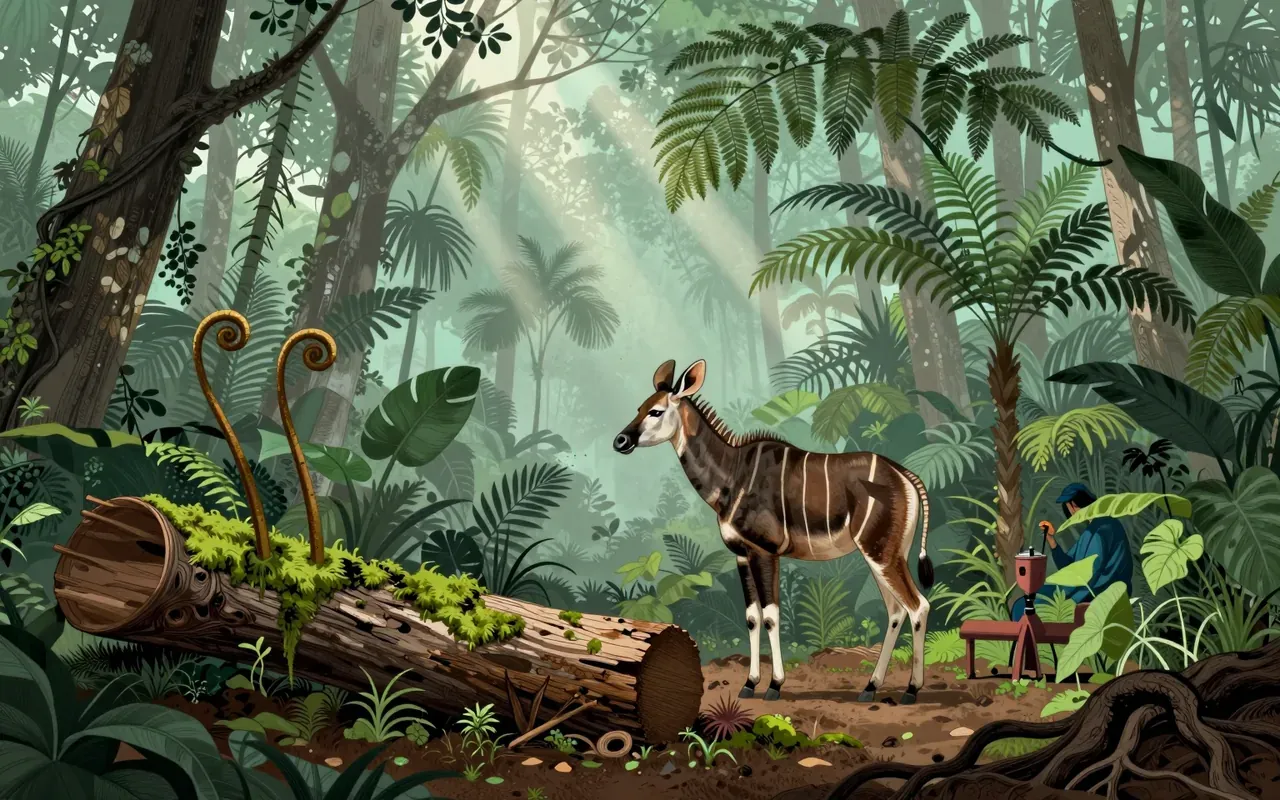
OkapiThe okapi is a solitary, diurnal, forest-dwelling artiodactyl endemic to the northeast Democratic Republic of the Congo. It is the only species in its genus and the giraffe’s sole living relative. Its stripes provide camouflage in dense vegetation. It feeds on leaves, buds, grasses, ferns, fruits, and fungi. It is classified as endangered by the IUCN.
8:36
CougarThe cougar is a large, solitary feline native to the Americas. Its range spans Yukon, British Columbia and Alberta in Canada; the Rocky Mountains and western US; Mexico; the Amazon rainforest; and the southern Andes in Patagonia. It prefers habitats with dense underbrush and rocky areas for stalking but also lives in open areas. It is an adaptable generalist species, occurring in most American habitat types. It is largely solitary. Its activity pattern varies from diurnality and cathemerality to crepuscularity and nocturnality between protected and non-protected areas, and is apparently correlated with the presence of other predators, prey species, livestock and humans. It is an ambush predator that pursues a wide variety of prey.
8:47
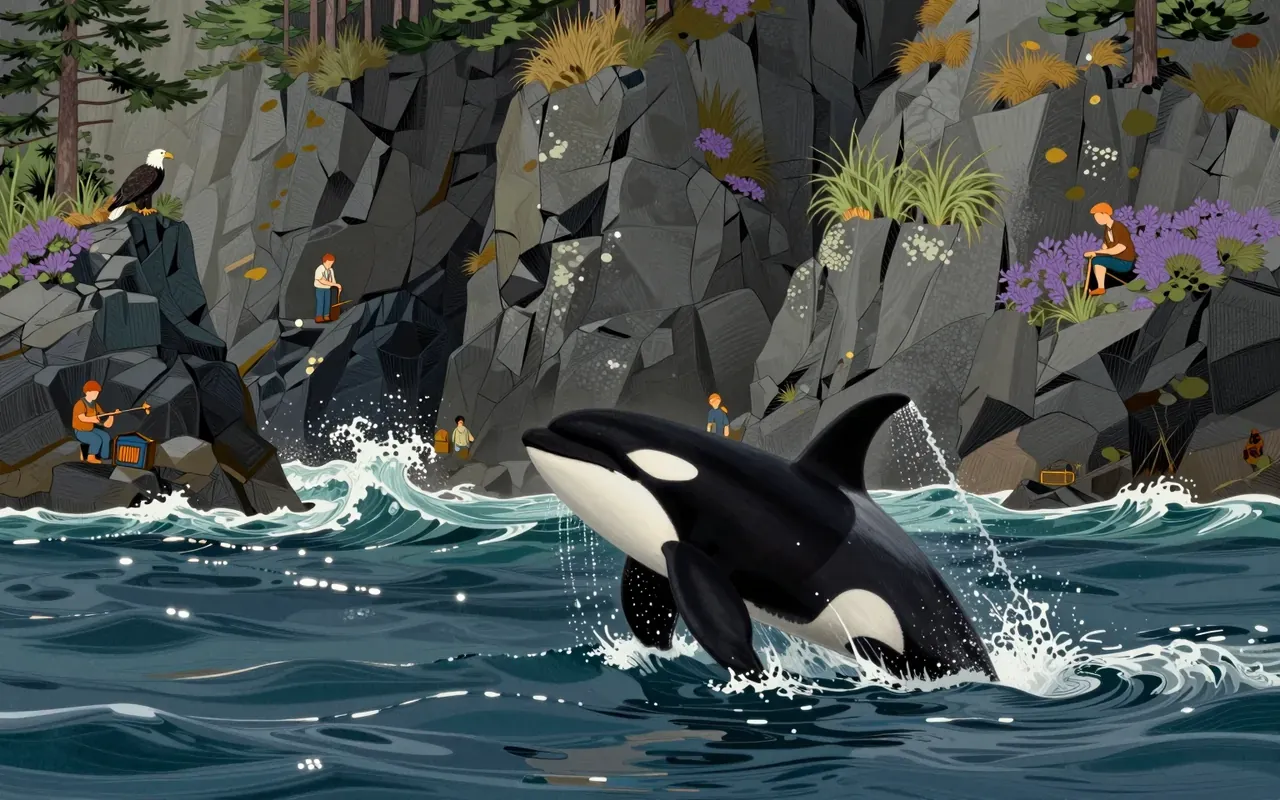
OrcaOrca is a cosmopolitan toothed whale—the largest oceanic dolphin—with population-specific diets and intergenerationally transmitted behaviours. Its individual identification via dorsal fin and saddle patch enables precise photographic census. The IUCN lists it as data deficient due to unresolved taxonomic questions. Indigenous peoples in the Pacific Northwest, Australia, and Peru revere it; Western cultures historically feared it.
10:10
West Indian manateeThe West Indian manatee is a tactile aquatic mammal native to warm coastal zones from the southeastern US to northern Brazil. It uses highly sensitive vibrissae to navigate and feed on underwater vegetation. Two subspecies exist—the Florida and Antillean manatees—both threatened by habitat loss, pollution, and boat collisions. It reproduces slowly: one calf every two to three years. Its U.S. conservation status shifted from endangered (1970s) to threatened (2017), then faced a 2025 petition to reinstate endangered classification. The IUCN lists the species as vulnerable (2023).
Up next in Nature

Gila monster

· 9:08

A sluggish, burrowing lizard whose venom rewrote diabetes medicine—and whose survival strategy defies every cliché about reptiles.

9:08