naturebriefs
8:27in productionCh. 1 · Range/ 8:27 · ceiling 15 min
Reptiles & amphibians · Habitats

Komodo dragon

Cannibalism drives juveniles into trees—and into dung. That’s the Komodo dragon’s first rule.

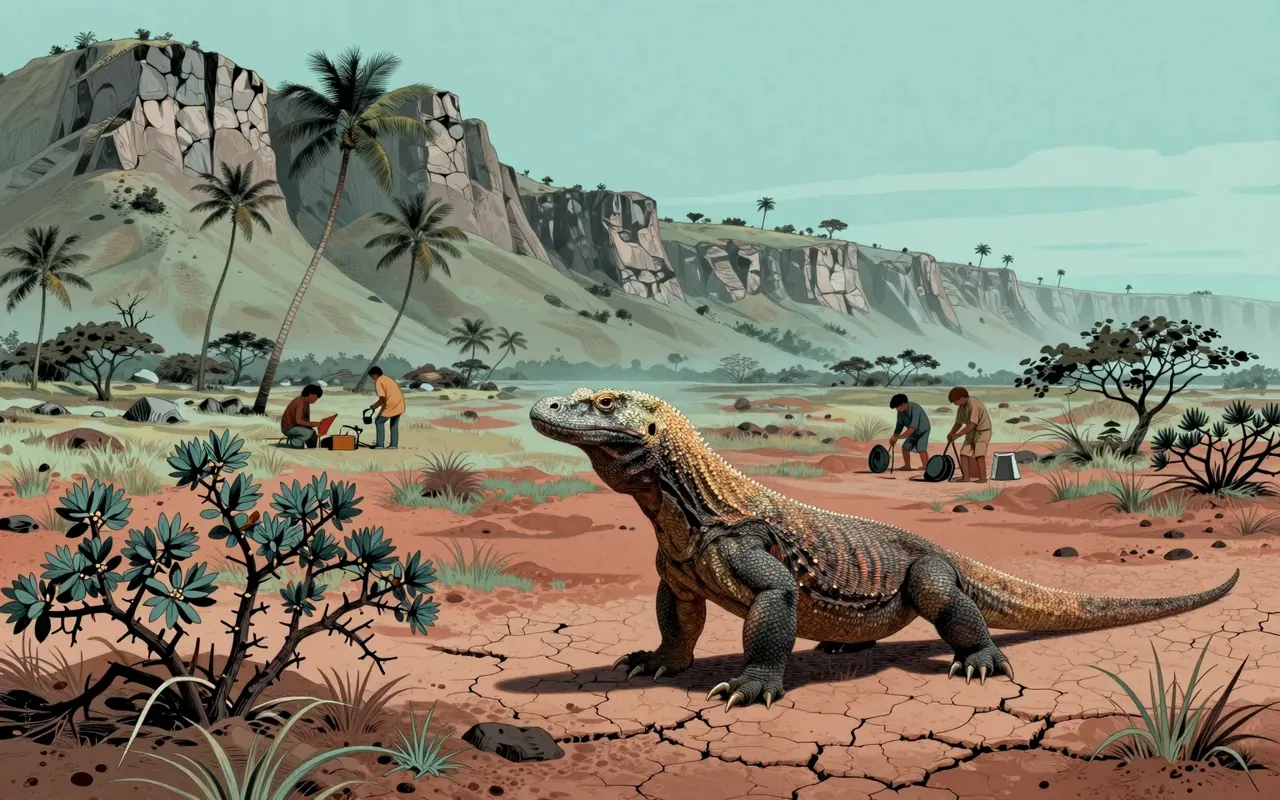
Komodo dragon is the largest extant lizard. Endemic to five Indonesian islands. Apex predator. Diet shifts with age. Juveniles avoid cannibalism by climbing trees and rolling in feces. Matures in 8–11 years. Lives up to 62 years. Lays up to 20 eggs in September in megapode nests or self-dug holes. Habitat: hot, dry grasslands, savannas, tropical forests at low elevations. IUCN Endangered due to habitat loss, poaching, climate change.

Chapters & takeaways6
  1. 0:50
    Range

    It lives only on five Indonesian islands—and nowhere else on Earth.

  2. 1:24
    Predation

    Size makes it apex. Diet shifts from bugs to deer—with cannibalism shaping juvenile behaviour.

  3. 2:13
    Survival Tactics

    Juveniles climb trees and roll in feces—not to hide, but to repel adult dragons.

  4. 3:22
    Life Cycle

    It takes 8–11 years to mature. Eggs appear in September—buried or laid in megapode mounds.

  5. 4:29
    Size

    Males reach 3 m and 150 kg—the largest living lizard by verified measurement.

  6. 5:32
    Diet & Distribution

    Its diet depends on where it lives: Javan rusa and feral pigs dominate where they co-occur.

Worth your time?

Yes. See the whole thing.

4.5/ 5
What works
  • Its size makes it apex.
  • Its diet shift matches age and opportunity.
  • Its nesting strategy exploits existing megapode mounds or digs new ones.
  • Its juvenile anti-cannibal tactics are observable and specific.
What does not
  • It does not live outside its five-island range.
  • It does not breed outside May–August or lay eggs outside September.
  • It does not hunt humans as routine prey.
  • It does not avoid cannibalism solely by scent—behaviour is active and physical.
See it if
  • Field biologists tracking life-history traits.
  • Conservation staff managing island habitats.
  • Wildlife observers prepared for low-elevation, hot-dry terrain.
Skip it if
  • Tourists seeking guaranteed encounters.
  • Anyone outside Komodo, Rinca, Flores, Gili Dasami, or Gili Motang.
  • Readers expecting behavioural generalisations beyond verified observation.
The written brief1 min read

What the species is and where it came from

The Komodo dragon is the largest extant lizard. It is endemic to Komodo, Rinca, Flores, Gili Dasami, and Gili Motang—five Indonesian islands.

How it works, in terms someone would actually use

It ambushes prey. Juveniles eat invertebrates and birds. Adults eat Javan rusa, feral pigs, and carrion. They mature in 8–11 years. They live up to 62 years.

What it gets right

Its osteoderm-reinforced skin protects it. Its size makes it an apex predator. Its diet shift with age matches observed behaviour. Its nesting strategy uses megapode mounds or self-dug holes.

What it does not

It does not hunt humans regularly. It does not live outside those five Indonesian islands. It does not breed outside May–August or lay eggs outside September. It does not avoid cannibalism by scent alone—juveniles roll in feces and climb trees.

What it changed

Nothing outside its range. It does not migrate. It does not alter ecosystems beyond its five islands. Its endangerment signals local habitat loss—not global change.

Who it is for, and who it is not

It is for field biologists, park rangers, and serious wildlife observers on those islands. It is not for casual tourists expecting guaranteed sightings, nor for anyone outside its native range.

Is it worth your time

Yes—if you are on Komodo, Rinca, Flores, Gili Dasami, or Gili Motang, and want to see an apex reptile that hunts, climbs, rolls in feces, and lays eggs in megapode nests.
Same habitat · Reptiles & amphibians4 of 36
8:06
ChrysopeleaChrysopelea is a genus of arboreal, diurnal, mildly venomous snakes native to Southeast Asia, India, Sri Lanka, and southernmost China. It glides up to 100 meters using ridge-scale climbing, J-shaped launching, abdominal flattening, rib flaring, and aerial lateral undulation—forming a pseudo concave wing that generates lift. It avoids earth-bound predators and saves energy versus ground travel. It does not fly. It does not glide from ground level. It does not survive outside arboreal tropical habitats.
9:54
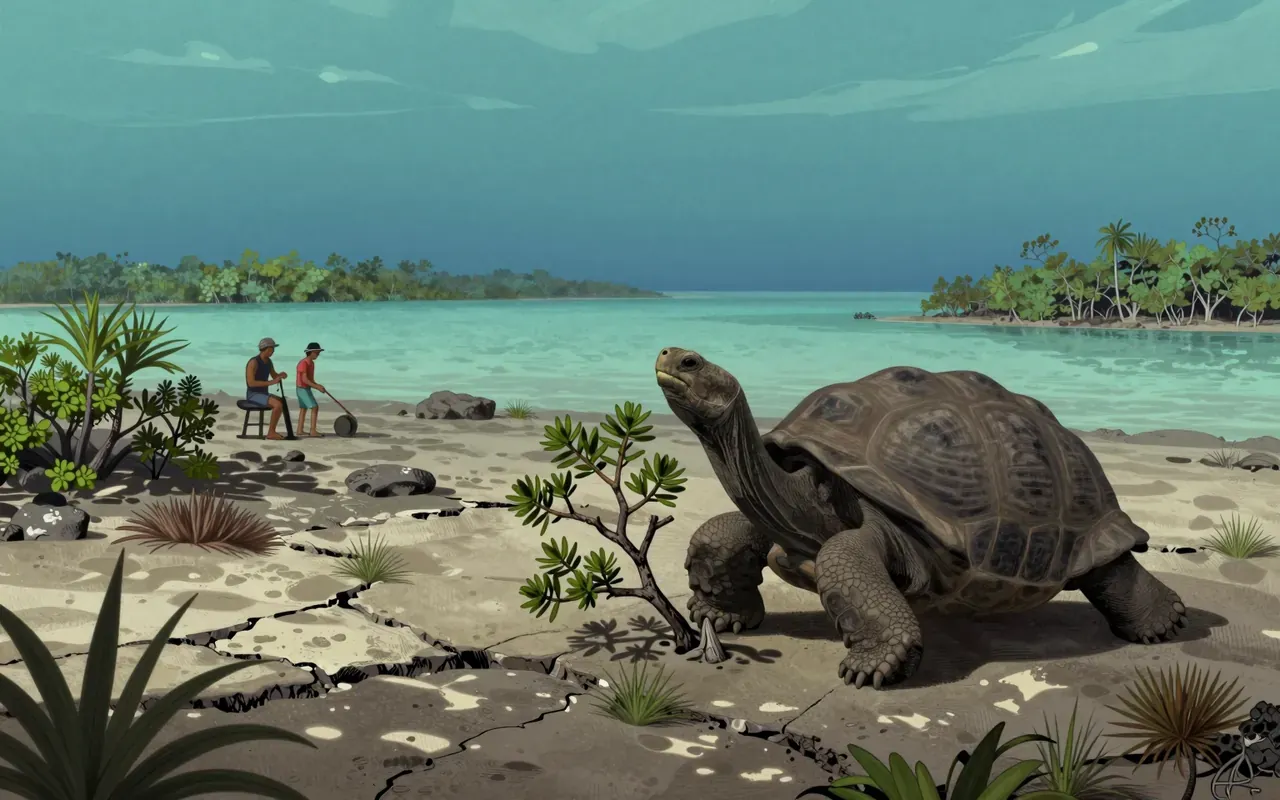
Aldabra giant tortoiseThe Aldabra giant tortoise is not a relic — it is an active ecosystem architect. Its survival is narrow, specific, and contingent on one place. It does not charm. It does not surprise. It reshapes.
8:26
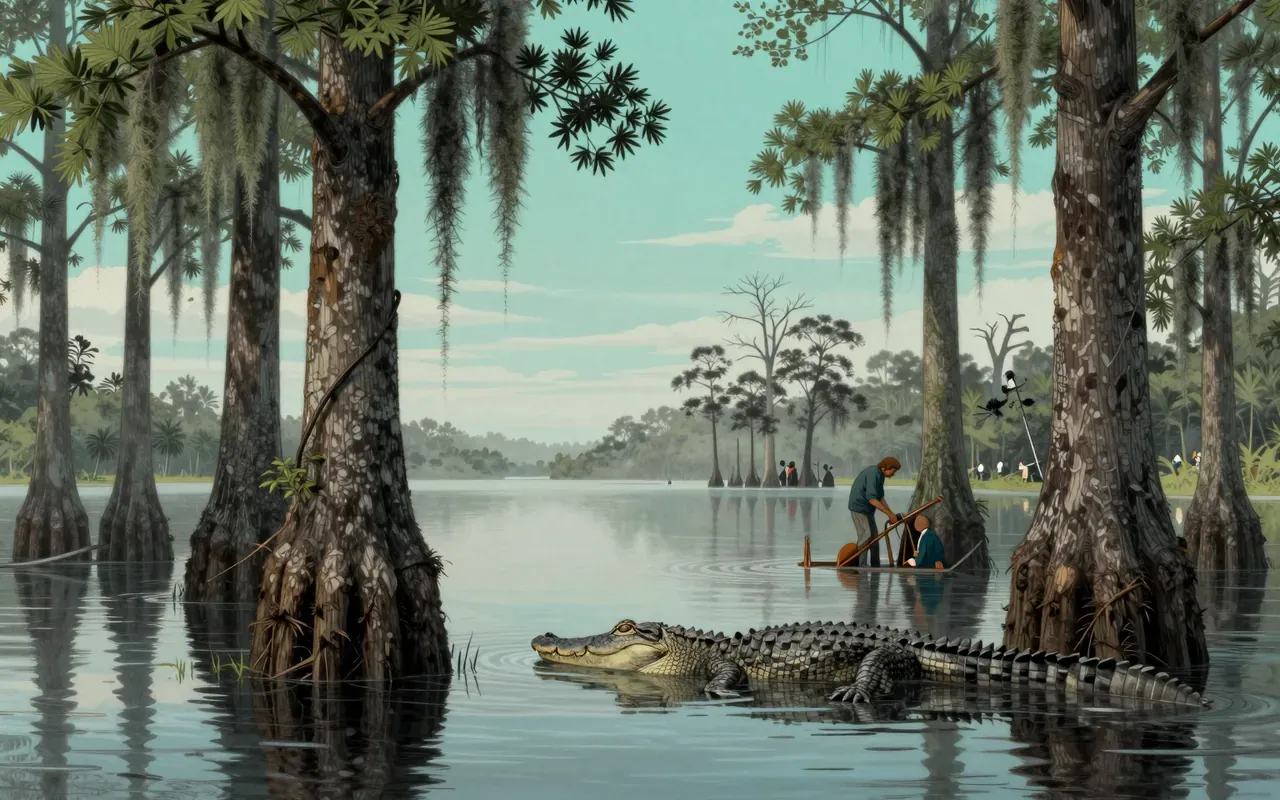
American alligatorThe American alligator is a large crocodilian reptile native to the Southeastern United States. It inhabits subtropical and tropical freshwater wetlands such as marshes and cypress swamps. It functions as an apex predator and ecosystem engineer. Its conservation status is Least Concern per the IUCN.
9:08
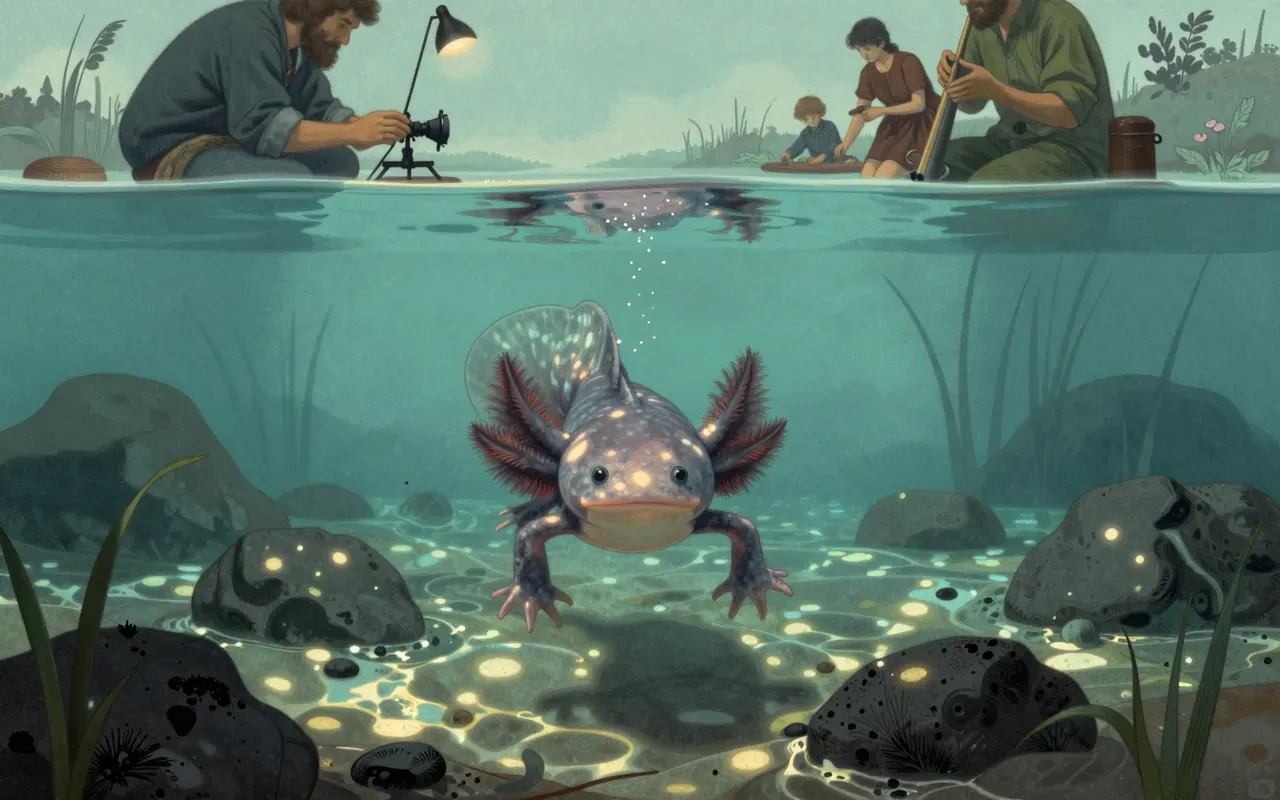
AxolotlThe axolotl is a neotenic mole salamander native to the interconnected wetlands and lakes of the Valley of Mexico—especially Xochimilco and Chalco—whose natural habitat has been largely destroyed by desiccation and urban expansion. It is carnivorous, critically endangered in the wild due to invasive species and pollution, and widely used in scientific research for its exceptional regenerative capacity. Its defining biological adaptation is neoteny: it reaches sexual maturity while retaining larval traits like external gills and remaining fully aquatic.
Up next in Nature

Lake Titicaca

· 9:02

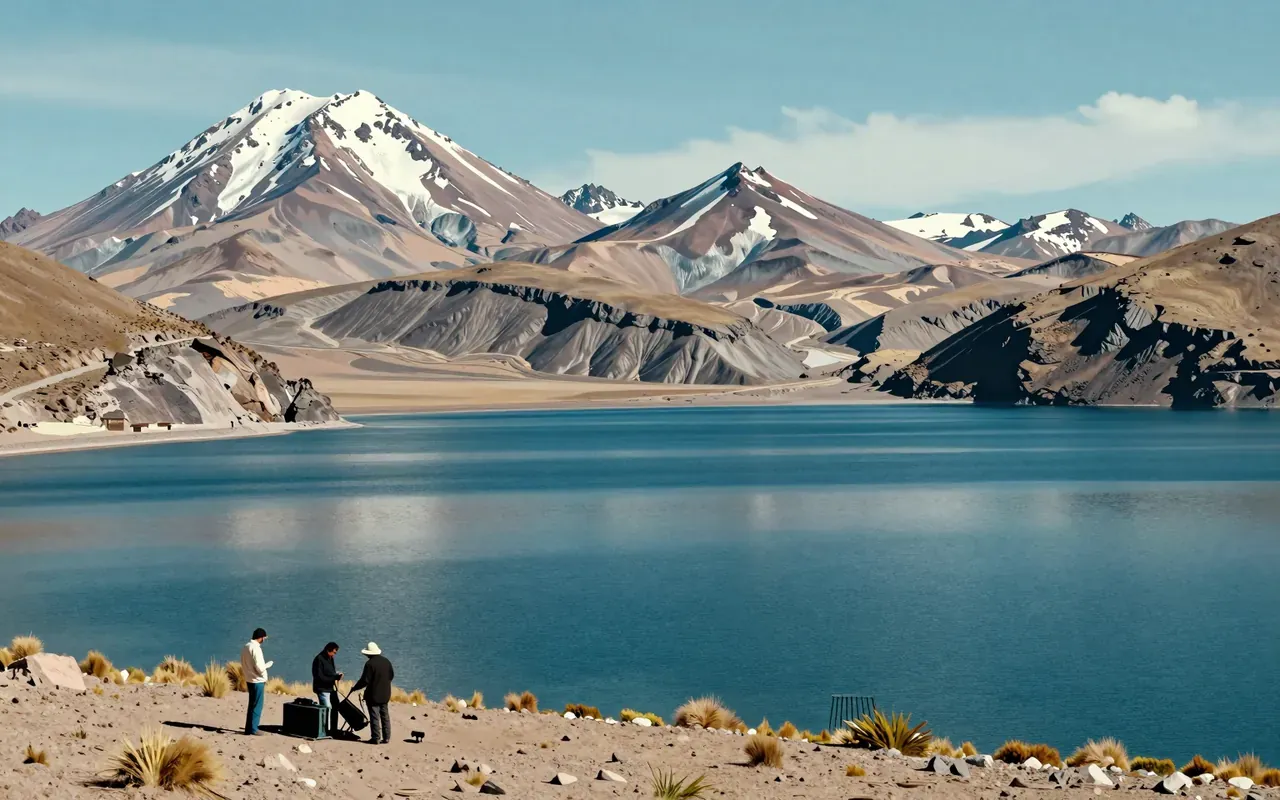
The highest navigable lake in the world isn’t just high—it’s sealed off, split in two, and teeming with life that shouldn’t survive there.

9:02