What the species is and where it came from
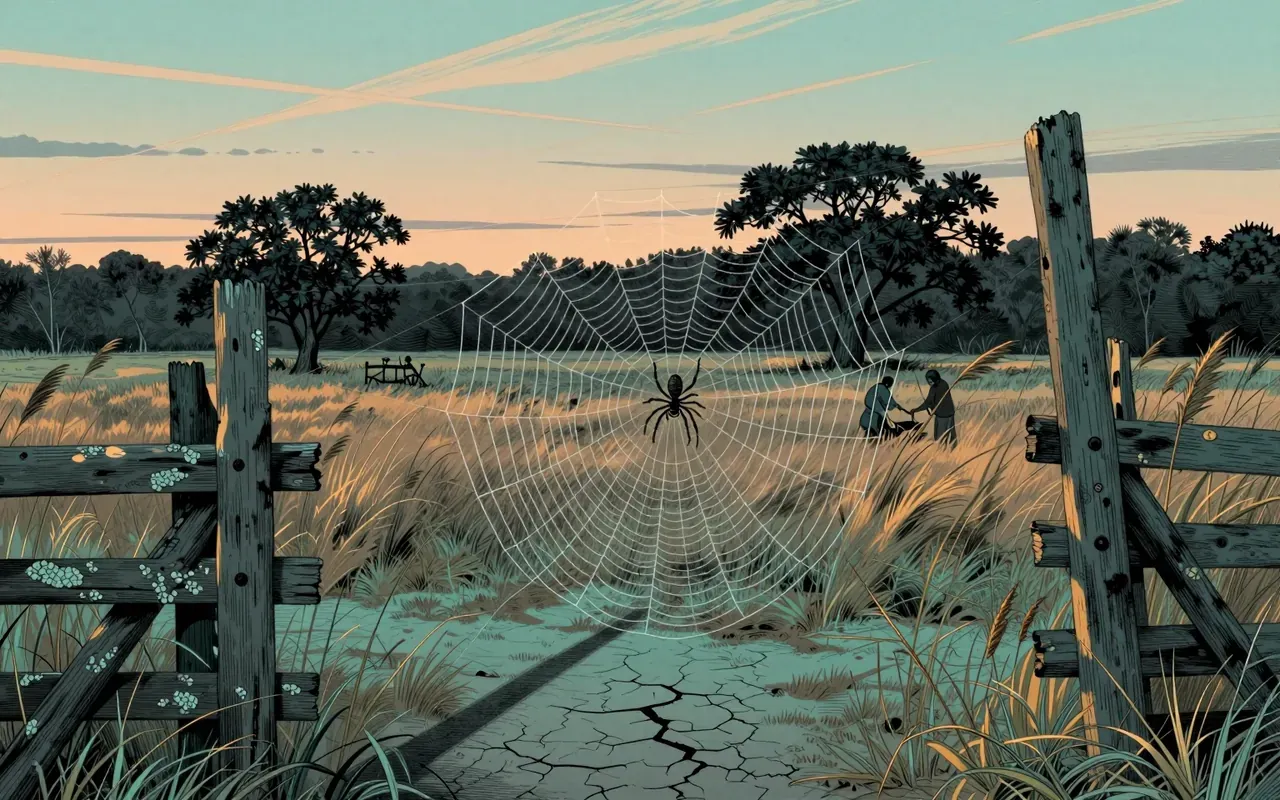
Orb-weaver spiders belong to the family Araneidae. They are the most common builders of spiral wheel-shaped webs in gardens, fields, and forests.
How it works, in terms someone would actually use
Orb-weavers build spiral wheel-shaped webs in gardens, fields, and forests. They float a silk line on the wind to anchor the web. They construct a nonsticky framework first, then add a sticky spiral with droplets. A third claw lets them walk on nonsticky silk. Prey insects blunder into the sticky lines, are stunned by a quick bite, then wrapped in silk.
What it gets right
They reliably rebuild functional webs daily. Their stereotyped sequence — wind-anchored framework, then sticky spiral — works where prey fly. Their third claw enables movement across nonsticky silk without entanglement.
What it does not
Orb-weavers do not maintain webs for more than a day. Their stickiness reduces capture success by increasing visibility to prey. They do not avoid rebuilding in the same location.
What it changed
Nothing is stated about what orb-weavers changed in ecosystems, evolution, or human practice.
Who it is for, and who it is not
It is for people who watch spiders build webs at dawn or dusk. It is not for those seeking cryptic behaviour, long-lived structures, or webs that hide from insect vision.
Is it worth your time
Yes — if you want to see daily engineering: web-building, consumption of the old web, and precise prey handling. No — if you expect long-term web use, camouflage, or passive waiting.