What the species is and where it came from
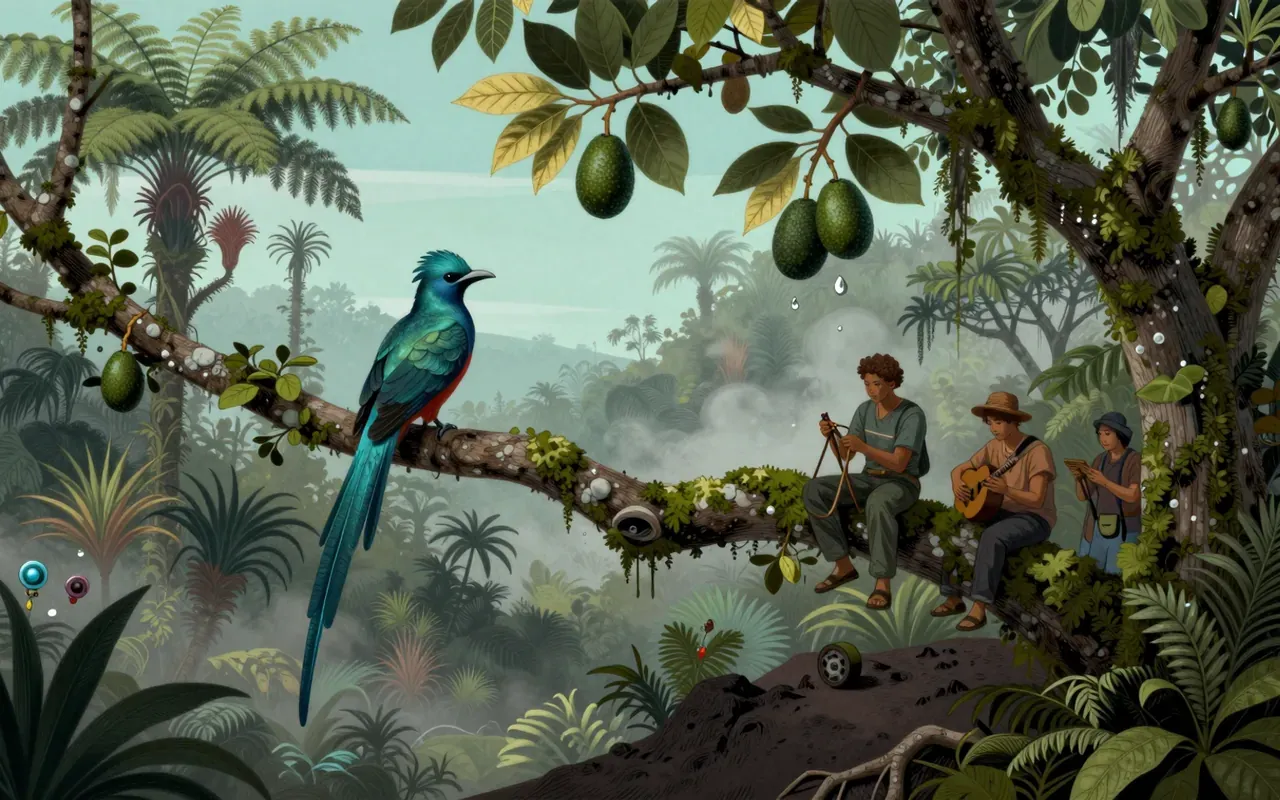
The resplendent quetzal (Pharomachrus mocinno) is a near-threatened trogon native to Central America and southern Mexico. It lives exclusively in montane cloud forests. Its plumage is colourful and complex, differing substantially between sexes.
How it works, in terms someone would actually use
It nests in holes it hollows in decaying trees or reuses from woodpeckers. Males incubate by day; females by night. It lays one to three eggs, hatching in 17–19 days. It eats mostly Lauraceae fruits, plus insects, lizards, frogs and snails. It migrates altitudinally—from forest slopes to canopy—tied to breeding.
What it gets right
It exploits decaying wood for nesting where few other birds do. Its sex-dimorphic plumage signals clear reproductive roles. Its reliance on Lauraceae ties it tightly to intact cloud forest structure.
What it does not
It does not maintain stable year-round residency at a single elevation. It does not eat only fruit. It does not nest on branches or build open cup nests. It does not incubate alone.
What it changed
Nothing is stated in the sources about what it changed in ecology, culture or science.
Who it is for, and who it is not
It is for field naturalists, cloud forest visitors, and conservation practitioners working in Central America or southern Mexico. It is not for casual birdwatchers outside its range, nor for those seeking low-effort sightings.
Is it worth your time
Yes—if you are in Central America or southern Mexico and can access montane cloud forest. Its iridescent plumage and altitudinal movement are observable, but only where habitat remains intact.