10:24in productionCh. 1 · Endemic/ 10:24 · ceiling 15 min
Birds · Conservation
Philippine eagle
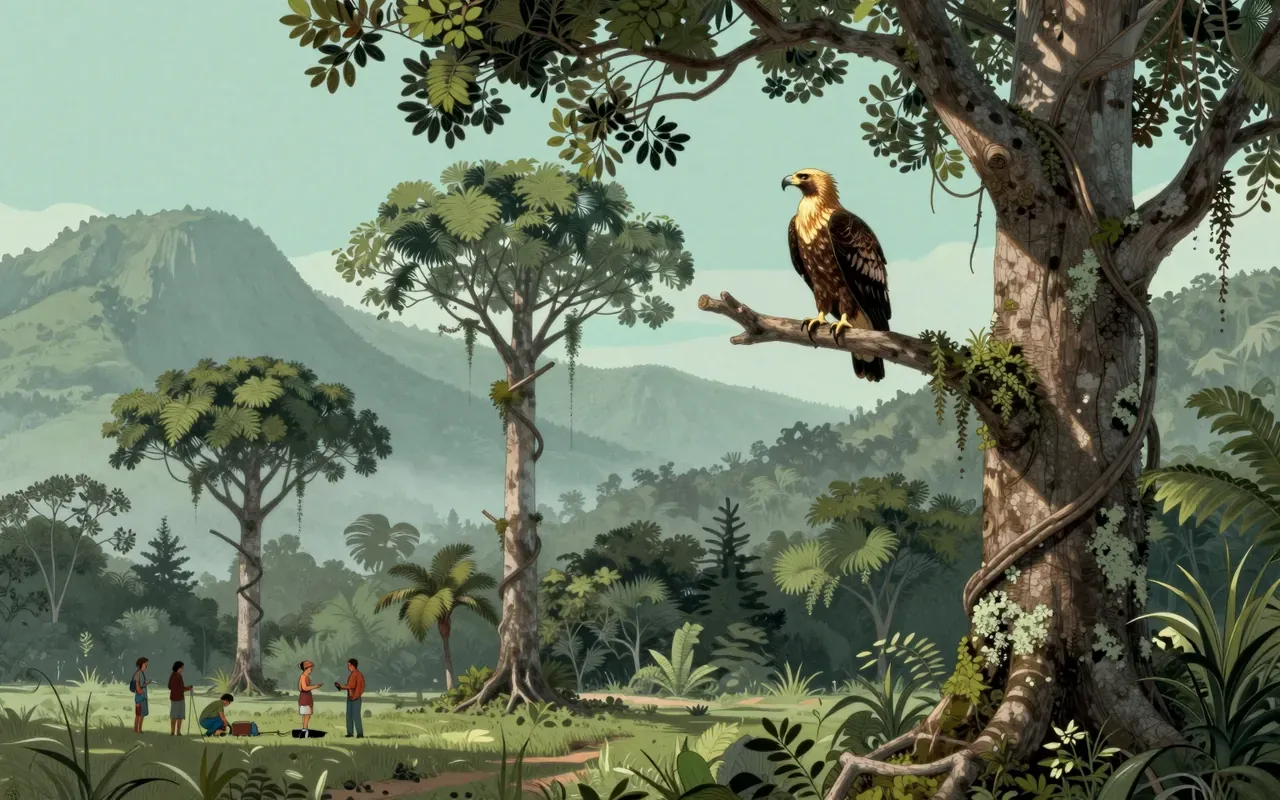
The Philippine eagle doesn’t need myth—it needs forest. And it’s running out.
The Philippine eagle is a forest-dependent raptor found only in the Philippines. It is the longest extant eagle and has the greatest wing surface area. Deforestation is its primary threat. Legal protection is strong on paper—up to 12 years’ imprisonment for killing it—but enforcement lags: over 20 eagles have been rescued from gunshot wounds since 2019. Its original name came from local reports in Bonga, Samar, not verified predation. It does not persist in degraded or fragmented forest. It does not breed reliably in captivity. It is critically endangered, with a declining population.
It lives only in Philippine forests—and nowhere else on Earth.
2:12
Largest in length
It is the longest eagle alive—and has the largest wing surface area.
3:20
Habitat loss is the main threat
Deforestation is killing it faster than laws can save it.
4:42
Law vs. reality
Killing it carries up to 12 years’ prison time—yet more than 20 have been shot since 2019.
5:48
Rescued, not recovered
Gunshot wounds are the most common injury among rescued eagles.
7:00
A name built on rumour
It was named 'monkey-eating eagle' from reports in Bonga, Samar—not from scientific observation.
Worth your time?
Yes. See the whole thing.
3.5/ 5
What works
endemism
size and structure
threat recognition
What does not
recover quickly from habitat loss
tolerate fragmented forest
breed in captivity at scale
avoid human conflict
See it if
field biologists
raptor conservationists
Filipino forest stewards
Skip it if
casual birdwatchers expecting reliable sightings
policymakers ignoring deforestation
The written brief1 min read
What the species is and where it came from
It is a critically endangered eagle, endemic to forests in the Philippines. It was first scientifically described in 1896 by John Whitehead in Bonga, Samar. Its first specimen was collected by his servant, Juan.
How it works, in terms someone would actually use
It hunts in the canopy of Philippine forests. It takes large prey. It nests high in emergent trees. It requires vast tracts of intact forest to survive.
What it gets right
It gets size and structure right: it is the largest extant eagle in length and wing surface area. It gets endemism right: it exists nowhere but Philippine forests. It gets threat recognition right: deforestation is its most significant danger.
What it does not
It does not recover quickly from habitat loss. It does not tolerate fragmented forest. It does not breed in captivity at scale. It does not avoid human conflict—more than 20 have been rescued from gunshot wounds since 2019.
What it changed
It changed how conservation law works in the Philippines. Killing it now carries up to 12 years’ imprisonment and heavy fines.
Who it is for, and who it is not
It is for field biologists, raptor conservationists, and Filipino forest stewards. It is not for casual birdwatchers expecting reliable sightings, or for policymakers ignoring deforestation.
Is it worth your time
Yes—if you are in the Philippines and can access remaining lowland and montane forests on Luzon, Samar, Leyte or Mindanao. No—if you expect to see it easily, or outside its shrinking forest range.