9:56in productionCh. 1 · White and large/ 9:56 · ceiling 15 min
Birds
Snowy owl
The only white owl breaks every rule—and pays for it.
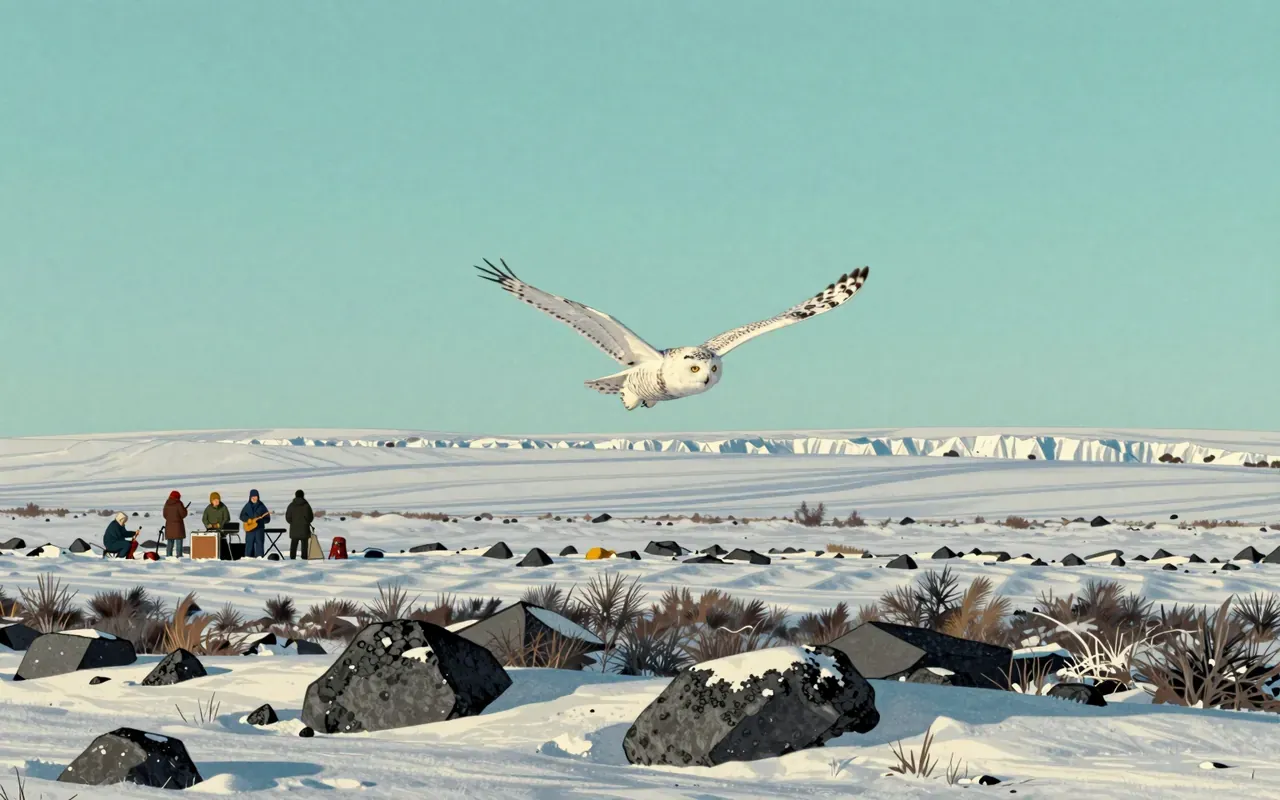
The snowy owl is a large, white true owl native to the Arctic tundra of North America and the Palearctic. It is the only owl with mainly white plumage. It is often active during the day—especially in summer—and has unique adaptations to its habitat and lifestyle. Males tend to be purer white; females have more dark brown flecks. Juvenile males resemble females until maturity. Wing marking composition is the most reliable method for aging and sexing individuals. Its diet centres on lemmings but expands opportunistically. It is classified as Vulnerable by the IUCN due to rapid population decline linked to climate-driven lemming collapse and anthropogenic threats.
It is the only owl with mostly white plumage—and one of the largest.
2:39
Daylight on the tundra
It lives and hunts on Arctic tundra—and does so by day, especially in summer.
3:52
How to tell them apart
Males whiten with age; females stay flecked; wing markings are the best way to tell them apart.
5:50
Unlike any other owl
Its adaptations—diurnality, plumage, habitat use—are unlike any other living owl.
Worth your time?
Yes. See the whole thing.
3.5/ 5
What works
hunts by day on open tundra
perches low or flies low, scanning for lemmings
uses white plumage for snow and ice camouflage
allows reliable ageing and sexing via wing markings
What does not
thrive outside the Arctic tundra
maintain stable numbers when lemming populations collapse
show consistent sexual dimorphism in juveniles
See it if
Arctic field observers
tundra ecologists
birders prepared to travel north in summer
Skip it if
casual backyard birdwatchers
those seeking predictable seasonal sightings
The written brief1 min read
What the species is and where it came from
The snowy owl is a large, white true owl native to the Arctic tundra of North America and the Palearctic. It is the only owl with mainly white plumage.
How it works, in terms someone would actually use
It hunts by day on open tundra. It perches low or flies low, scanning for lemmings. Its white plumage camouflages it against snow and ice. Wing markings let observers age and sex individuals reliably.
What it gets right
It gets Arctic survival right: white plumage, diurnal hunting, and lemming-specialised diet match the tundra’s light, openness, and prey cycles.
What it does not
It does not thrive outside the Arctic tundra. It does not maintain stable numbers when lemming populations collapse. It does not show consistent sexual dimorphism in juveniles—males resemble females until maturity.
What it changed
It changed how we think about owl behaviour: most owls are nocturnal; snowy owls are often active by day, especially in summer.
Who it is for, and who it is not
It is for Arctic field observers, tundra ecologists, and birders prepared to travel north in summer. It is not for casual backyard birdwatchers or those seeking predictable seasonal sightings.
Is it worth your time
Yes—if you are in the Arctic tundra in summer and want to see a large, diurnal, white owl hunting lemmings. No—if you expect forest owls, night activity, or stable populations.
The only desert where winter warmth and two rainy seasons let plants outcompete every other desert — and where flies evolved liver enzymes to nest in rotting cactus juice.