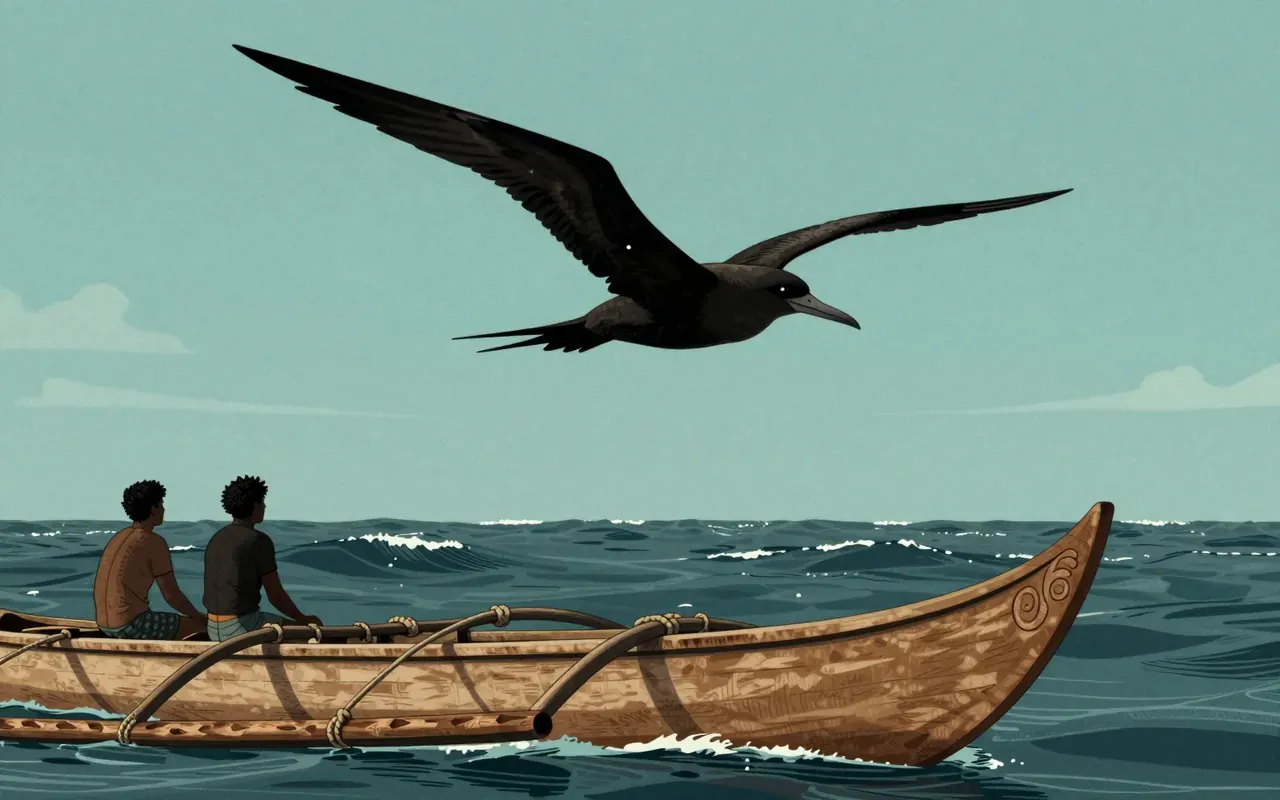
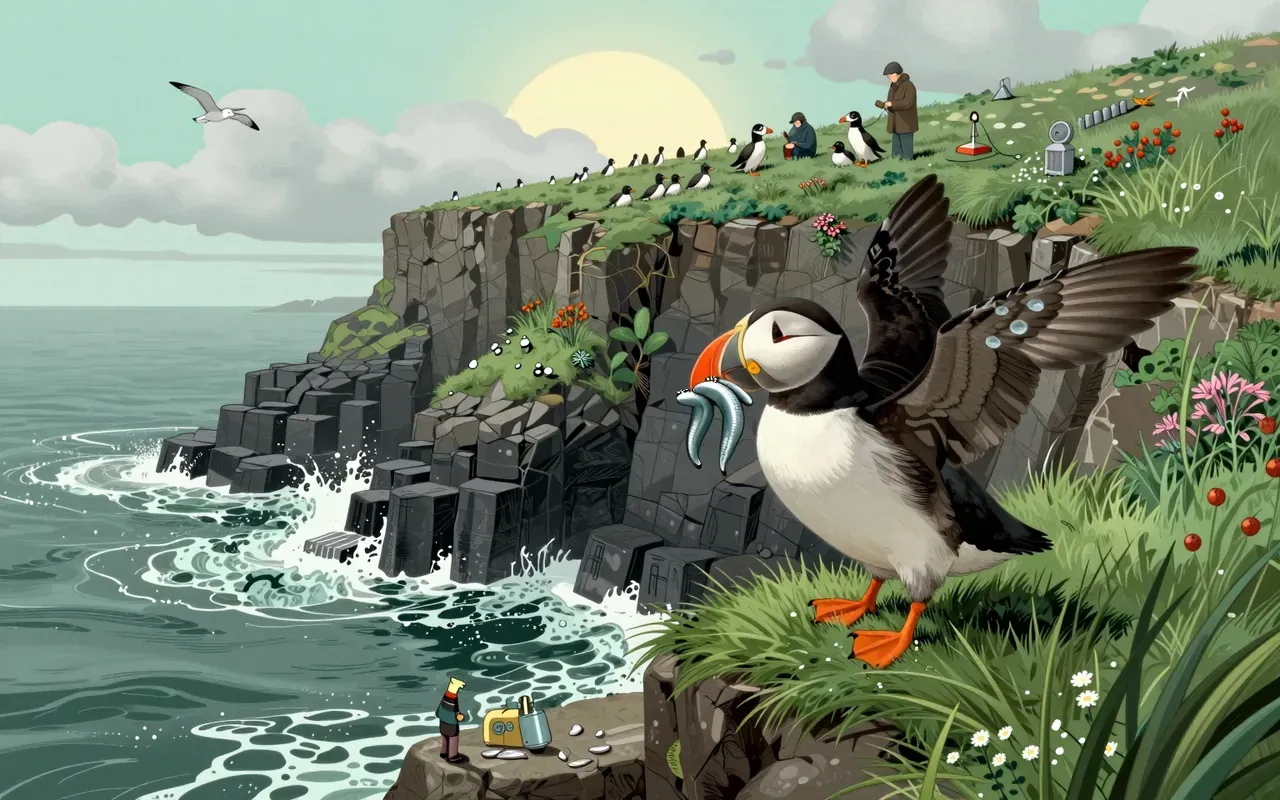
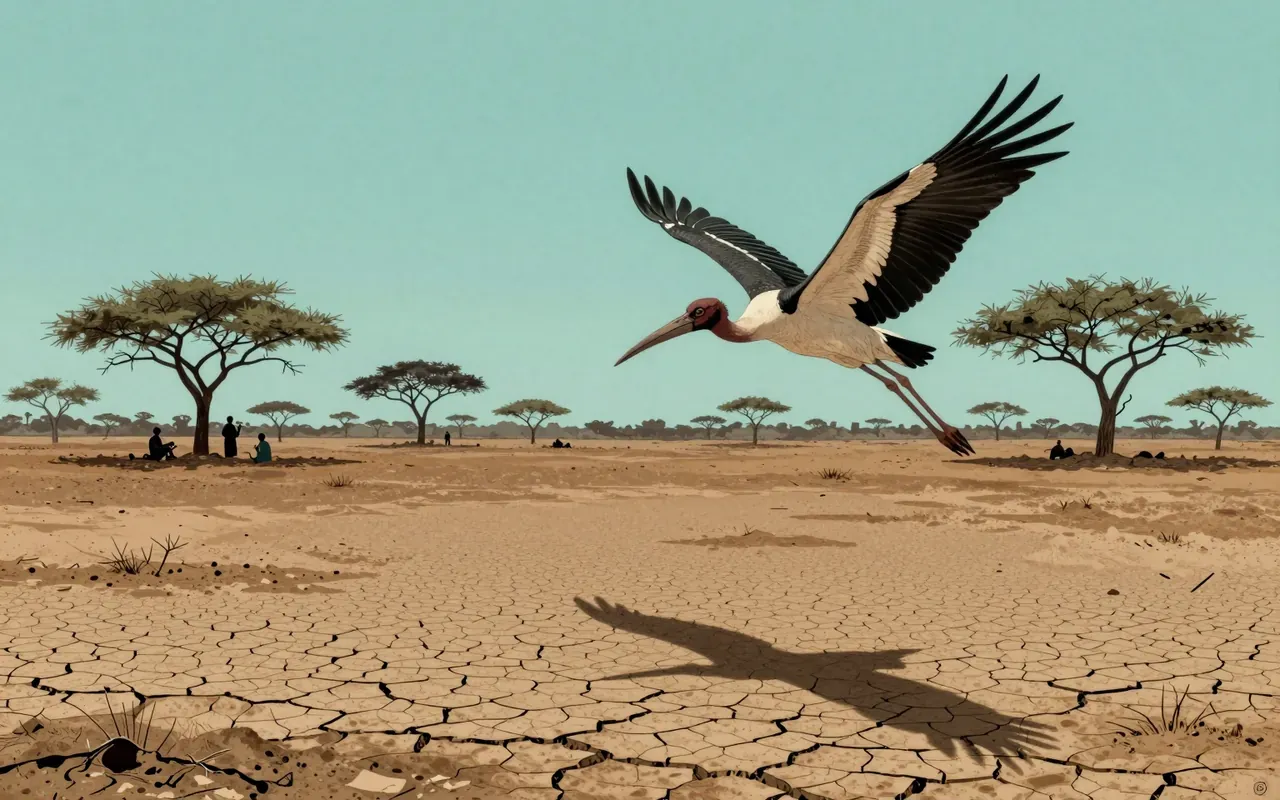
Frigatebirds are five extant seabird species in genus Fregata, family Fregatidae, found across tropical and subtropical oceans. They have black plumage, long forked tails, hooked bills, and males inflate a red gular pouch during breeding. They possess the largest wing-area-to-body-mass ratio of any bird, soar for weeks on wind currents, roost on trees or cliffs at night, eat fish and squid driven to the surface by predators like tuna, and practice kleptoparasitism—including snatching seabird chicks from nests. Two species are endangered due to restricted breeding ranges and anthropogenic threats.
Five living species—all in one genus, all in the family Fregatidae.
2:28
Built for air and display
Black plumage, forked tail, hooked bill—and a male’s inflatable red throat sac.
4:02
Engineered to stay aloft
Largest wing-area-to-body-mass ratio of any bird—and it soars for weeks without landing.
5:15
No diving. Just theft and opportunism
Eats only surface prey—chased up by tuna—or steals it from other birds.
1 more chapterFewer chapters
Worth your time?
Yes. See the whole thing.
4.5/ 5
What works
soar for weeks on wind currents
roost on trees or cliffs at night
hunt surface prey chased up by tuna
steal food from other seabirds
What does not
land on water
dive
feed young by regurgitation (not stated)
See it if
people who watch seabirds from cliffs or islands
people scanning horizons for soaring silhouettes
Skip it if
people expecting to see them wade, swim, or nest on open ground
Who should see it, and who should skipHide who it is for
The written brief1 min read
What the species is and where it came from
Frigatebirds are five extant seabird species in the genus Fregata, family Fregatidae, found across tropical and subtropical oceans.
How it works, in terms someone would actually use
Frigatebirds soar for weeks on wind currents. They roost on trees or cliffs at night. They hunt fish and squid driven to the surface by tuna. They steal food from other seabirds and snatch seabird chicks from nests.
What it gets right
Their wing-area-to-body-mass ratio is the largest of any bird. Their black plumage, forked tails, and hooked bills are consistent across all five species. Males inflate a red gular pouch; females have white underbellies.
What it does not
They do not land on water. They do not dive. They do not feed their young by regurgitation alone—the sources say nothing about feeding mechanics beyond kleptoparasitism and surface-snatching.
What it changed
Nothing is stated in the sources about what frigatebirds changed.
Who it is for, and who it is not
It is for people who watch seabirds from cliffs or islands, or scan horizons for soaring silhouettes. It is not for people expecting to see them wade, swim, or nest on open ground.
Is it worth your time
Yes—if you want to see a seabird that cannot land on water, steals meals mid-air, and inflates a red throat sac like a balloon to court mates.