9:02in productionCh. 1 · Origin/ 9:02 · ceiling 15 min
Birds · Conservation
Andean condor
A bald, red-faced sky-dominant scavenger that nests at 5,000 m—and refuses to do anything small.
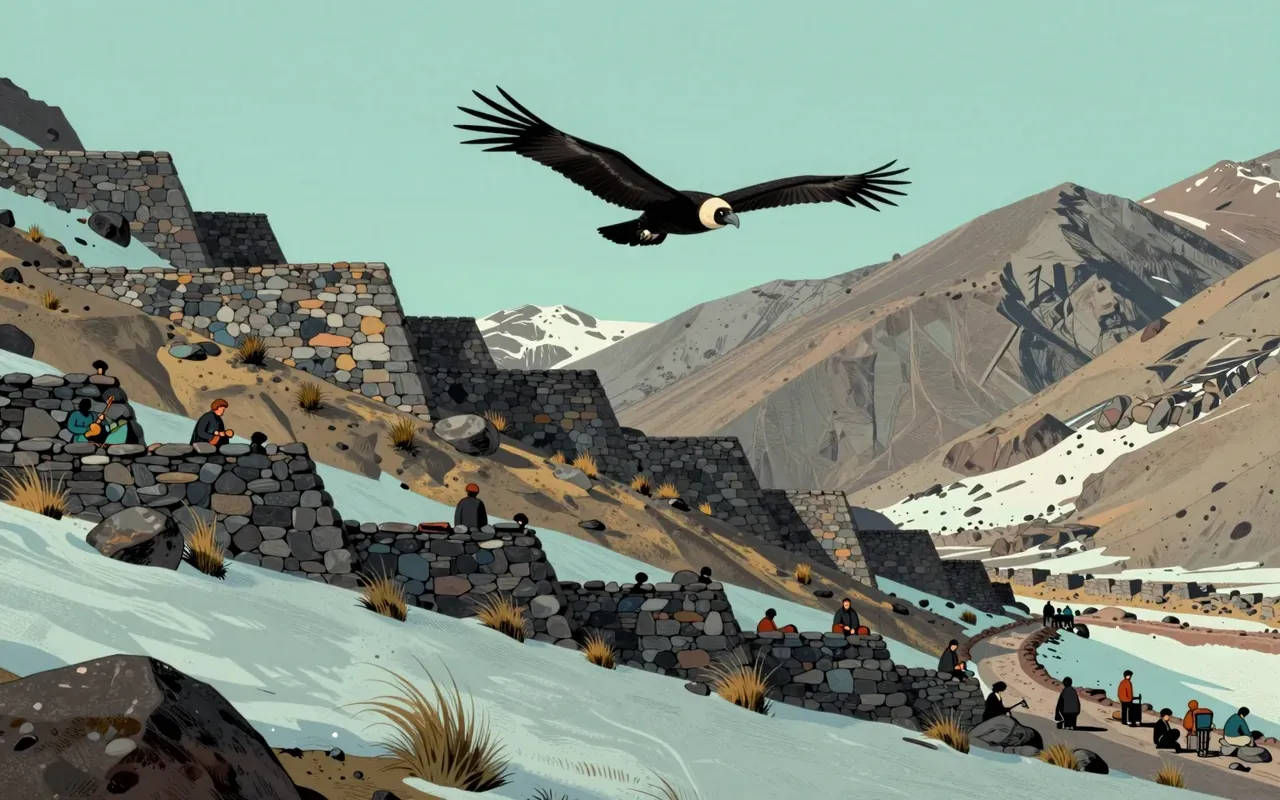
The Andean condor is the only extant member of the genus Vultur. It lives in the Andes and adjacent Pacific coasts of western South America. It has a wingspan of up to 3.3 m and weighs up to 15 kg. Its head and neck are nearly featherless and dull red, flushing with emotion. It is primarily a scavenger feeding on carrion, especially large carcasses like deer or cattle. It reaches sexual maturity at five or six years and nests on inaccessible rock ledges up to 5,000 m. One or two eggs are usually laid per clutch. Its conservation status is Vulnerable due to habitat loss and poisoning.
It is the sole survivor of its genus—and lives only in the Andes and along the Pacific coast of western South America.
2:29
Form
With a 3.3-m wingspan and a flushable red head, it is built for high-altitude soaring and emotional signalling.
3:46
Diet
It eats only carrion—and prefers large carcasses like deer and cattle.
5:15
Reproduction
It nests on inaccessible ledges up to 5,000 m—and lays one or two eggs per clutch.
Worth your time?
Yes. See the whole thing.
4.5/ 5
What works
soaring efficiency using thermals
thermal habitat use in open high-altitude terrain
carrion specialisation on large carcasses
What does not
hunt live prey
nest in trees or lowlands
feed on small carcasses or refuse
See it if
observers who value scale, altitude, and behavioural visibility
Skip it if
those seeking dense forest dwellers, active hunters, or low-elevation species
The written brief1 min read
What the species is and where it came from
The Andean condor (Vultur gryphus) is the only living species in the genus Vultur. It is native to the Andes mountains and adjacent Pacific coasts of western South America.
How it works, in terms someone would actually use
It soars on thermals over the Andes and Pacific coasts. It feeds on deer and cattle carcasses. It nests on rock ledges up to 5,000 m. Its bald red head flushes with emotion.
What it gets right
It gets soaring efficiency right—using thermals to cover vast distances without flapping. It gets thermal habitat use right—staying where updrafts and open terrain meet. It gets carrion specialisation right—focusing on large, predictable kills.
What it does not
It does not hunt live prey. It does not nest in trees or lowland forests. It does not feed on small carcasses or refuse.
What it changed
Nothing is stated in the sources about what it changed.
Who it is for, and who it is not
It is for observers who value scale, altitude, and behavioural visibility. It is not for those seeking dense forest dwellers, active hunters, or low-elevation species.
Is it worth your time
Yes—if you’re in western South America and want to see a scavenger that dominates the sky, nests at extreme altitude, and signals mood with its face.