naturebriefs
8:12in productionCh. 1 · Name and origin/ 8:12 · ceiling 15 min
Fish & sea life · Evolution

Anglerfish

Predation by puppetry. Reproduction by fusion. Evolution without compromise.

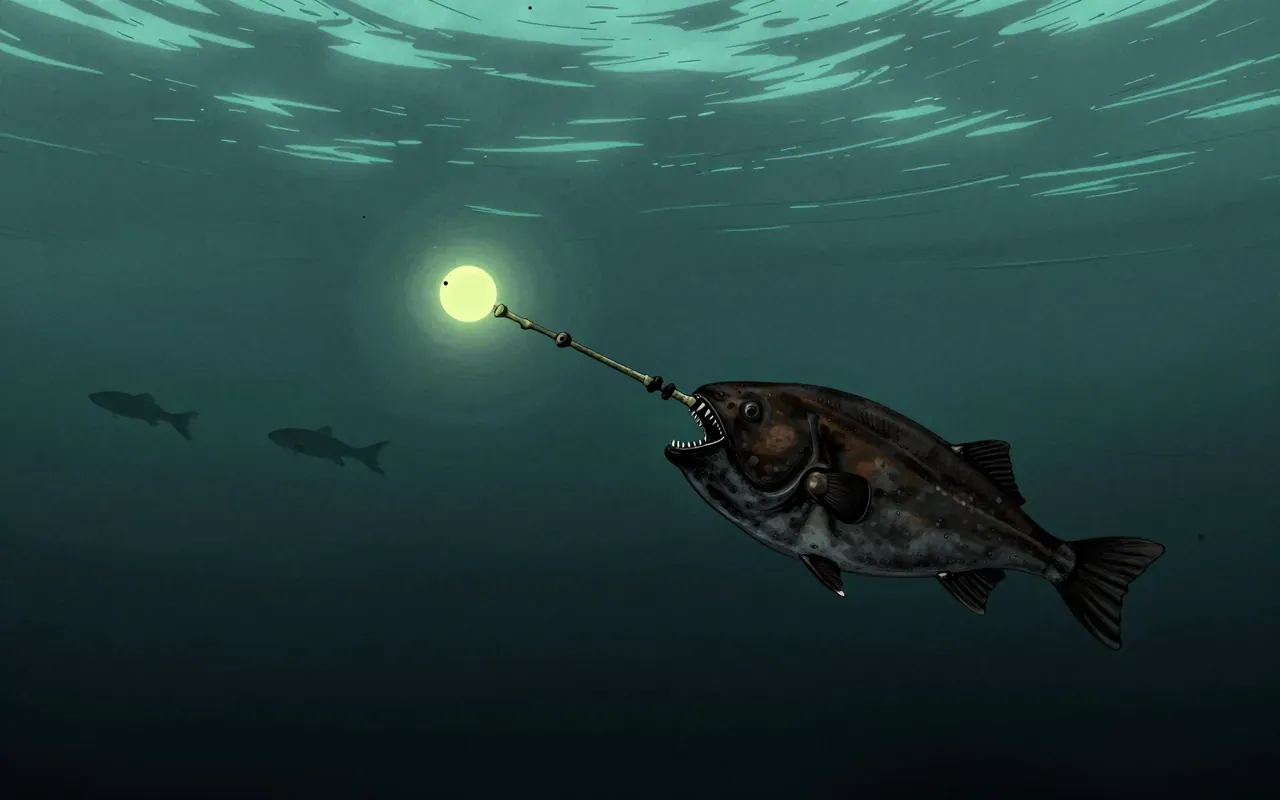
Anglerfish are not one thing. They are a global order defined by a single predatory innovation — the illicium-esca — deployed across habitats, depths and reproductive strategies. Their extremity is precise, not theatrical.

Chapters & takeaways4
  1. 0:53
    Name and origin

    Lophiiformes means 'crest-bearing' — and every species bears a lure.

  2. 2:24
    How the lure works — and where

    The lure isn’t generic: it’s tuned to specific prey, and the fish’s lifestyle splits cleanly — bottom-dwellers versus open-water floaters.

  3. 3:52
    Sexual parasitism is real

    Females dwarf males — and in deep-sea species, males attach, fuse, and become permanent reproductive appendages.

  4. 5:01
    Worldwide, but never uniform

    They live everywhere — from tide pools to abyssal plains — but never all in the same way.

Worth your time?

Yes. See the whole thing.

4.5/ 5
What works
  • illicium-esca specificity
  • sexual parasitism as observed
  • global distribution
  • habitat split (demersal vs pelagic)
What does not
  • conservation status
  • lifespan
  • clutch size
  • population numbers
See it if
  • biologists
  • deep-sea observers
  • students of sexual selection
Skip it if
  • casual beachcombers
  • aquarium hobbyists seeking easy care
The written brief1 min read

What the species is and where it came from

Anglerfish are ray-finned fish in the order Lophiiformes, named for their luring predation method.

How it works, in terms someone would actually use

It lures prey with a modified dorsal fin ray — the illicium — tipped with a bioluminescent, chemically tuned or mimetic lure called the esca.

What it gets right

It gets predation right: the illicium-esca apparatus is adapted to attract specific prey, not just any small fish or crustacean.

What it does not

It does not occupy a single habitat type. It is neither exclusively deep-sea nor shallow-water, neither pelagic nor demersal across the order.

What it changed

It redefined what parasitism means in reproduction: male anglerfish fuse permanently to females in deep-sea species, becoming mobile gonads.

Who it is for, and who it is not

It is for people who watch the ocean’s edges and depths and ask how form follows function — not for those who want neat ecological categories or tidy conservation narratives.

Is it worth your time

Yes — if you want to see how predation, sexual strategy and habitat use converge in one extreme evolutionary package.
Same habitat · Fish & sea life4 of 46
10:23
MacrocystisMacrocystis pyrifera is a monospecific brown alga that forms extensive underwater forests on rocky substrata in cool, nutrient-rich waters across the Southern Hemisphere and northeast Pacific. It grows up to 60 cm per day, reaches over 45 m in length, and uses pneumatocysts to maintain canopy structure. It supports biodiversity, alters hydrodynamics, and locally raises pH—but only where temperatures stay below 21 °C and urchin pressure remains low. Its taxonomy was consolidated in 2009–2010. Conservation status varies: endangered in Australia, At Risk–Declining in New Zealand.
8:47
OrcaOrca is a cosmopolitan toothed whale—the largest oceanic dolphin—with population-specific diets and intergenerationally transmitted behaviours. Its individual identification via dorsal fin and saddle patch enables precise photographic census. The IUCN lists it as data deficient due to unresolved taxonomic questions. Indigenous peoples in the Pacific Northwest, Australia, and Peru revere it; Western cultures historically feared it.
8:36
TetraodontidaeTetraodontidae is a family of marine and freshwater fish in the order Tetraodontiformes, characterised by four fused beak-like teeth, absence of ribs and pelvic fins, and a specialised defence mechanism involving stomach inflation and dermal spines. Most species are toxic due to tetrodotoxin concentrated in liver and skin, though some — like Sphoeroides maculatus — are nontoxic and consumed as delicacies. They inhabit tropical, temperate, and freshwater ecosystems; diet centres on algae and small invertebrates; and key adaptations include inflation, independent eye movement, colour change, and aposematic colouration.
8:27
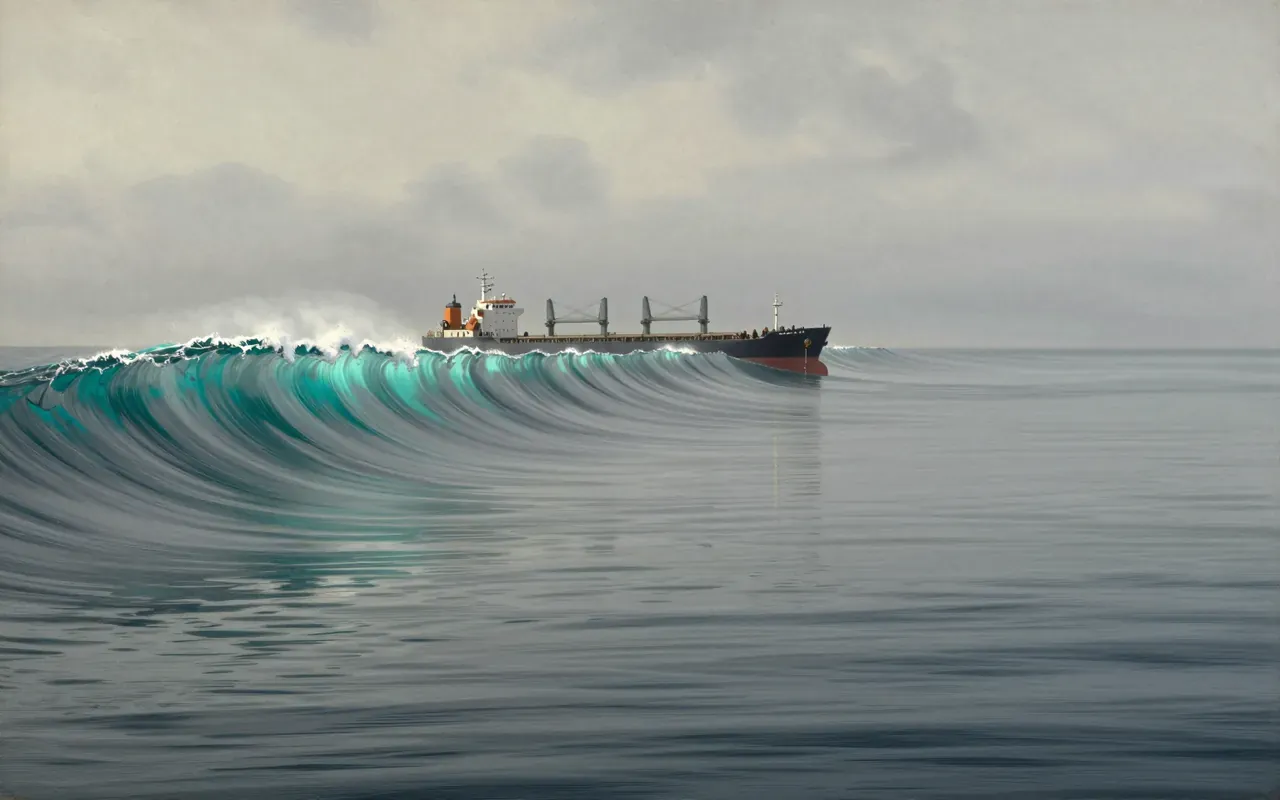
Rogue waveRogue waves are transient, non-biological oceanic events—defined, observed, replicated, and hazardous. They do not inhabit, reproduce, migrate, or evolve. They are physics made visible.
Up next in Nature

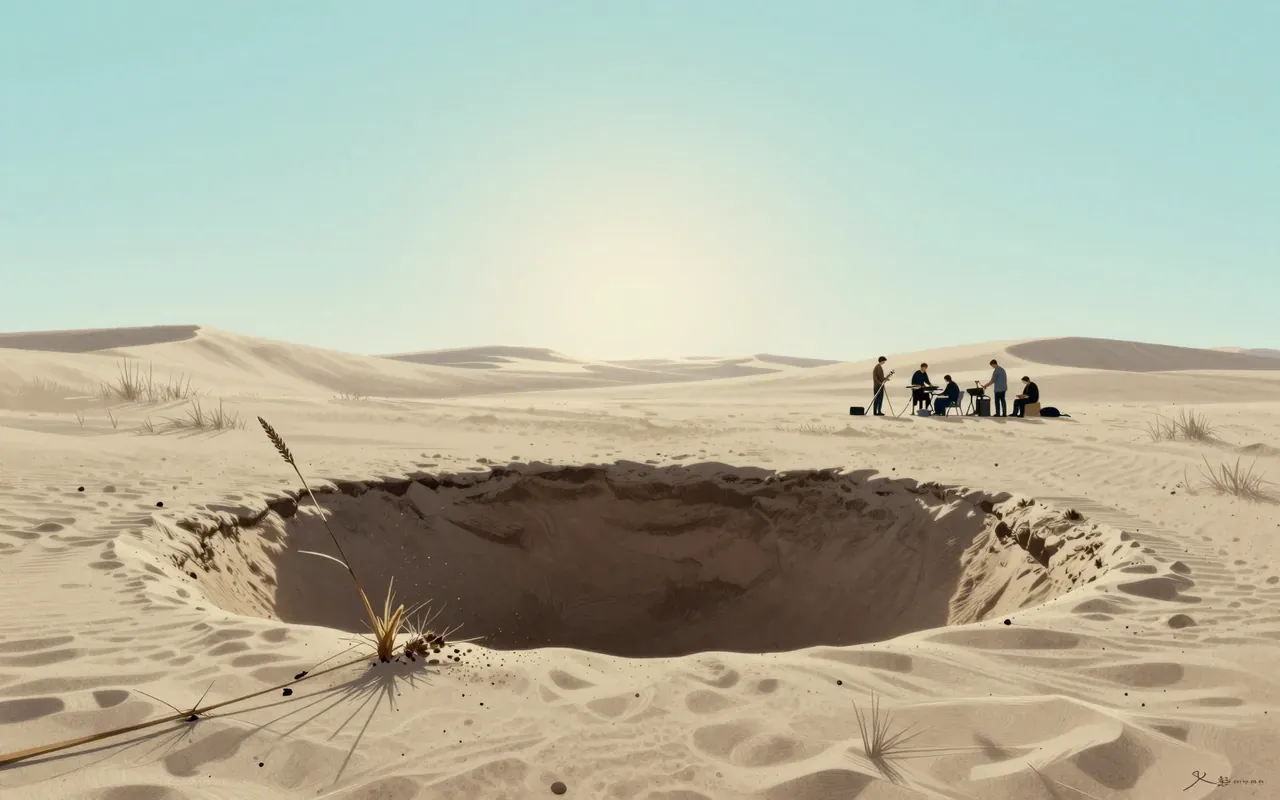
Antlion

· 7:56

A sand-trap assassin that plays dead—and wins.

7:56