What the species is and where it came from
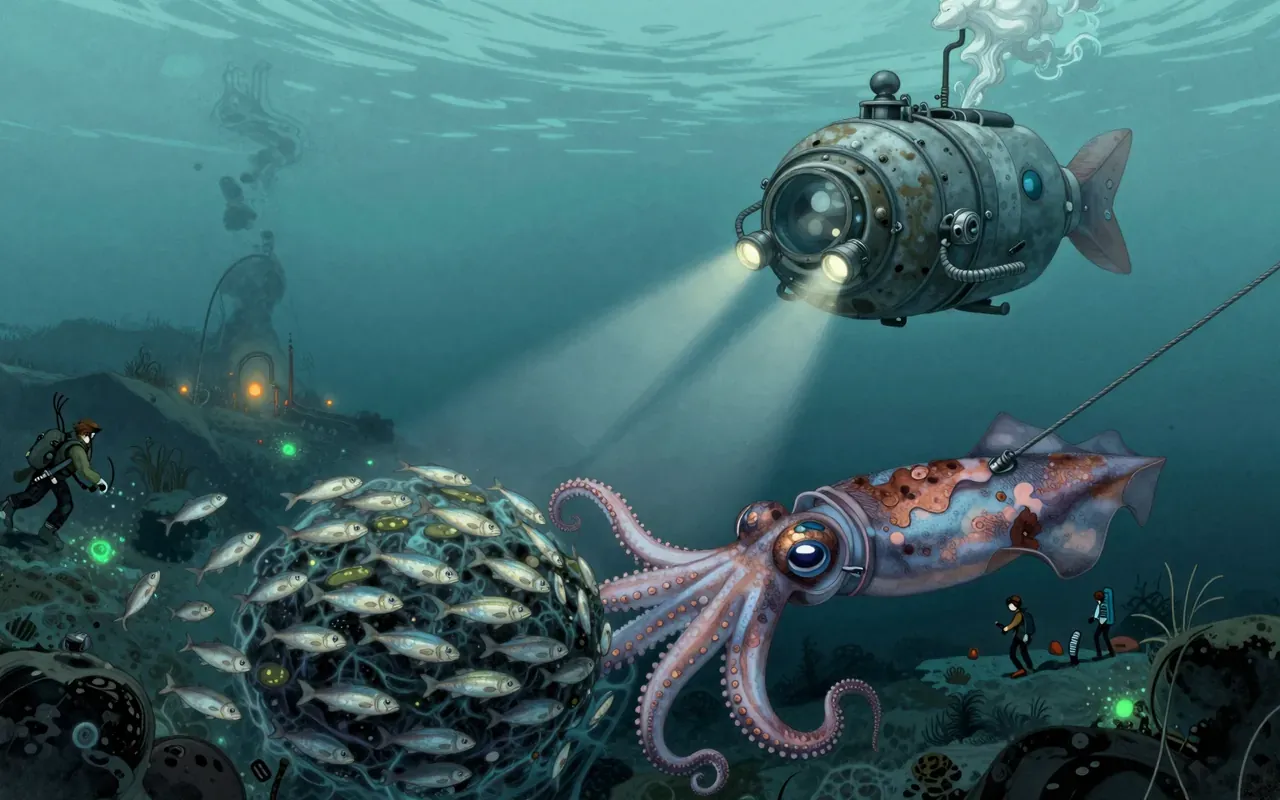
Architeuthis dux is a deep-ocean cephalopod. Its range is global. It was first imaged alive on land in Japan in 2002, then in its habitat in 2004.
How it works, in terms someone would actually use
It uses ammonium chloride solution for neutral buoyancy in the deep ocean. It hunts aggressively, not passively. It has a globally distributed range and exhibits sexual dimorphism.
What it gets right
It gets right the global genetic unity of Architeuthis dux. Mitochondrial DNA shows just 181 base-pair differences across 20,331—supporting one worldwide species.
What it does not
It does not establish lifespan, clutch size, population trend, or conservation status. It does not confirm social behaviour, migration routes, or predation pressure beyond sperm whales.
What it changed
It changed the idea that giant squid are passive drifters. The 2004 photographs proved active, aggressive hunting in situ.
Who it is for, and who it is not
It is for marine biologists, deep-sea ecologists, and cephalopod specialists. It is not for educators needing classroom-ready life-cycle diagrams or conservation practitioners requiring IUCN-grade metrics.
Is it worth your time
Yes—if you want to see how a deep-ocean predator defies old assumptions about cephalopod behaviour. No—if you expect clear visuals, stable populations, or direct ecological impact data.