naturebriefs
10:23in productionCh. 1 · One Kelp, Not Many/ 10:23 · ceiling 15 min
Habitats · Fish & sea life

Macrocystis

It’s not a plant—it’s a buoyant, pH-shifting, taxonomically streamlined giant that collapses under heat, urchins, and pollution.

Macrocystis pyrifera is a monospecific brown alga that forms extensive underwater forests on rocky substrata in cool, nutrient-rich waters across the Southern Hemisphere and northeast Pacific. It grows up to 60 cm per day, reaches over 45 m in length, and uses pneumatocysts to maintain canopy structure. It supports biodiversity, alters hydrodynamics, and locally raises pH—but only where temperatures stay below 21 °C and urchin pressure remains low. Its taxonomy was consolidated in 2009–2010. Conservation status varies: endangered in Australia, At Risk–Declining in New Zealand.

Chapters & takeaways6
  1. 0:55
    One Kelp, Not Many

    Macrocystis is one species—not many—and that was settled by lab and field work in 2009–2010.

  2. 2:00
    How It Lifts, Grows, and Stretches

    Pneumatocysts lift it; growth hits 60 cm a day; length exceeds 45 m.

  3. 3:03
    The Fastest Internal Highway

    Nutrients race up its stipe at 60 cm per hour—faster than most vascular plants move sugars.

  4. 4:28
    A Living Antacid

    Under summer light, its forests raise local pH by 0.15 units in 10 days—measurable ocean acidification mitigation.

  5. 5:34
    Speed Is Its Signature

    It ranks among Earth’s fastest-growing organisms—no qualifiers, no comparisons needed.

  6. 7:00
    Where It Holds—and Where It Fails

    It builds habitat, buffers chemistry, and collapses predictably—when water warms, urchins surge, or pollutants arrive.

Worth your time?

Yes. See the whole thing.

4.5/ 5
What works
  • forms dense three-dimensional forests
  • shelters marine life
  • damps currents
  • reduces light penetration
What does not
  • persist in warming waters
  • survive prolonged El Niño events
  • resist sea urchin overgrazing
  • tolerate pollution
See it if
  • marine ecologists
  • coastal conservation practitioners
  • divers in known kelp forest zones
Skip it if
  • freshwater biologists
  • tropical reef surveyors
  • inland educators without access to live or high-fidelity imagery
The written brief1 min read

What the species is and where it came from

Macrocystis is a monospecific genus of brown algae. Its sole species is Macrocystis pyrifera—giant kelp. It occurs in temperate and sub-Antarctic oceans of the Southern Hemisphere and northeast Pacific.

How it works, in terms someone would actually use

Macrocystis pyrifera anchors to rocky seabeds in cool, nutrient-rich waters below 21 °C. Its pneumatocysts lift fronds to the surface, forming floating canopies. Nutrients move along its stipe at up to 60 cm per hour. It grows up to 60 cm per day and exceeds 45 m in length.

What it gets right

It reliably forms dense, three-dimensional forests that shelter marine life, damp currents, reduce light penetration, and locally raise pH by 0.15 units over 10 days during summer daylight.

What it does not

It does not persist in warming waters. It does not survive prolonged El Niño events. It does not resist sea urchin overgrazing. It does not tolerate pollution.

What it changed

It redefined kelp taxonomy: molecular and morphological work in 2009–2010 collapsed former species (M. integrifolia, M. angustifolia) into a single species, M. pyrifera.

Who it is for, and who it is not

It is for marine ecologists, coastal conservation practitioners, and divers in known kelp forest zones. It is not for freshwater biologists, tropical reef surveyors, or inland educators without access to live or high-fidelity imagery.

Is it worth your time

Yes—if you are diving or snorkelling in temperate rocky reefs where it persists, or studying local pH shifts, canopy-driven current changes, or sea urchin–kelp dynamics.
Same habitat · Habitats4 of 107
8:09
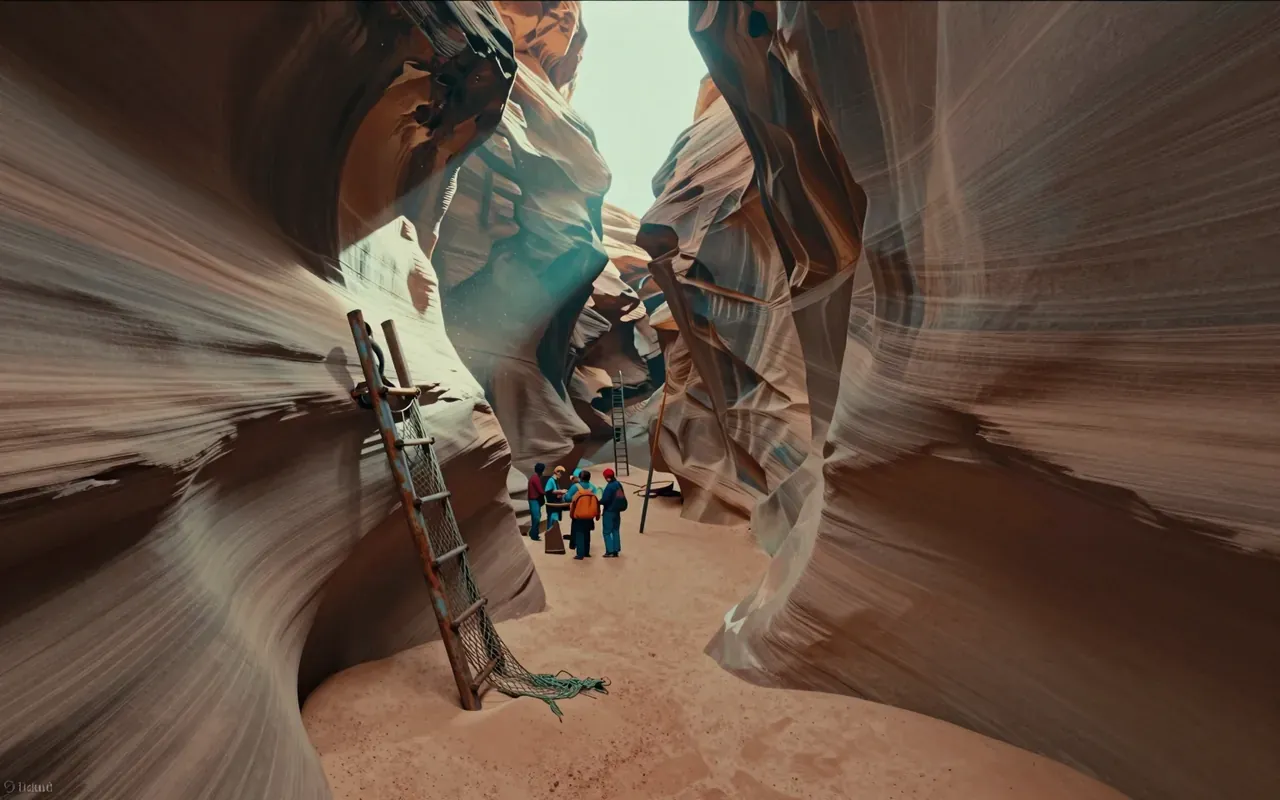
Antelope CanyonAntelope Canyon is a slot canyon on Navajo land in the American Southwest, formed by flash flood erosion of Navajo Sandstone. Monsoon rainwater carries sand into narrow passageways, deepening corridors and smoothing edges into flowing shapes. A flash flood on August 12, 1997 killed eleven tourists in Lower Antelope Canyon — triggered by an upstream thunderstorm 7 miles away. That event replaced amateur wood ladders with bolted systems and cargo nets. Today, a NOAA Weather Radio and alarm horn stand at the fee booth to warn of incoming floods. The canyon remains dangerous, managed, and visually singular.
10:00
TundraThe tundra is a biome defined by frigid temperatures and short growing seasons that inhibit tree growth. It occurs in three regional forms — Arctic, Alpine, and Antarctic. Its vegetation comprises low-growing plants such as dwarf shrubs, sedges, grasses, mosses, and lichens. Soils are nutrient-rich (nitrogen, phosphorus) and store vast amounts of carbon in permafrost, acting as a carbon sink — but warming-induced thaw releases greenhouse gases, creating a climate feedback loop.
9:39
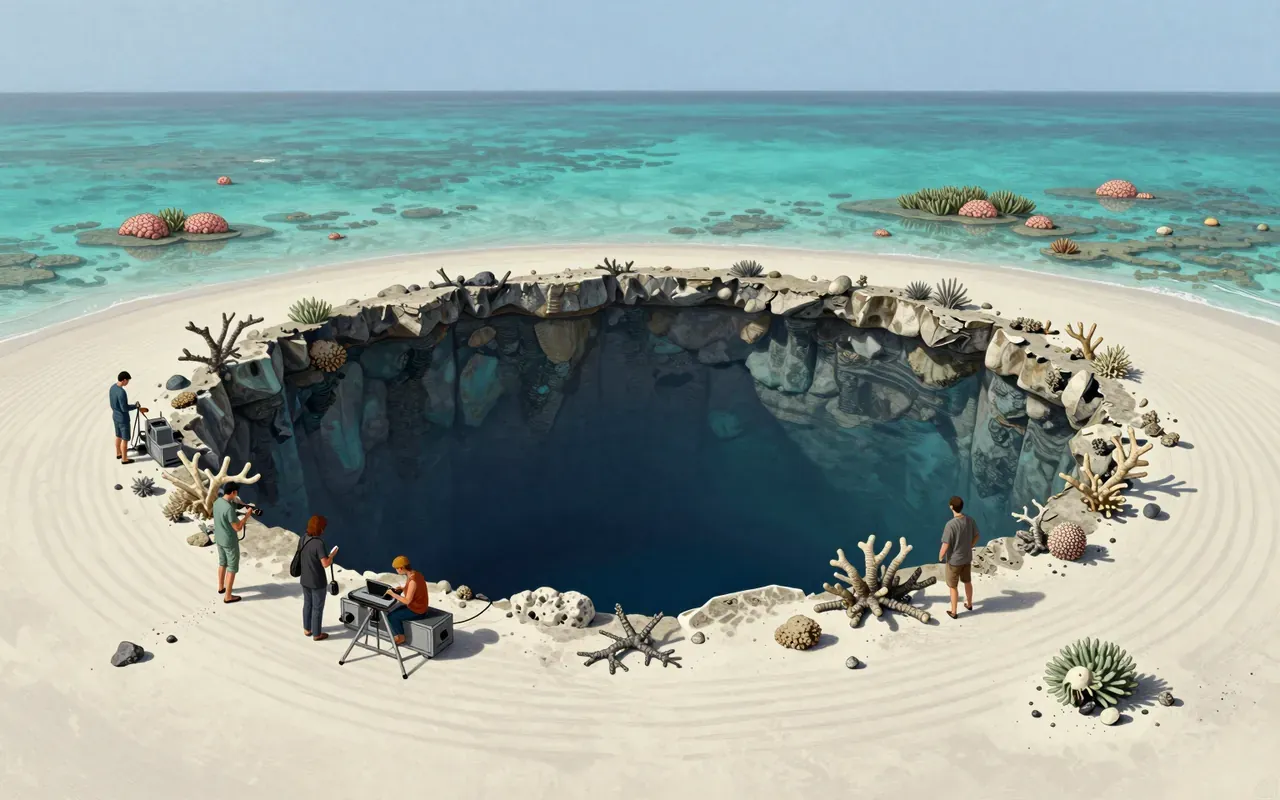
Blue holeBlue holes are marine sinkholes in carbonate bedrock, formed during ice ages when lower sea levels exposed limestone to rain and chemical weathering. They contain tidally influenced but poorly circulated water — fresh, marine or mixed — with sharp haloclines and anoxic deep zones that host bacteria but exclude most marine life. Their high transparency and white carbonate sand produce the signature deep blue colour. They differ from cenotes by holding seawater, not freshwater. They serve as sediment traps preserving climate and fossil records.
8:12
Bryce Canyon National Park1928Bryce Canyon National Park (1928) is a U.S. national park in southwestern Utah. It lies on the Paunsaugunt Plateau within the Colorado Plateau. Its defining features are amphitheater-shaped erosional basins—not canyons—and hoodoos formed by frost weathering and stream erosion of Cenozoic sedimentary rock. Colours derive from hematite (orange), limonite (yellow), and pyrolusite (purple). It experiences a Dsb continental climate. Elevations range from 6,620 to 9,105 feet.
Up next in Nature

Sequoiadendron giganteum

· 10:26

The largest living things on Earth are dying—and their survival depends on fire they can no longer withstand.

10:26