Saved
Fish & sea life · Evolution

Hammerhead shark

Its head isn’t for turning — it’s a vertical radar dish with built-in depth perception.

Worth your time?4.5/5Yes.See the whole thing.What works, what does not, who it is for ↓
10:48in productionCh. 1 · What the head is for/ 10:48 · ceiling 15 min
6 chapters · 10:48Ceiling 15:00

The brief is written and checked. The video joins this page when it is cut.6 chapters · 1 min read · 10:48 planned

Read the brief

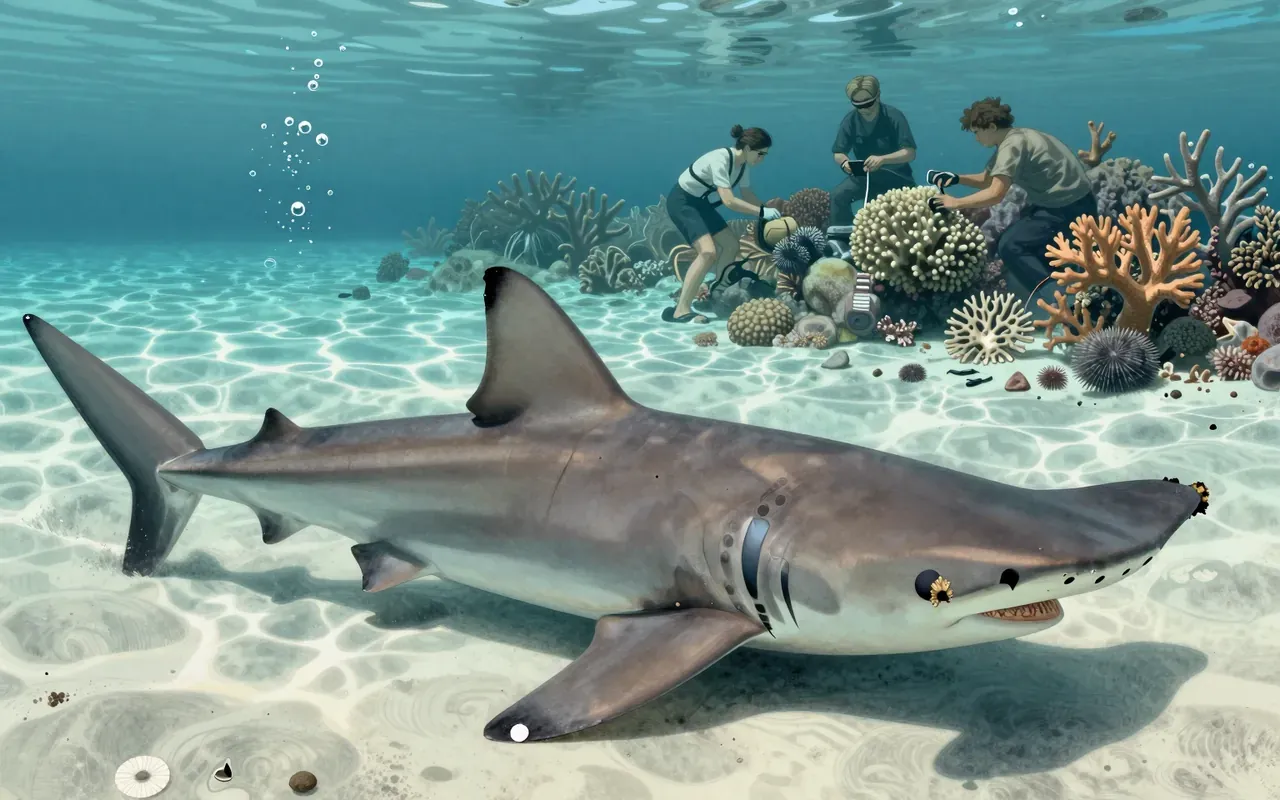
Hammerhead sharks are defined by the cephalofoil — a T-shaped head extension used for vertical vision, depth perception and expanded electroreception. They inhabit warm coastal waters and continental shelves. Their diet includes fish, squid, octopus and crustaceans. Great and scalloped hammerheads are endangered per IUCN 2008. The bonnethead reproduces asexually; the winghead’s large hammer suggests ancestral hammerheads had large cephalofoils; vertebral anatomy — not head shape — enables turning.

Chapters & takeaways6
  1. 1:00
    What the head is for

    The cephalofoil is a structural definition — not an ornament — with eyes at opposite ends and mouth centred underneath.

  2. 1:53
    Vertical vision, not wide-angle

    It sees above and below at once — and judges distance better than most sharks — because eyes are spaced wide on the hammer.

  3. 3:16
    A sensory antenna, not a nose

    More surface area for ampullae of Lorenzini means a larger electric-field antenna — scanning wider, not deeper.

  4. 4:33
    Vertebrae turn, head lifts

    Turning is powered by vertebrae, not head shape — the hammer lifts, but doesn’t steer.

  5. 5:33
    Big hammers came first

    The winghead shark’s oversized hammer suggests the first hammerheads evolved large cephalofoils — not small ones that grew.

  6. 6:56
    One sex, no sperm

    Bonnetheads reproduce without males — the only shark confirmed to do so — via automictic parthenogenesis.

3 more chaptersFewer chapters
Worth your time?

Yes. See the whole thing.

4.5/ 5
What works
  • 360° vertical vision
  • enhanced binocular depth perception
  • expanded electroreceptor surface area
  • vertebral-driven turning with cephalofoil lift
What does not
  • improve horizontal field-of-view
  • enable sharp turning alone
  • enhance olfaction or lateral line function
  • extend lifespan or population resilience
See it if
  • divers
  • marine biologists
  • fisheries observers
Skip it if
  • deep-ocean researchers
  • freshwater ecologists
  • temperate or polar system specialists
Who should see it, and who should skipHide who it is for
The written brief1 min read

What the species is and where it came from

Hammerhead sharks are a family (Sphyrnidae) defined by the cephalofoil — a flattened, laterally extended head — found in warm-water coastlines and continental shelves.

How it works, in terms someone would actually use

The hammerhead shark uses its T-shaped cephalofoil to see above and below simultaneously, detect prey electric fields more effectively, and gain depth perception — all while turning via vertebral mechanics, not head shape.

What it gets right

It gets vertical vision right: 360° coverage above and below. It gets sensory antenna design right: wider ampullae of Lorenzini distribution improves detection range. It gets binocular precision right: eye separation enhances depth perception for striking prey.

What it does not

It does not confer superior horizontal field-of-view. It does not make sharp turns possible alone. It does not improve olfaction or lateral line function. It does not extend lifespan, clutch size or population resilience.

What it changed

It overturned the assumption that head shape drives manoeuvrability: vertebral anatomy does, with the cephalofoil acting secondarily for lift — shifting how we assess form-function relationships in swimming predators.

Who it is for, and who it is not

It is for divers, marine biologists, and fisheries observers working where fish, squid, octopus and crustaceans gather. It is not for deep-ocean researchers, freshwater ecologists, or those studying temperate or polar systems.

Is it worth your time

Yes, if you want to see a vertebrate sensory system re-engineered for vertical surveillance and electroreceptive sweep — not as an evolutionary curiosity, but as a working solution tested in warm coastal waters.
Same habitat · Fish & sea life4 of 50
10:50
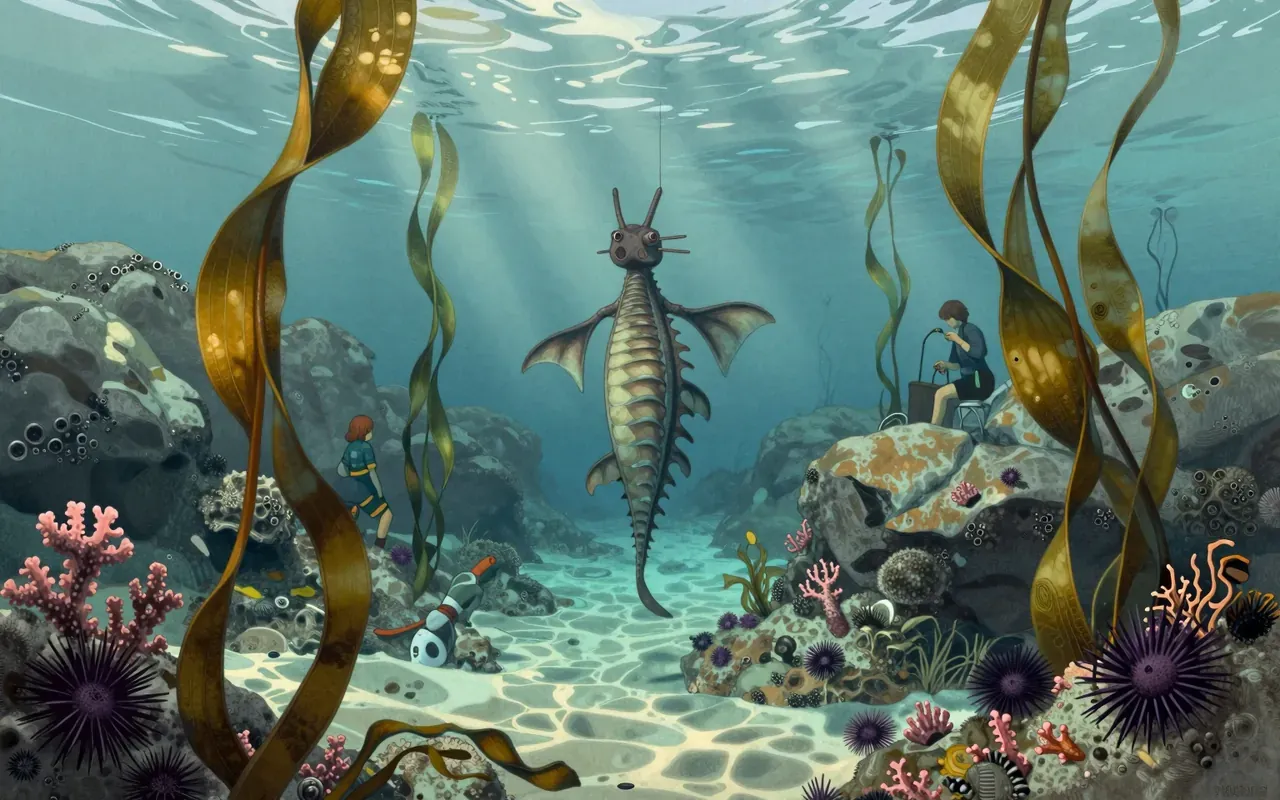
Leafy seadragonThe leafy seadragon is a marine fish found only in southern and western Australian waters. It has no close relatives—Phycodurus eques is the sole species in its genus. Its leaf-like skin lobes serve only for camouflage, not propulsion. It swims using nearly invisible pectoral and dorsal fins, creating the illusion of floating seaweed—even while moving. It changes colour depending on diet, age, location, and stress. It eats plankton and small crustaceans. It belongs to the Syngnathidae family but lacks a prehensile tail and differs from seahorses in locomotion. It is legally protected across Australian states due to pollution, industrial runoff, and aquarium trade collection.
7:44
ClownfishClownfish are saltwater fish native to warm and tropical Indo-Pacific waters. They inhabit coral reefs. They rely on sea anemones for shelter and predator protection. In return, they defend, clean, fan, and nourish the anemones. They are omnivorous plankton feeders. They live in size-structured social groups with protandrous sequential hermaphroditism. As of 2025, most assessed species are IUCN Least-concern.
8:42
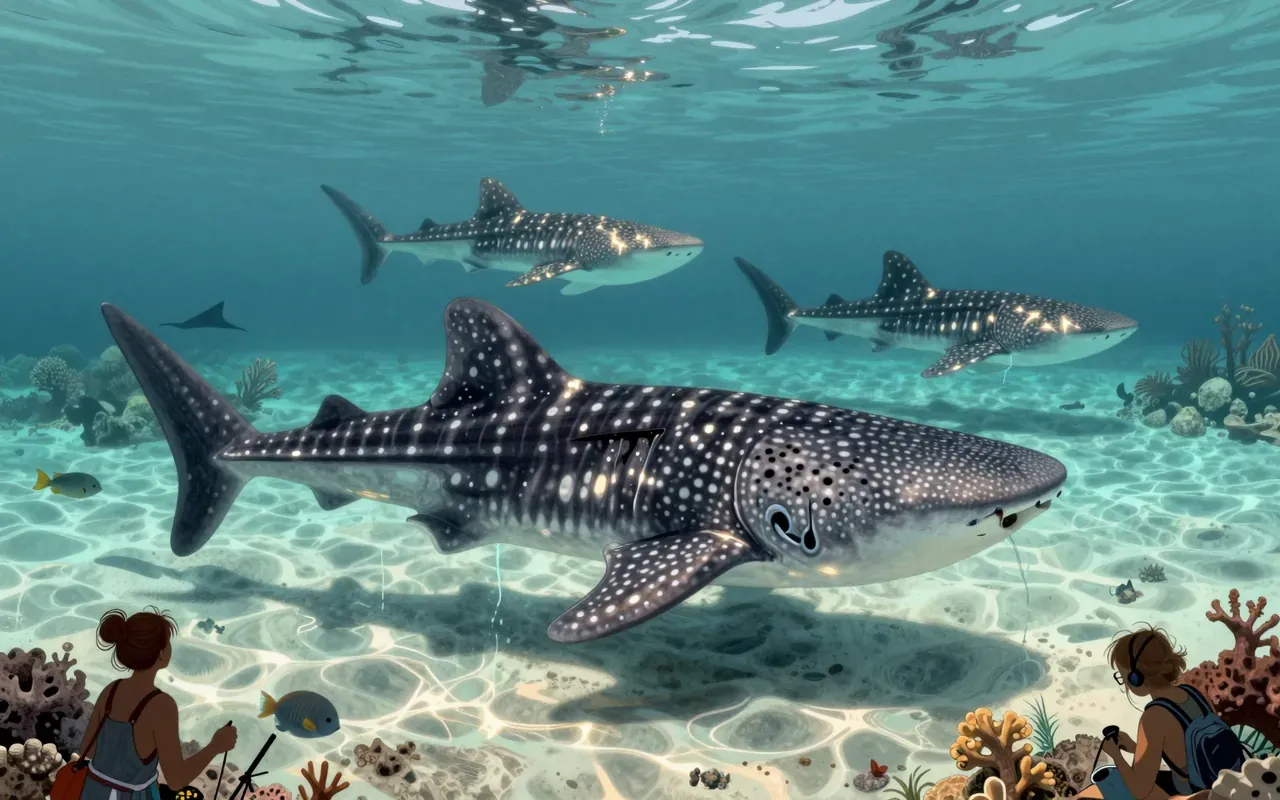
Whale sharkThe whale shark is the largest known extant fish species. It is the only living species of the genus Rhincodon and the only extant member of the family Rhincodontidae. It is highly migratory and forms large, predictable feeding aggregations at coastal sites including Ningaloo Reef, the Yucatan Peninsula, and Gujarat and Kerala. It is an active filter feeder, primarily consuming plankton, krill, fish eggs, and small schooling fish such as sardines and anchovies. The shark can process over 6,000 litres of water per hour through its specialised sieve-like gill pads. Despite its immense size, the whale shark is docile and poses no significant threat to humans.
9:23
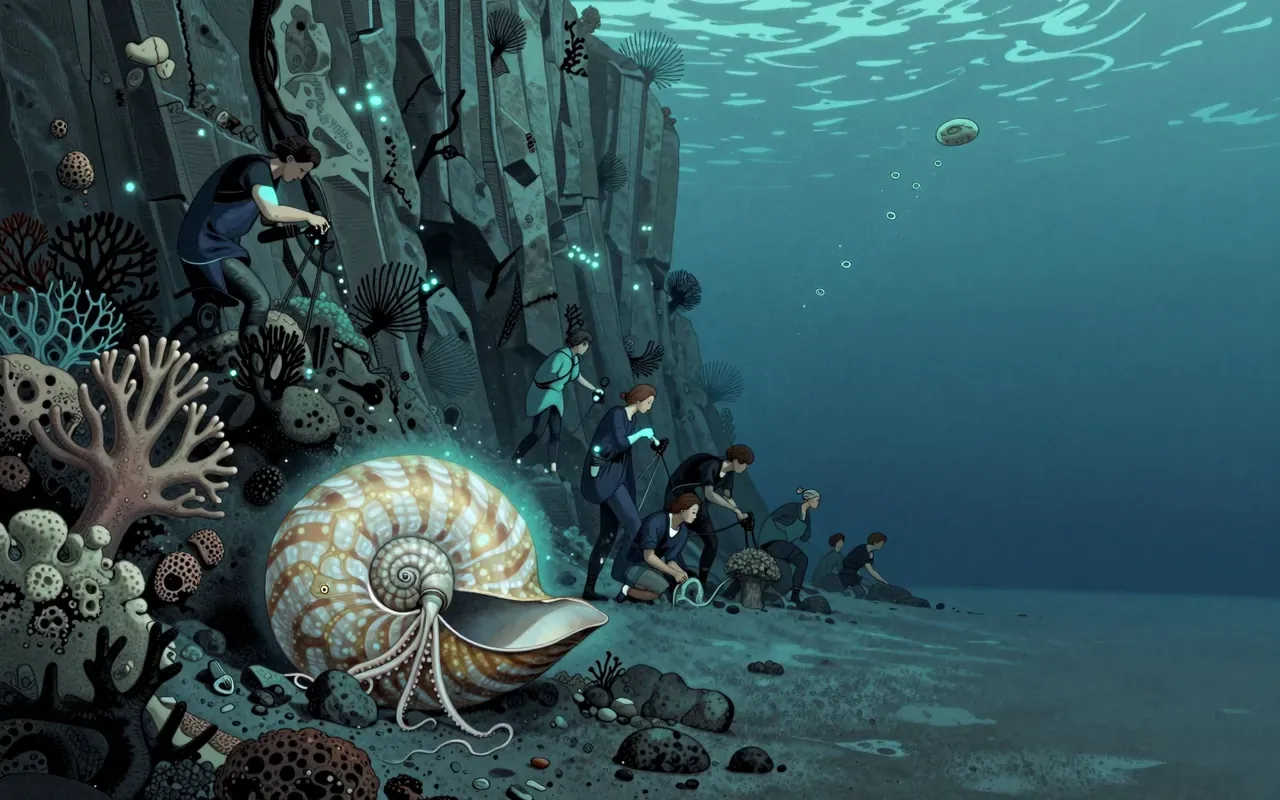
NautilusNautilus is a taxonomic relic—not an ecological actor. Its value lies in its unbroken morphology, not its behaviour or abundance.
Up next in Nature

Harpy eagle

· 10:42

The harpy eagle is not a sky sovereign—it’s a rainforest ceiling enforcer.

10:42