naturebriefs
9:58in productionCh. 1 · Only one of its kind/ 9:58 · ceiling 15 min
Fish & sea life · Conservation

Tiger shark

A shark that eats dolphins, sea turtles, and plastic bottles — and has no natural enemy but orcas.

Tiger shark brief: solitary, nocturnal, global, wide-diet predator; near threatened; only extant member of its genus and family; eats dolphins, turtles, plastic; hunted by orcas only.

Chapters & takeaways5
  1. 0:50
    Only one of its kind

    It is the sole survivor of its genus and family — named for stripes that vanish as it ages.

  2. 2:02
    Nocturnal and widespread

    It patrols warm seas alone, mostly after dark.

  3. 3:17
    Widest diet on record

    No shark eats more kinds of animals — from squid to seals to smaller sharks.

  4. 4:24
    Garbage eater, apex until orcas

    It swallows plastic and metal. Its only known natural predator is the orca.

  5. 5:57
    Big enough to rule

    Females exceed five metres — large enough to dominate most marine encounters.

Worth your time?

Yes. See the whole thing.

4.5/ 5
What works
  • tests limits of shark adaptability
  • reveals intersection of predation and pollution
  • demonstrates countershading in action
What does not
  • avoid human waste
  • fit narrow ecological roles
  • show predictable feeding patterns
See it if
  • divers
  • fishers
  • coastal ecologists
Skip it if
  • those seeking predictable behaviour
  • those expecting narrow ecological roles
The written brief1 min read

What the species is and where it came from

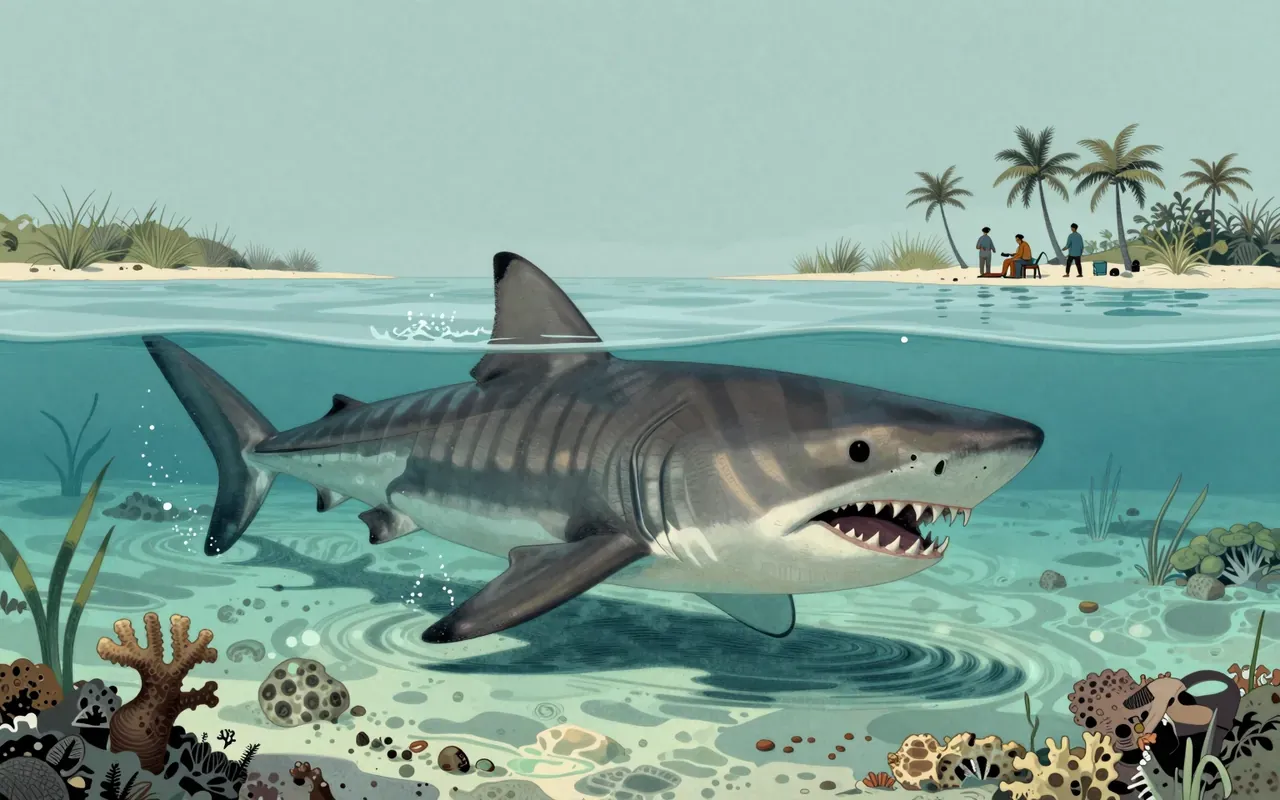
The tiger shark (Galeocerdo cuvier) is the only living species in its genus and family. It evolved stripes as a juvenile that fade with age. It lives in tropical and temperate waters globally.

How it works, in terms someone would actually use

It hunts alone at night in warm seas. It eats anything it can swallow — from sea turtles to dolphins to plastic bottles.

What it gets right

It gets right the role of a wide-ranging, adaptable marine scavenger-predator — using countershading for concealment and tolerating varied habitats from central Pacific islands to the Maldives.

What it does not

It does not avoid human waste. It swallows man-made objects that linger in its stomach indefinitely.

What it changed

It changed how we think about dietary breadth in apex predators. No other shark consumes such a documented variety of prey and debris.

Who it is for, and who it is not

It is for divers, fishers, and coastal ecologists who work where sharks and plastic intersect. It is not for those seeking predictable behaviour or narrow ecological roles.

Is it worth your time

Yes, if you want to see a predator that tests the limits of what a shark can be — and what humans leave behind.

Same habitat · Fish & sea life4 of 46
10:23
MacrocystisMacrocystis pyrifera is a monospecific brown alga that forms extensive underwater forests on rocky substrata in cool, nutrient-rich waters across the Southern Hemisphere and northeast Pacific. It grows up to 60 cm per day, reaches over 45 m in length, and uses pneumatocysts to maintain canopy structure. It supports biodiversity, alters hydrodynamics, and locally raises pH—but only where temperatures stay below 21 °C and urchin pressure remains low. Its taxonomy was consolidated in 2009–2010. Conservation status varies: endangered in Australia, At Risk–Declining in New Zealand.
8:47
OrcaOrca is a cosmopolitan toothed whale—the largest oceanic dolphin—with population-specific diets and intergenerationally transmitted behaviours. Its individual identification via dorsal fin and saddle patch enables precise photographic census. The IUCN lists it as data deficient due to unresolved taxonomic questions. Indigenous peoples in the Pacific Northwest, Australia, and Peru revere it; Western cultures historically feared it.
8:36
TetraodontidaeTetraodontidae is a family of marine and freshwater fish in the order Tetraodontiformes, characterised by four fused beak-like teeth, absence of ribs and pelvic fins, and a specialised defence mechanism involving stomach inflation and dermal spines. Most species are toxic due to tetrodotoxin concentrated in liver and skin, though some — like Sphoeroides maculatus — are nontoxic and consumed as delicacies. They inhabit tropical, temperate, and freshwater ecosystems; diet centres on algae and small invertebrates; and key adaptations include inflation, independent eye movement, colour change, and aposematic colouration.
8:27
Rogue waveRogue waves are transient, non-biological oceanic events—defined, observed, replicated, and hazardous. They do not inhabit, reproduce, migrate, or evolve. They are physics made visible.
Up next in Nature

Truffle

· 8:54

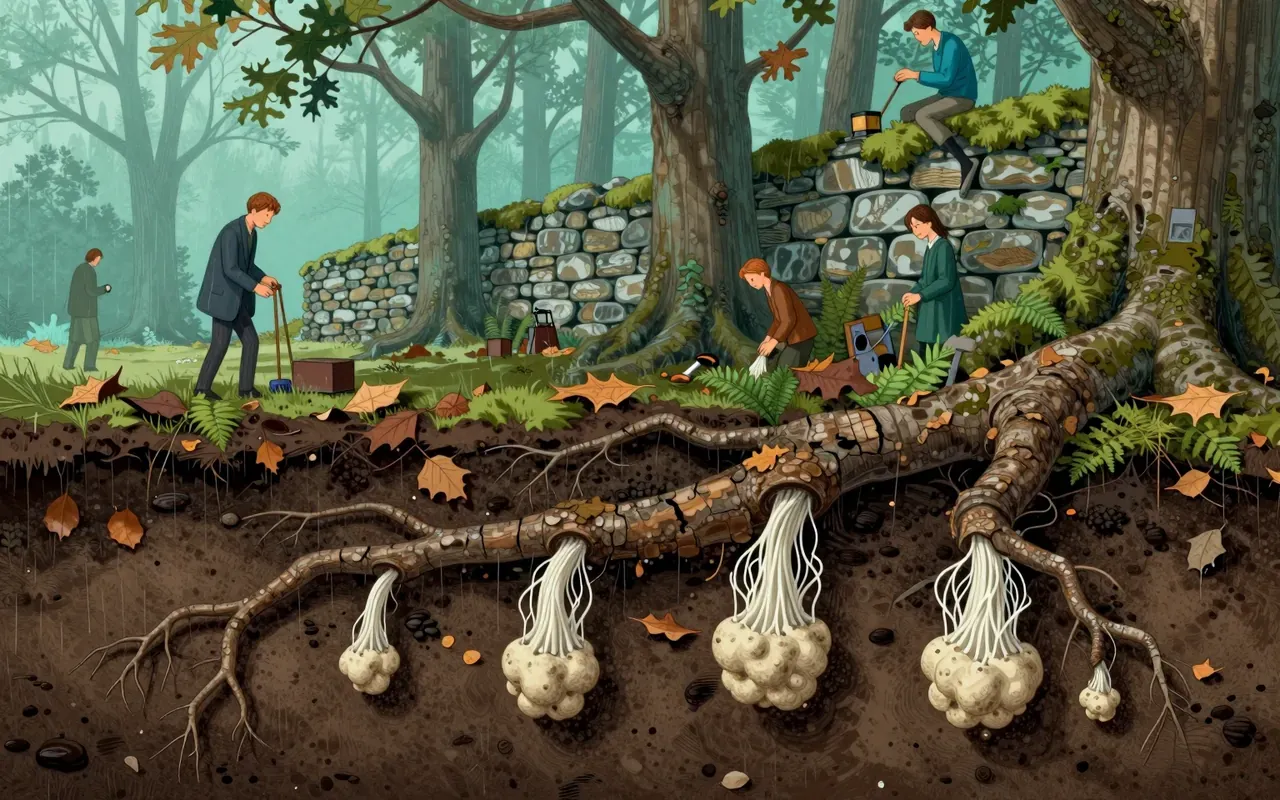
Truffles are not luxury food—they’re underground proof that symbiosis evolved more than once.

8:54