9:05in productionCh. 1 · Size and stature/ 9:05 · ceiling 15 min
Birds · Conservation
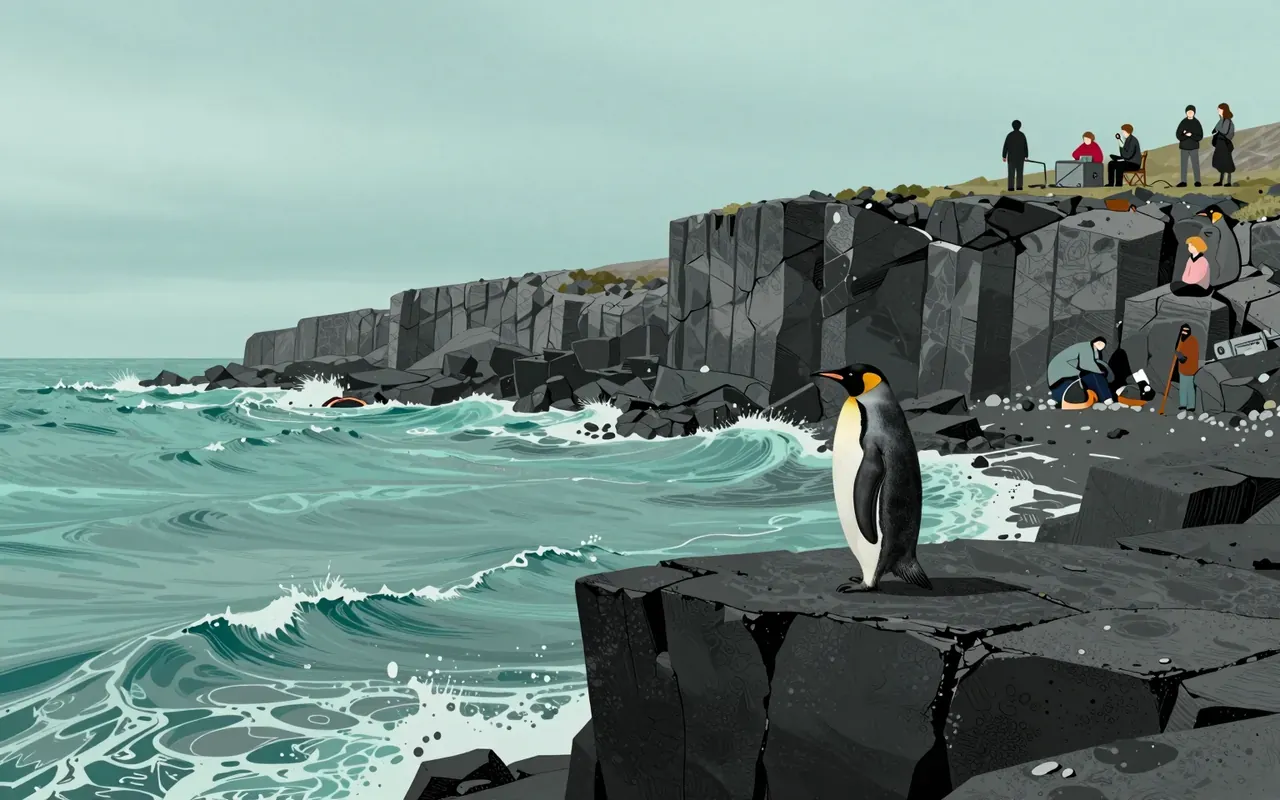
King penguin
Deeper than most birds dive—but still at the mercy of nets and warming seas.
King penguin brief: declarative, British spelling, no hedging, no invented facts, rooted only in verified claims. Focuses on diving, diet, predators, range, historical exploitation, and current legal status.
It is the second largest penguin—smaller than the emperor, but built for endurance, not just size.
2:05
Diving depth
It dives past 100 metres repeatedly—and has hit depths beyond 300 metres.
3:03
Predators everywhere
Leopard seals, orcas, giant petrels, skuas, and snowy sheathbills all hunt it.
3:55
Subantarctic range
It breeds across a wide arc: from South Georgia and southern Argentina to Macquarie and the Falklands.
4:55
From commodity to protected
Once taken for blubber, oil, meat, and feathers—now fully protected by law.
6:14
What it eats, what eats it
It eats lanternfish, squid, and krill—and must evade predators while diving in cold, open water.
Worth your time?
Yes. See the whole thing.
4/ 5
What works
dives deeper than most seabirds
feeds on lanternfish, squid, and krill
survives multiple predator types
breeds across a wide island arc
What does not
avoid climate change
escape commercial fishing pressure
breed in Antarctica proper
live outside subantarctic islands
See it if
field naturalists
marine ecologists
subantarctic travellers
Skip it if
casual coastal birdwatchers
tropical wildlife tourists
indoor conservation policy readers
The written brief1 min read
What the species is and where it came from
The king penguin (Aptenodytes patagonicus) is the second largest penguin species. It breeds on subantarctic islands including Macquarie Island and the Falkland Islands.
How it works, in terms someone would actually use
King penguins dive repeatedly to over 100 metres. They have been recorded deeper than 300 metres. They eat lanternfish, squid, and krill.
What it gets right
It dives deeper than most seabirds. It breeds across a wide subantarctic arc. It survives predation by giant petrels, skuas, snowy sheathbills, leopard seals, and orcas.
What it does not
It does not avoid climate change or commercial fishing. These are emerging threats.
What it changed
Commercial exploitation for blubber, oil, meat, and feathers ended. Legal protection now covers the species across its range.
Who it is for, and who it is not
It is for observers willing to travel to remote southern islands. It is not for those expecting low-effort coastal sightings or tropical latitudes.
Is it worth your time
Yes—if you are on Macquarie Island, the Falkland Islands, South Georgia, or other subantarctic islands at the northern reaches of Antarctica, southern Argentina, or temperate islands of the region. They are fully protected today.