Saved
Reptiles & amphibians

Marine iguana

The only lizard that swims to eat—and pays for it with vulnerability.

Worth your time?4.5/5Yes.See the whole thing.What works, what does not, who it is for ↓
9:44in productionCh. 1 · Where it lives/ 9:44 · ceiling 15 min
6 chapters · 9:44Ceiling 15:00

The brief is written and checked. The video joins this page when it is cut.6 chapters · 1 min read · 9:44 planned

Read the brief

Marine iguana

Chapters & takeaways6
  1. 1:01
    Where it lives

    Endemic to the Galápagos Islands—and nowhere else.

  2. 2:07
    How it feeds

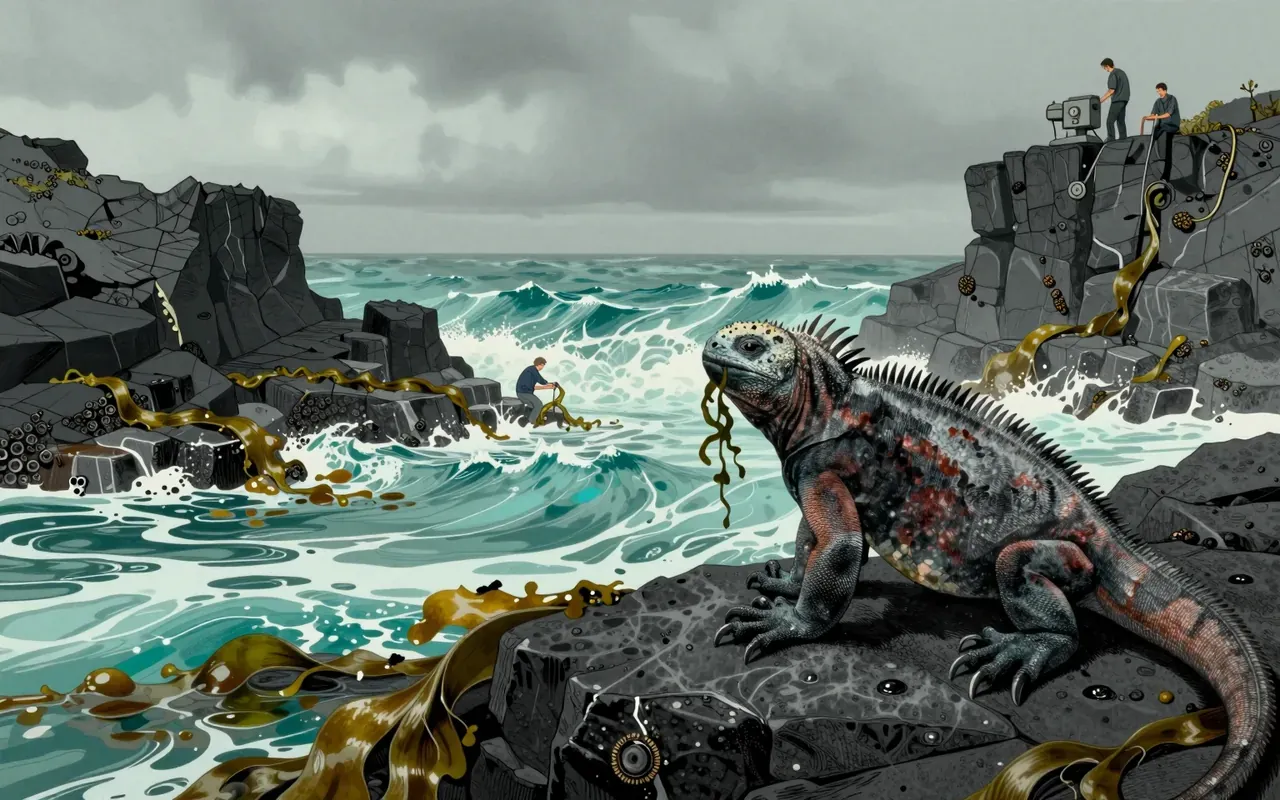
    Large males dive; females and small males graze the rocks at low tide.

  3. 3:10
    What makes it unique

    It is the only living lizard that spends time in the sea—and it basks on shore to recover.

  4. 4:14
    How it breeds

    Females dig soil nests and leave eggs to hatch alone.

  5. 5:08
    Why it is vulnerable

    El Niño, invasive predators, and oil spills threaten it—even where it is locally abundant.

  6. 6:15
    When it entered science

    First described in 1825 as Amblyrhynchus cristatus.

3 more chaptersFewer chapters
Worth your time?

Yes. See the whole thing.

4.5/ 5
What works
  • marine foraging
  • thermoregulation via basking
  • simple soil nesting
What does not
  • survive El Niño-driven algae collapse without population loss
  • avoid predators introduced by humans
  • regulate body temperature efficiently in cold water
See it if
  • observers on Galápagos rocky shores
  • observers in intertidal zones
  • observers in mangrove swamps and beaches
Skip it if
  • inland forests
  • coral reefs
  • anywhere outside the Galápagos archipelago
Who should see it, and who should skipHide who it is for
The written brief1 min read

What the species is and where it came from

The marine iguana (Amblyrhynchus cristatus) is a reptile found only on the Galápagos Islands. It was first described in 1825. It is endemic, taxonomically distinct, and ecologically specialized.

How it works, in terms someone would actually use

It forages in the sea for algae. Large males dive. Females and smaller males feed in the intertidal zone at low tide. It basks on rocky shores after cold-water foraging. It nests in soil on land, laying eggs that hatch unattended after several months.

What it gets right

It gets marine foraging right. It gets thermoregulation via basking right. It gets nesting simplicity right—no parental care, just soil, sun, and time.

What it does not

It does not regulate its body temperature efficiently in cold water. It does not avoid predators introduced by humans. It does not survive El Niño-driven algae collapse without population loss.

What it changed

It changed how we define lizard ecology. No other living lizard occupies the marine foraging niche. Its existence proves marine adaptation is possible in squamates.

Who it is for, and who it is not

It is for observers on Galápagos rocky shores, intertidal zones, mangrove swamps, and beaches. It is not for inland forests, coral reefs, or anywhere outside the archipelago.

Is it worth your time

Yes—if you are on the Galápagos Islands and want to see a reptile doing something no other lizard does: swimming and feeding underwater.

Same habitat · Reptiles & amphibians4 of 37
Up next in Nature

Matsutake

· 9:13

It hides under needles, trades nutrients with pines, and kills if you mistake it for Inocybe pyriodora.

9:13