What the species is and where it came from
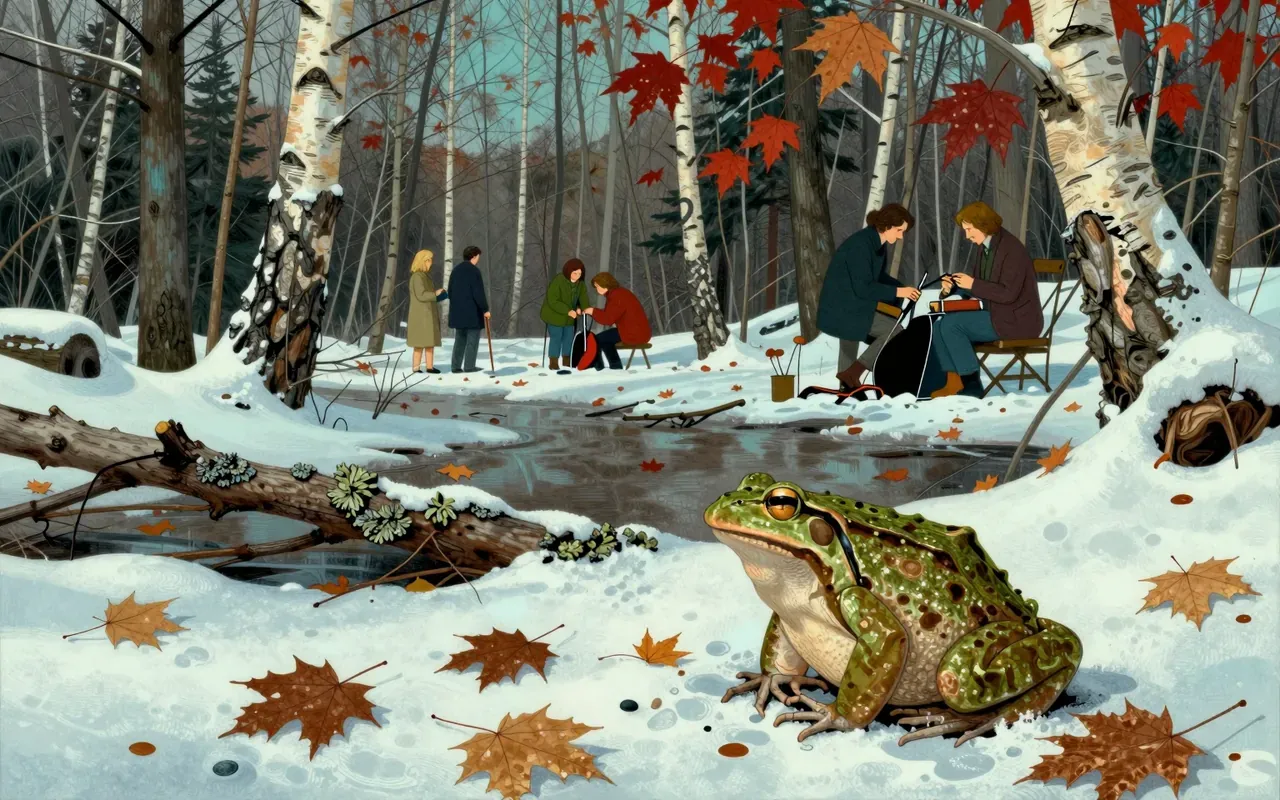
The wood frog (Lithobates sylvaticus) is a North American amphibian native to forests across the continent, including boreal zones and north of the Arctic Circle.
How it works, in terms someone would actually use
It freezes solid for up to 193 days under leaf litter or soil, surviving with 65–70% of its body water turned to ice. Glucose and urea act as cryoprotectants. Its SERCA 1 enzyme works at −6.3 °C thanks to seven amino acid substitutions.
What it gets right
It gets vernal pool dependence right: obligate breeding there ensures no fish predation. It gets terrestrialism right: unlike most ranids, it spends most of its life far from permanent water. It gets cold adaptation right: Alaskan subpopulations boost liver glycogen and urea production precisely where needed.
What it does not
It does not survive repeated freeze/thaw cycles if more than ~70% of its body water freezes. It does not persist where vernal pools are degraded or isolated without protection. It does not tolerate NaCl: tadpoles show reduced activity, weight, survivorship, and increased abnormalities when exposed.
What it changed
It changed how biologists study cold adaptation: not as avoidance, but as controlled, repeatable, whole-organism freezing. It reframed amphibian hibernation from dormancy to metabolic arrest with active biochemical regulation.
Who it is for, and who it is not
It is for field ecologists studying pond fidelity, physiologists dissecting cryoprotection, conservationists mapping unprotected vernal pools, and educators demonstrating extreme vertebrate adaptation. It is not for those seeking charismatic megafauna, diurnal spectacle, or broad-scale migration patterns.
Is it worth your time
Yes—if you want to see freeze tolerance in action, track dispersal in vernal pools, or study how road salt disrupts development. No—if you need long-term population trends, lifespan data, or behavioural ecology beyond philopatry and salt exposure.