Saved
Reptiles & amphibians · Fish & sea life

Leatherback sea turtle

A turtle without a shell — and therefore without limits.

Worth your time?4.5/5Yes.See the whole thing.What works, what does not, who it is for ↓
8:34in productionCh. 1 · No shell. No peers./ 8:34 · ceiling 15 min
4 chapters · 8:34Ceiling 15:00

The brief is written and checked. The video joins this page when it is cut.4 chapters · 1 min read · 8:34 planned

Read the brief

Leatherback sea turtle brief

Chapters & takeaways4
  1. 0:50
    No shell. No peers.

    It is the only surviving member of its genus and family — named for its leathery skin, not its shell.

  2. 1:51
    Built for depth, not defence

    It reaches 2.7 m and 500 kg, supported by oily flesh and flexible skin — not bone.

  3. 3:31
    Worldwide — but breaking up

    Its global range hides fragmentation: vulnerable overall, critically endangered in key subpopulations.

  4. 5:05
    Cretaceous to current

    Relatives swam alongside dinosaurs — and it still does the same job, in the same way.

1 more chapterFewer chapters
Worth your time?

Yes. See the whole thing.

4.5/ 5
What works
  • It works as a deep-diving, cold-tolerant, jellyfish-specialist migrator.
  • It works as a living fossil — morphologically stable for over 110 million years.
  • It works as a biogeographic indicator: its subpopulations map ocean basins, not coastlines.
What does not
  • It does not nest reliably on monitored beaches.
  • It does not tolerate entanglement or ingestion of plastic debris.
  • It does not exhibit site fidelity across all subpopulations.
  • It does not have a known clutch size, lifespan, or population figure in the source material.
See it if
  • Oceanographers tracking transboundary movements.
  • Conservation practitioners managing nesting sites in Trinidad, French Guiana, or Costa Rica.
  • Palaeobiologists studying Cretaceous marine reptile continuity.
Skip it if
  • Beachgoers seeking hatchling releases.
  • Urban naturalists expecting local sightings.
  • Educators needing simple, classroom-friendly life-cycle diagrams.
Who should see it, and who should skipHide who it is for
The written brief1 min read

What the species is and where it came from

The leatherback sea turtle (Dermochelys coriacea) is the sole living species in its genus and family. It is not a modified hard-shelled turtle. It is a lineage apart — a leathery-skinned, open-ocean reptile with origins stretching back over 110 million years.

How it works, in terms someone would actually use

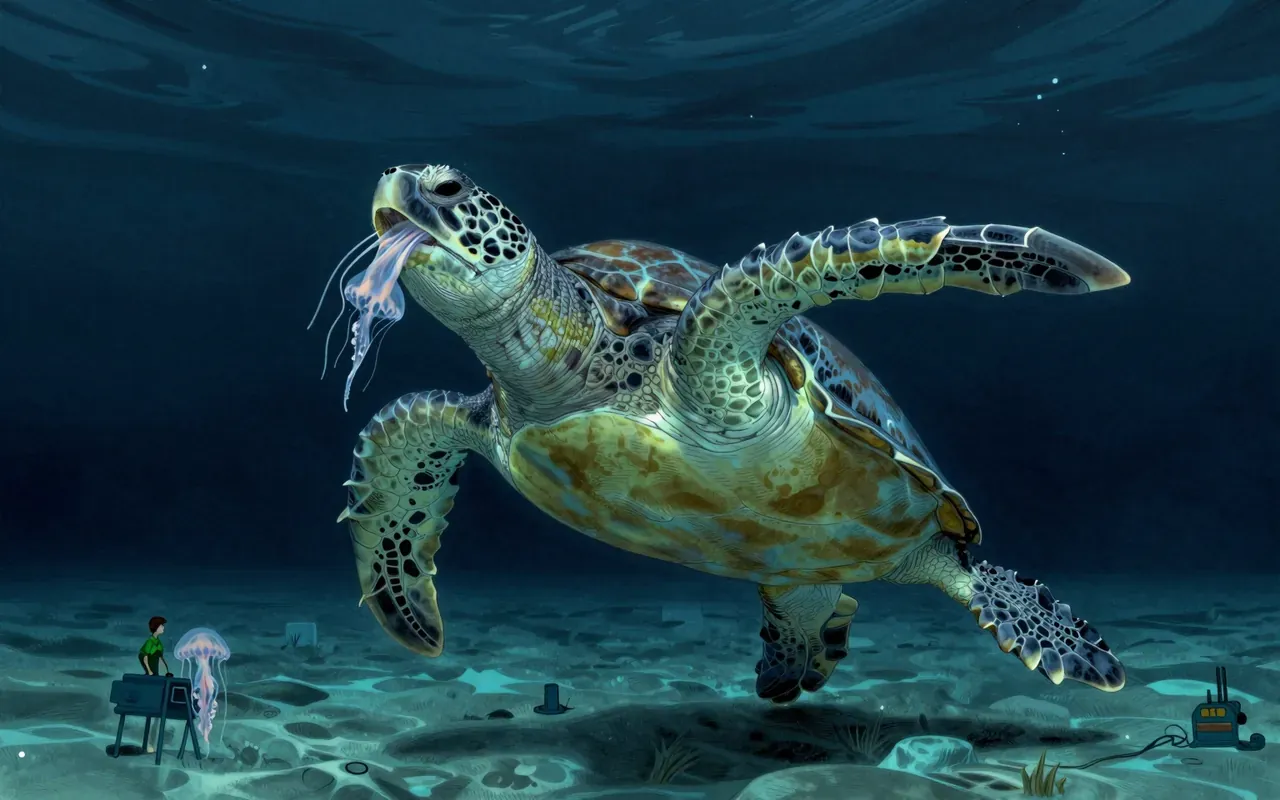
It swims across oceans using flippers built for endurance, not manoeuvrability. It dives deep — beyond 1,000 metres — to hunt jellyfish. Its leathery carapace absorbs pressure and insulates against cold. It cannot retract its head or limbs. It cannot survive out of water for long.

What it gets right

It gets ocean-scale movement right. It gets thermal tolerance right. It gets jellyfish predation right — eating them almost exclusively, in numbers no other vertebrate matches. It gets evolutionary persistence right: relatives in similar form since the Cretaceous.

What it does not

It does not nest on every beach it passes. It does not tolerate plastic bags — mistaking them for jellyfish. It does not recover quickly from population decline. It does not have localised subpopulations that function independently.

What it changed

It redefined what a turtle could be: no bony shell, no hard scutes, no freshwater ancestry, no coastal confinement. It proved marine reptiles could thermoregulate, migrate globally, and specialise on gelatinous prey.

Who it is for, and who it is not

It is for oceanographers tracking transboundary migrations. It is for conservationists managing nesting beaches in Trinidad, French Guiana, or Costa Rica. It is not for casual beachcombers expecting hatchlings at dawn — most nests are remote, unmonitored, and rarely witnessed.

Is it worth your time

Yes — if you want to see a creature that has crossed oceans unchanged since the Cretaceous, and still does so today. No — if you expect to observe it easily. It spends almost all its life far from shore, surfacing only briefly.
Same habitat · Reptiles & amphibians4 of 37
13:40
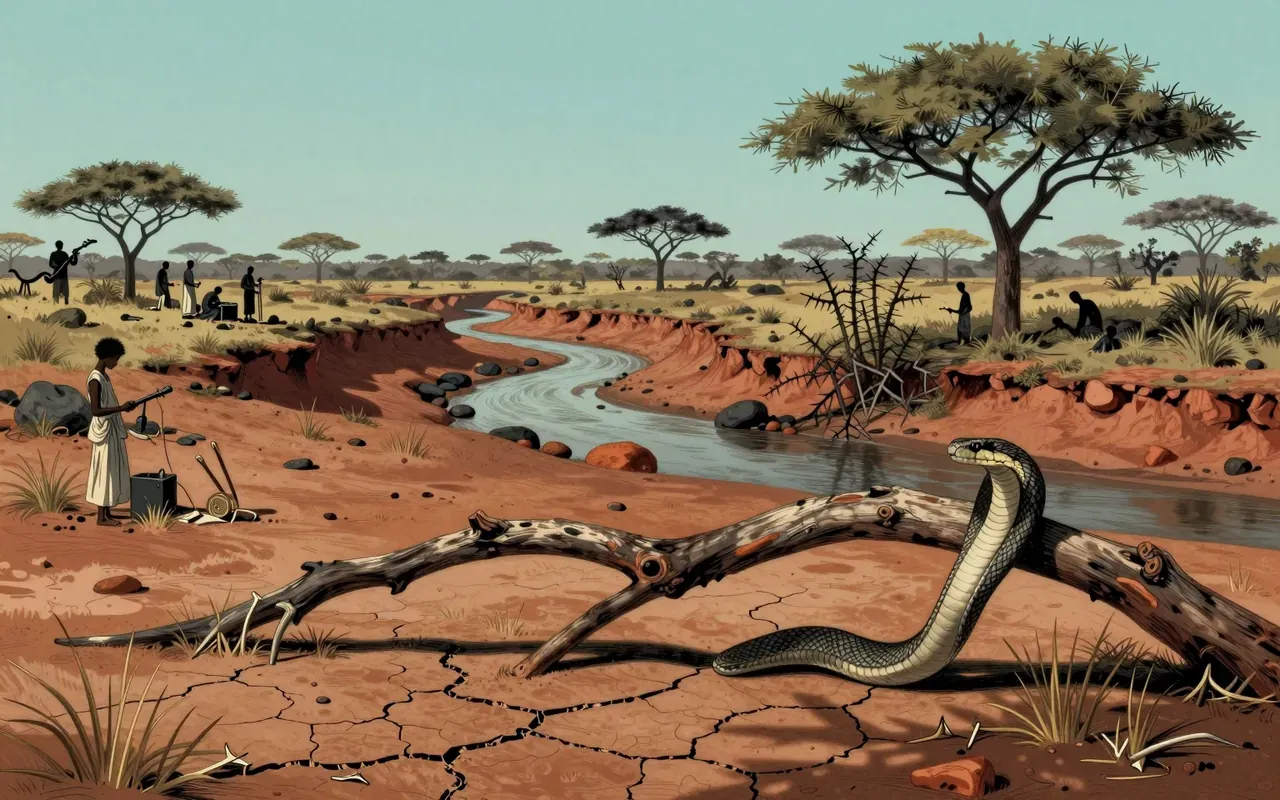
Black mambaThe black mamba is a fast, adaptable, and widely distributed venomous snake of sub-Saharan Africa. It is neither black nor unusually aggressive. Its reputation exceeds its behaviour. Its ecology is well-documented; its danger is situational, not inherent.
8:06
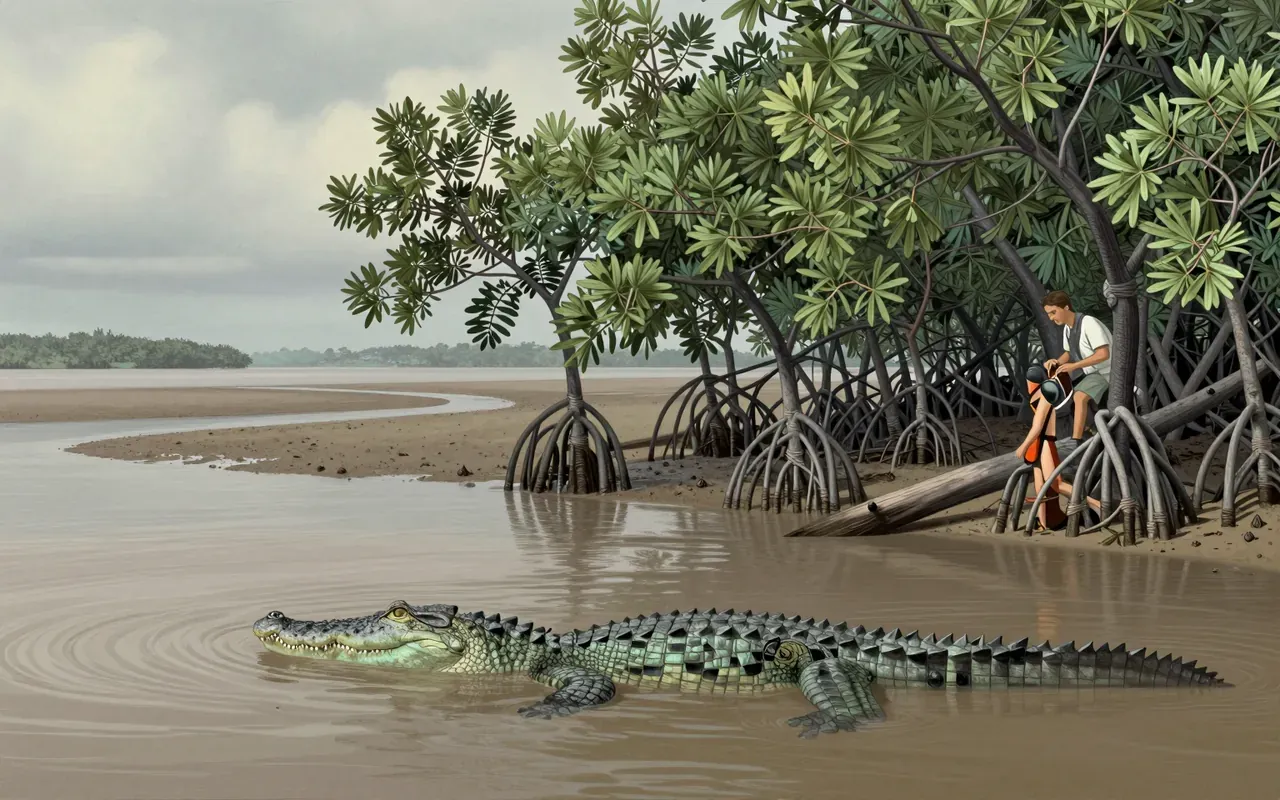
Saltwater crocodileA hypercarnivorous, salt-tolerant apex predator that dominates aquatic food webs across the Indo-Pacific—not through rarity or novelty, but sheer scale, habitat breadth and lethal efficiency.
8:26
American alligatorThe American alligator is a large crocodilian reptile native to the Southeastern United States. It inhabits subtropical and tropical freshwater wetlands such as marshes and cypress swamps. It functions as an apex predator and ecosystem engineer. Its conservation status is Least Concern per the IUCN.
10:41
Darwin's frogDarwin's frog is a small, endemic South American frog of the family Rhinodermatidae. Discovered by Charles Darwin in Chile during the HMS Beagle voyage, it was formally described by Duméril and Bibron in 1841. Its defining trait is male vocal sac incubation of tadpoles — a strategy possibly unique among extant frogs. Males ingest eggs after embryonic movement begins at 3–4 weeks; tadpoles feed on yolk and vocal sac secretions until metamorphosis. Brooding males continue feeding — beetles and flies have been found in dissected stomachs. The species is restricted to the Valdivian Temperate Rain Forest, where it faces severe threats: habitat loss, climate-driven fragmentation, wildfire risk, and chytridiomycosis. IUCN lists it as Endangered, based on severely fragmented populations and a tiny occupancy area of 264 km².
Up next in Nature

Leopard

· 7:26

A master of shadow-stalking—until the shadows vanish.

7:26