What the species is and where it came from
Mycelium is a root-like fungal structure composed of branching, thread-like hyphae. Its normal form is branched, slender, entangled, anastomosing, hyaline threads. It is found in and on soil and many other substrates.
How it works, in terms someone would actually use
Mycelium digests food outside its body. It secretes enzymes onto organic matter. Those enzymes break polymers into monomers. The mycelium then absorbs the monomers using facilitated diffusion and active transport.
What it gets right
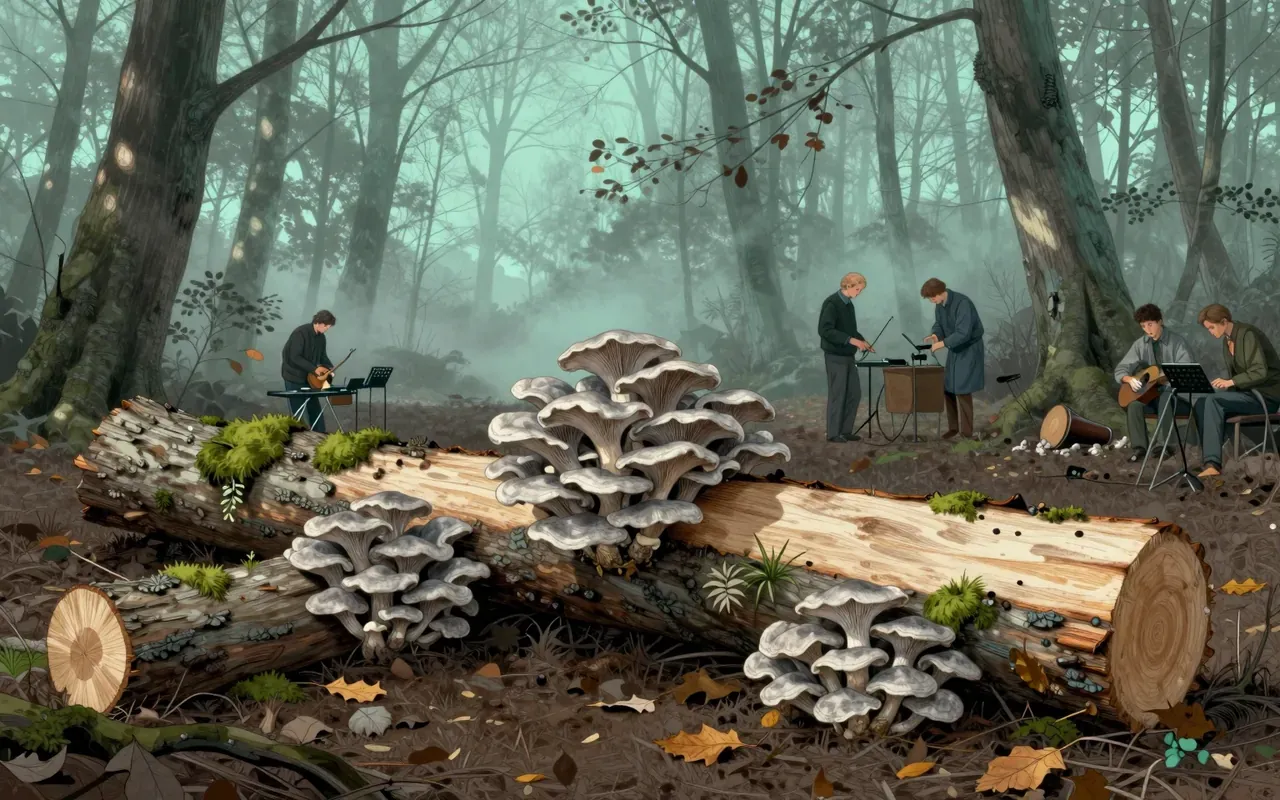
It decomposes plant material in terrestrial and aquatic ecosystems. It contributes to soil organic matter. It releases CO₂ during growth. It forms symbiotic interfaces—mycorrhizal and otherwise—that mediate plant nutrition and carbon cycling.
What it does not
It does not photosynthesise. It does not move independently. It does not form embryos, seeds, or gametes. It does not have organs, tissues, or a nervous system. It does not reproduce sexually as monokaryotic mycelium.
What it changed
It redefined ‘organism’. Mycelium is not a thing but a process: a dynamic, self-assembling, substrate-bound interface. It shifted engineering from inert material to living system, and ecology from individual species to distributed metabolic networks.
Who it is for, and who it is not
It is for soil scientists, restoration ecologists, bioremediation engineers, and designers working with living materials. It is not for taxonomists seeking binomial nomenclature, field botanists counting individuals, or conservationists tracking population trends.
Is it worth your time
Yes—if you work with soil, compost, construction materials, or carbon cycling. No—if you need a discrete organism with fixed boundaries, a lifecycle you can time, or a structure you can hold in one hand without it disintegrating.