What the species is and where it came from
The platypus is a semiaquatic, egg-laying mammal endemic to eastern Australia, including Tasmania. It is one of five extant monotremes.
How it works, in terms someone would actually use
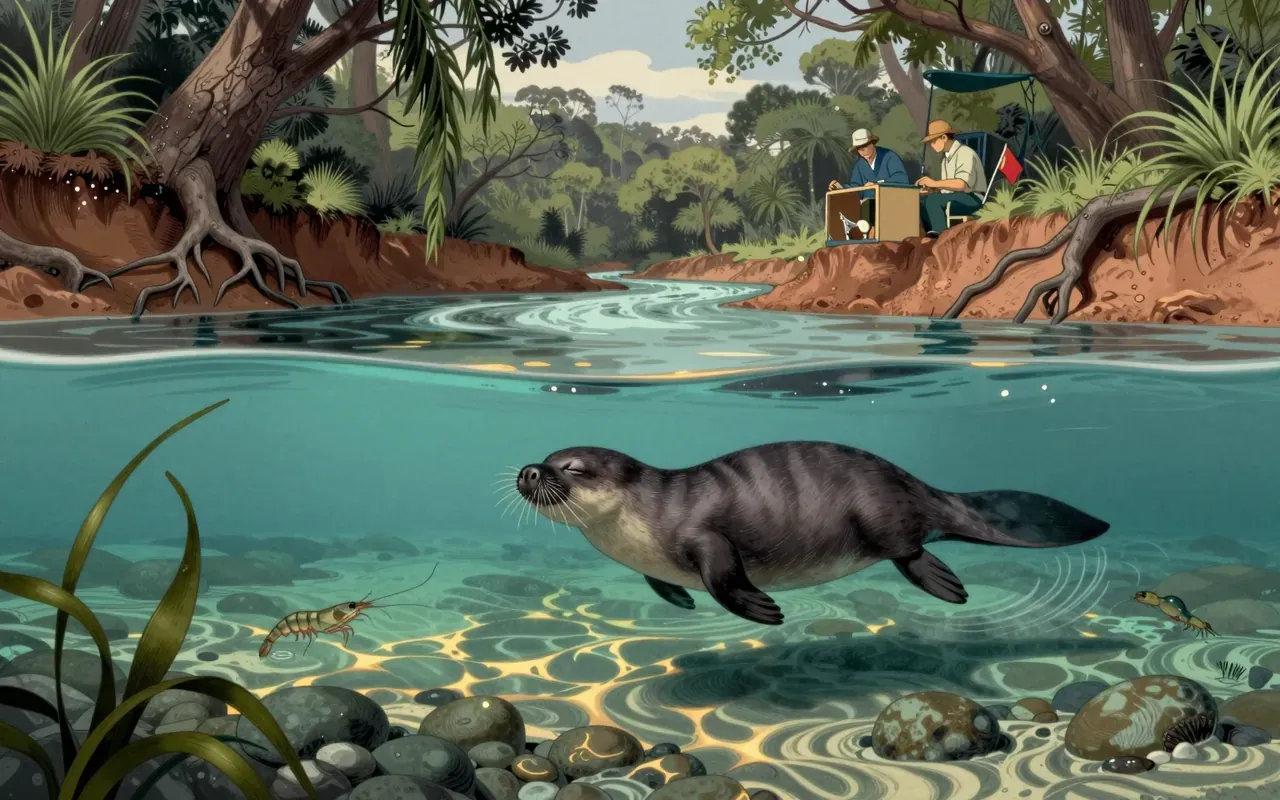
It swims with webbed front feet, dives with eyes, ears and nostrils sealed, and senses electric fields from prey using electroreceptors in its bill.
What it gets right
It gets electrolocation right: it detects prey in murky water while all other senses are shut. It gets monotreme biology right: egg-laying, milk patches, no nipples.
What it does not
It does not give live birth. It does not lack venom—males deliver painful venom via hind-foot spurs. It does not occur outside eastern Australia, including Tasmania.
What it changed
It forced science to accept that mammals could lay eggs and use electrolocation—changing how biologists define mammalian traits.
Who it is for, and who it is not
It is for field biologists, freshwater ecologists, and evolutionary zoologists. It is not for casual birdwatchers or marine divers—it lives only in rivers and streams of eastern Australia and Tasmania.
Is it worth your time
Yes—if you want to see a mammal that lays eggs, stings with its ankle, and hunts blindfolded underwater.