naturebriefs
9:32in productionCh. 1 · Timing/ 9:32 · ceiling 15 min
Systems · Evolution

Great Oxidation Event

2450 BC

Cyanobacteria poisoned the planet—and made complex life possible.

The Great Oxidation Event was a planetary-scale chemical transformation driven by cyanobacteria. It redefined Earth’s surface chemistry, left clear mineral fingerprints, and set hard preconditions for later life—without guaranteeing any of it.

Chapters & takeaways4
  1. 0:51
    Timing

    The GOE was not an instant switch—it was a 400-million-year transition from ~2.46 to 2.06 Ga.

  2. 2:37
    Cause

    Cyanobacteria caused it—not plants, not algae, not volcanoes—by evolving water-splitting photosynthesis.

  3. 3:57
    Evidence

    We know it happened because pyrite vanished from river sands, red beds appeared on land, and banded iron formations peaked then collapsed.

  4. 5:53
    Scale

    Oxygen reached only 10% of today’s levels—enough to rust iron and block UV, but not enough to sustain large animals.

Worth your time?

Yes. See the whole thing.

4.5/ 5
What works
  • claim 1
  • claim 4
  • claim 5
  • claim 8
What does not
  • claim 1
  • claim 4
  • claim 5
  • claim 8
See it if
  • geologists
  • palaeobiologists
  • earth-system scientists
Skip it if
  • those seeking narrative closure
  • those expecting rapid biological consequence
The written brief1 min read

What the species is and where it came from

Cyanobacteria—not a single species but a clade of photosynthetic microbes. They evolved chlorophyll-based water photolysis in the Archean, before the GOE. Their range: global shallow marine and freshwater habitats. Their habitat: sunlit surface waters. They eat light and water. Nothing else at the time released free O₂ as metabolic waste.

How it works, in terms someone would actually use

Cyanobacteria split water using sunlight, releasing oxygen as waste. That oxygen reacted with dissolved iron in shallow seas, forming banded iron formations. Once iron was saturated, oxygen built up in the atmosphere.

What it gets right

It correctly identifies cyanobacteria as the oxygen source. It links mineral evidence—pyrite disappearance, hematite red beds, banded iron formation timing—to atmospheric change. It anchors the shift to ~2.46–2.06 Ga.

What it does not

It did not produce modern oxygen levels. It did not cause immediate eukaryotic radiation. It did not eliminate all anoxic niches—many persisted, and still do.

What it changed

It turned Earth’s atmosphere from reducing to oxidizing. It triggered global glaciation. It ended mass-independent sulfur isotope fractionation. It enabled mitochondrial endosymbiosis—but not eukaryotic diversification, which remains debated.

Who it is for, and who it is not

Geologists, palaeobiologists, and anyone who reads rock layers as history. Not for those seeking narratives of progress, intention, or inevitability.

Is it worth your time

Yes—if you want to understand why Earth’s air is breathable, why rust exists, and why complex life needed a billion years to appear after microbes began photosynthesising.
Same habitat · Systems4 of 81
8:09
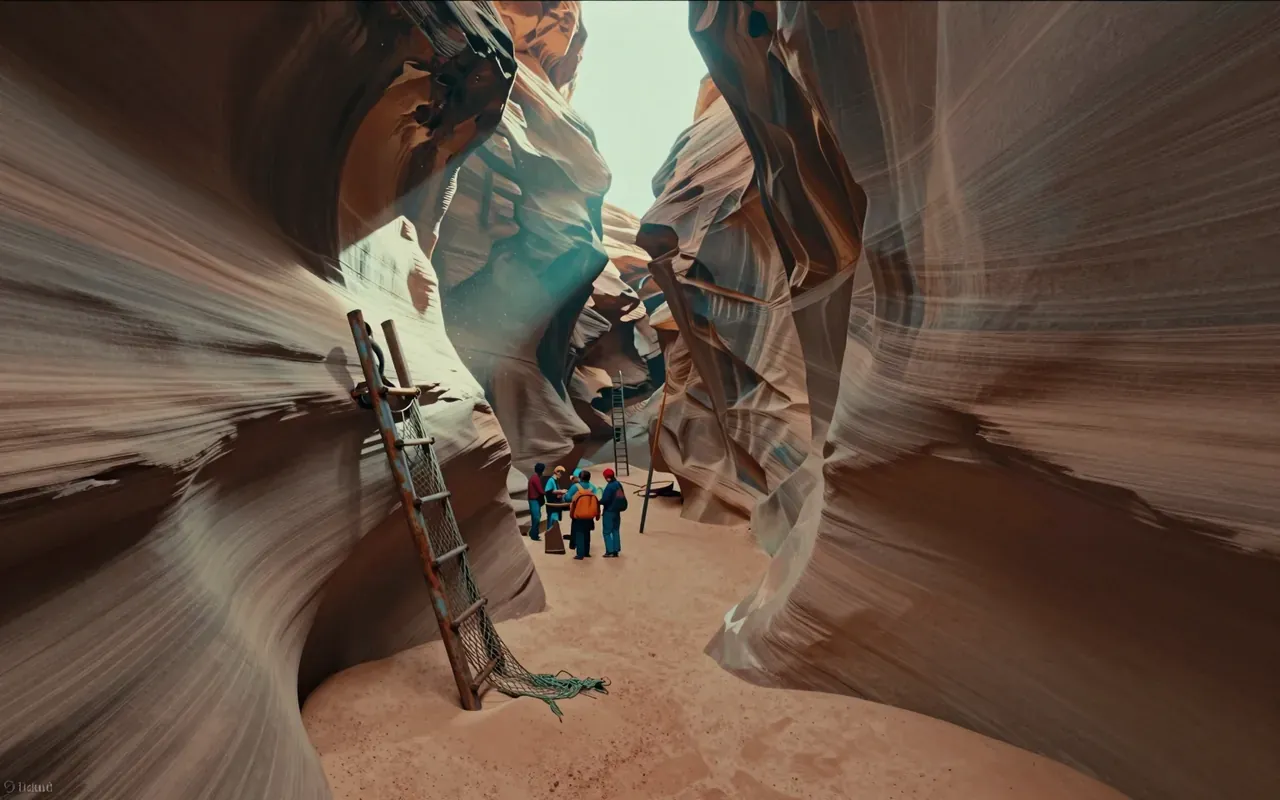
Antelope CanyonAntelope Canyon is a slot canyon on Navajo land in the American Southwest, formed by flash flood erosion of Navajo Sandstone. Monsoon rainwater carries sand into narrow passageways, deepening corridors and smoothing edges into flowing shapes. A flash flood on August 12, 1997 killed eleven tourists in Lower Antelope Canyon — triggered by an upstream thunderstorm 7 miles away. That event replaced amateur wood ladders with bolted systems and cargo nets. Today, a NOAA Weather Radio and alarm horn stand at the fee booth to warn of incoming floods. The canyon remains dangerous, managed, and visually singular.
9:40
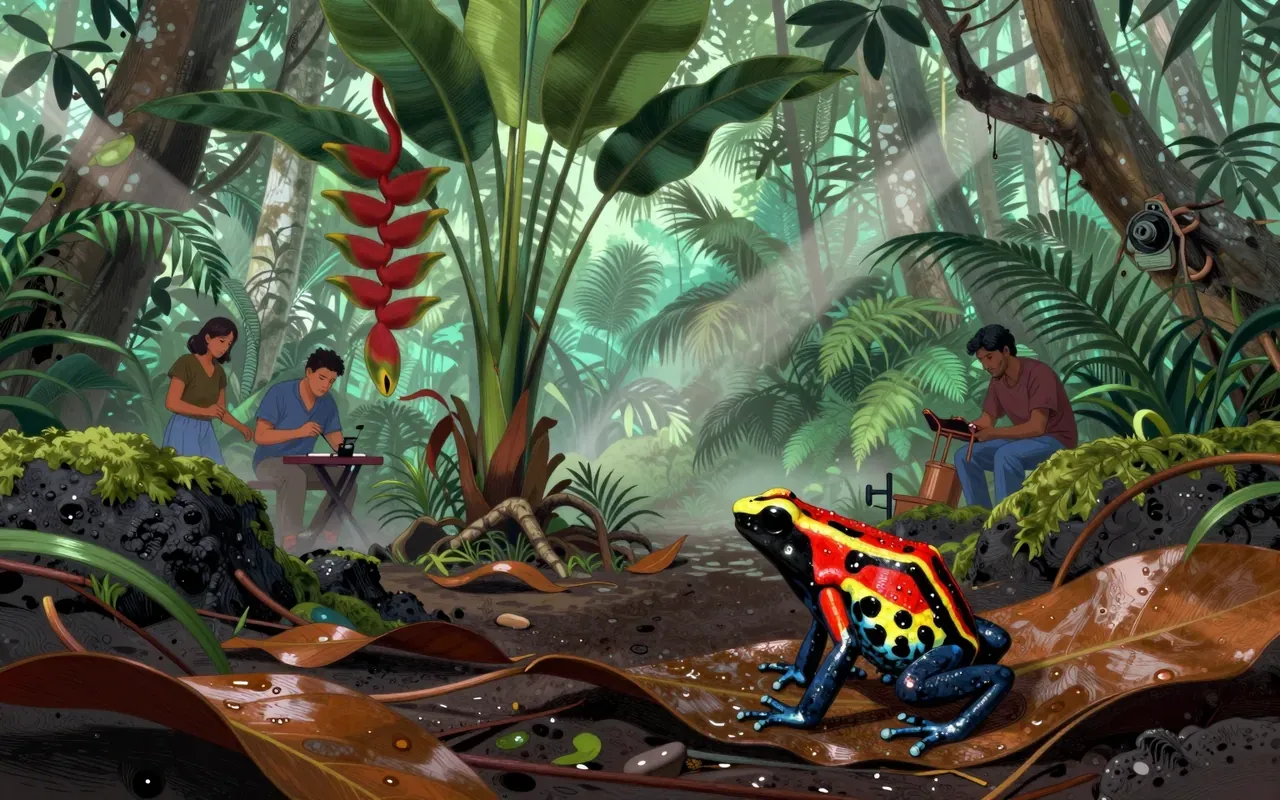
AposematismAposematism is a functional, empirically tested strategy — not metaphor, not speculation. It is defined by honesty, observability, and consequence.
10:00
TundraThe tundra is a biome defined by frigid temperatures and short growing seasons that inhibit tree growth. It occurs in three regional forms — Arctic, Alpine, and Antarctic. Its vegetation comprises low-growing plants such as dwarf shrubs, sedges, grasses, mosses, and lichens. Soils are nutrient-rich (nitrogen, phosphorus) and store vast amounts of carbon in permafrost, acting as a carbon sink — but warming-induced thaw releases greenhouse gases, creating a climate feedback loop.
9:16
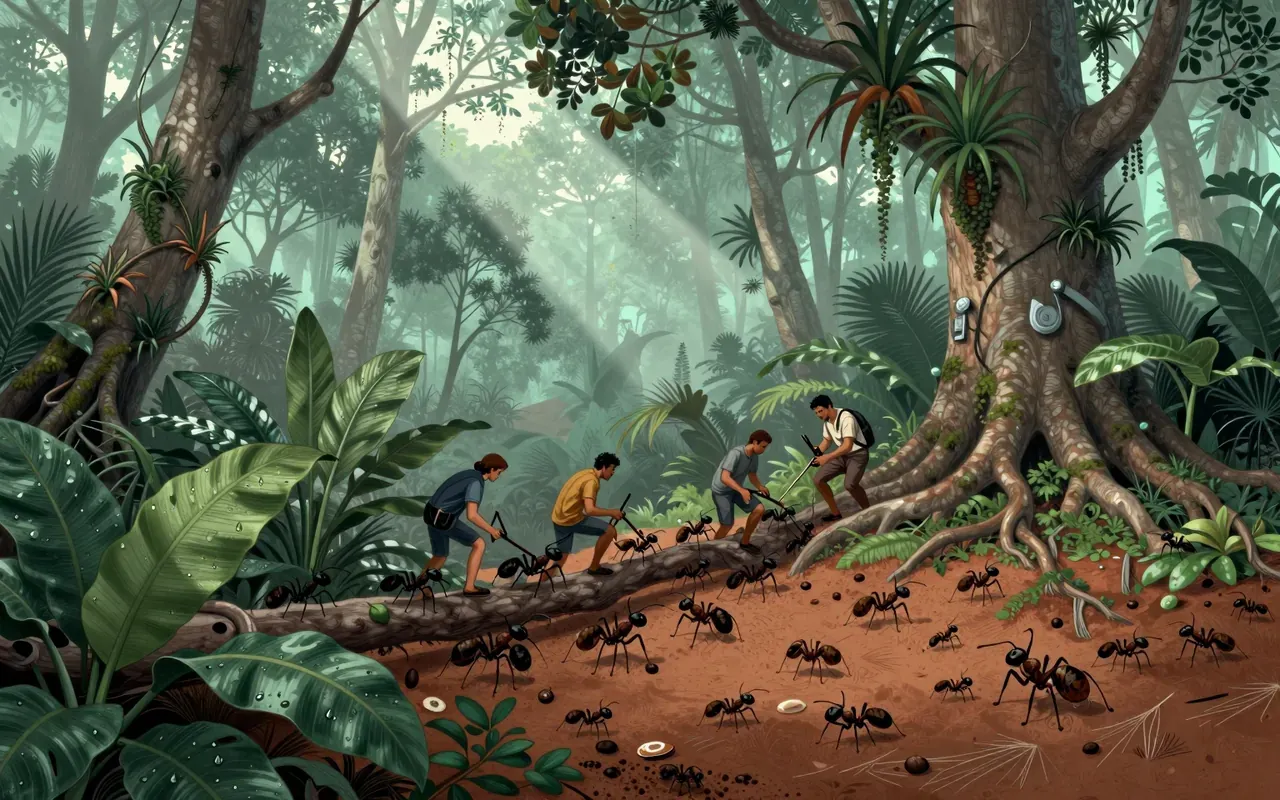
Army antArmy ants are a functional category—not a taxon—defined by nomadism, mass raiding, and monogynous, wingless queens. Genetic evidence from 2003 shows some lineages share deep ancestry; others converged. Their raids drive ecosystem dynamics across tropical forests. They offer no compromise: no stillness, no shared queens, no permanent home.
Up next in Nature

Great Rift Valley

· 9:45

The Great Rift Valley isn’t one rift — it’s a misnamed corridor where tectonics and birds converge.

9:45