naturebriefs
11:16in productionCh. 1 · Origin/ 11:16 · ceiling 15 min
Systems · Habitats

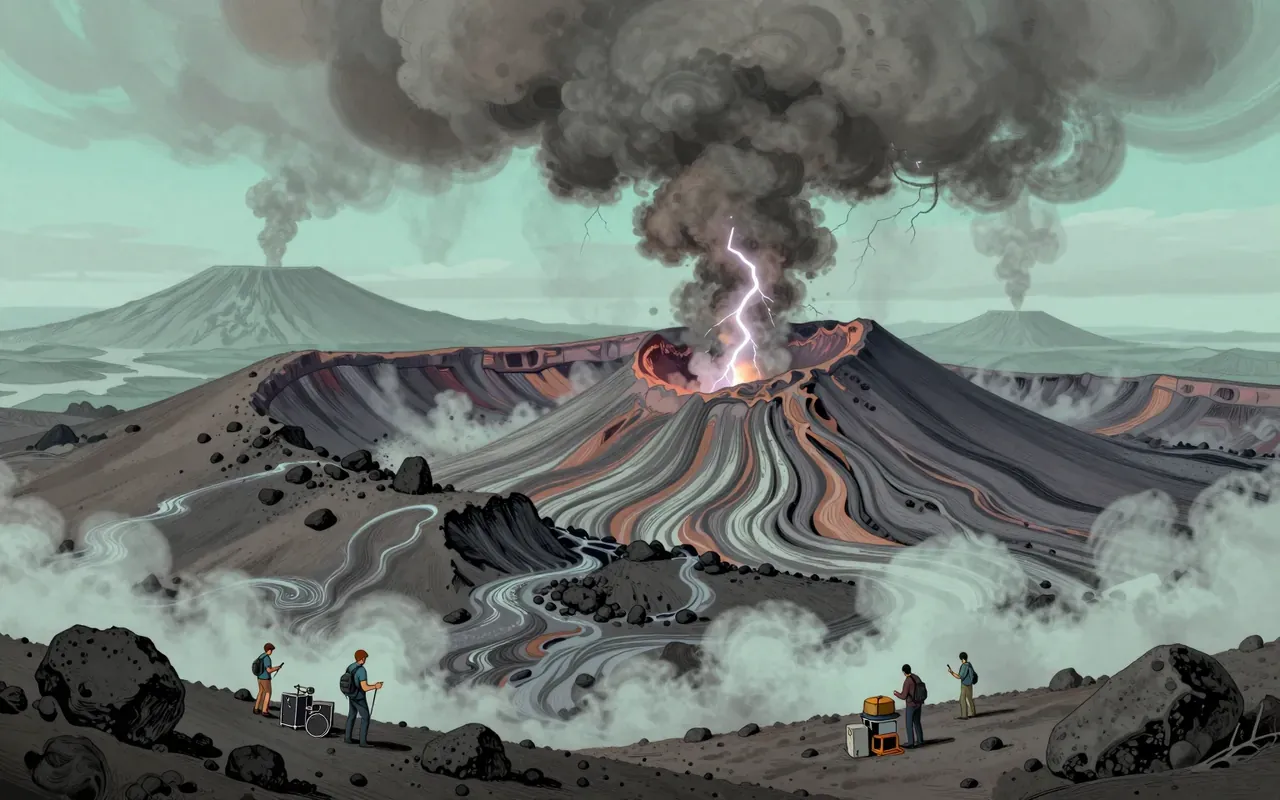
Volcanic lightning

Volcanic lightning isn’t weather — it’s rock breaking apart in real time.

Volcanic lightning is a transient physical phenomenon — not a lifeform — that reveals how rock, ash and energy interact during explosive eruptions. It operates across multiple verified mechanisms, functions as a real-time diagnostic tool, and defies simple meteorological analogy.

Chapters & takeaways6
  1. 0:58
    Origin

    Volcanic lightning only happens during eruptions — never in calm air or ordinary storms.

  2. 2:11
    Mechanism

    Charges build from ash smashing into ash — and rock shattering at the vent — not just from ice.

  3. 3:19
    Ice Is Optional

    Lightning surges above the freezing level — but also strikes below it, where no ice exists.

  4. 4:35
    Water Content

    Volcanic plumes can hold more water than thunderstorms — yet still generate lightning without ice.

  5. 6:10
    Convection Role

    Moist convection lifts ash and triggers instability — but isn’t required for charging.

  6. 7:27
    Geological Signal

    It’s a direct signal of explosive fragmentation — not a side effect of weather.

Worth your time?

Yes. See the whole thing.

4.5/ 5
What works
  • as-a-hazard-proxy
  • as-a-fragmentation-signal
  • as-an-ice-independent-discharge
What does not
  • biological
  • conserved
  • observable-on-demand
  • predictable-by-season
See it if
  • volcanologists
  • hazard-forecasters
  • atmospheric-physicists
Skip it if
  • field-biologists
  • conservation-planners
  • ecologists
The written brief1 min read

What the species is and where it came from

Volcanic lightning is not a species but an electrical discharge unique to volcanic eruptions — caused by particle collisions and rock fragmentation within the plume, not by meteorological conditions alone.

How it works, in terms someone would actually use

Volcanic lightning forms when ash, rock fragments and sometimes ice collide inside an erupting plume — generating static electricity through triboelectric charging and fractoemission near the vent.

What it gets right

It correctly identifies multiple independent charging mechanisms — ash collisions, ice-phase processes, fractoemission — and explains why lightning can spike above the freezing level while still occurring without ice.

What it does not

It does not require ice. It does not behave like ordinary thunderstorm lightning. It does not occur outside active eruptions.

What it changed

It changed how geophysicists interpret eruption dynamics: lightning is now used as a real-time proxy for plume height, ash concentration and fragmentation intensity.

Who it is for, and who it is not

It is for volcanologists, atmospheric physicists and hazard modellers. It is not for biologists, conservationists or field naturalists seeking organisms to observe in situ.

Is it worth your time

Yes — if you study atmospheric electricity, volcanic hazards or plume physics. No — if you expect a biological species, a stable phenomenon, or behaviour you can observe repeatedly in one place.
Same habitat · Systems4 of 81
8:09
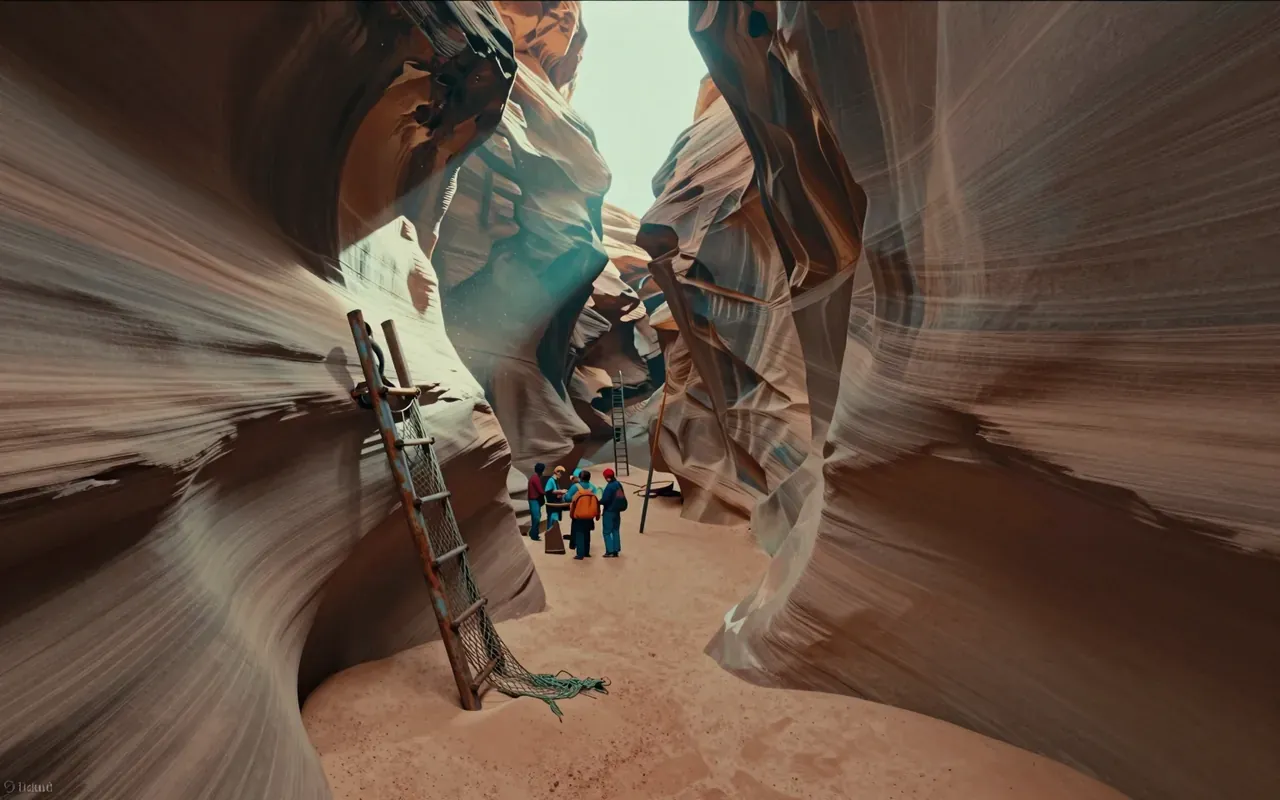
Antelope CanyonAntelope Canyon is a slot canyon on Navajo land in the American Southwest, formed by flash flood erosion of Navajo Sandstone. Monsoon rainwater carries sand into narrow passageways, deepening corridors and smoothing edges into flowing shapes. A flash flood on August 12, 1997 killed eleven tourists in Lower Antelope Canyon — triggered by an upstream thunderstorm 7 miles away. That event replaced amateur wood ladders with bolted systems and cargo nets. Today, a NOAA Weather Radio and alarm horn stand at the fee booth to warn of incoming floods. The canyon remains dangerous, managed, and visually singular.
9:40
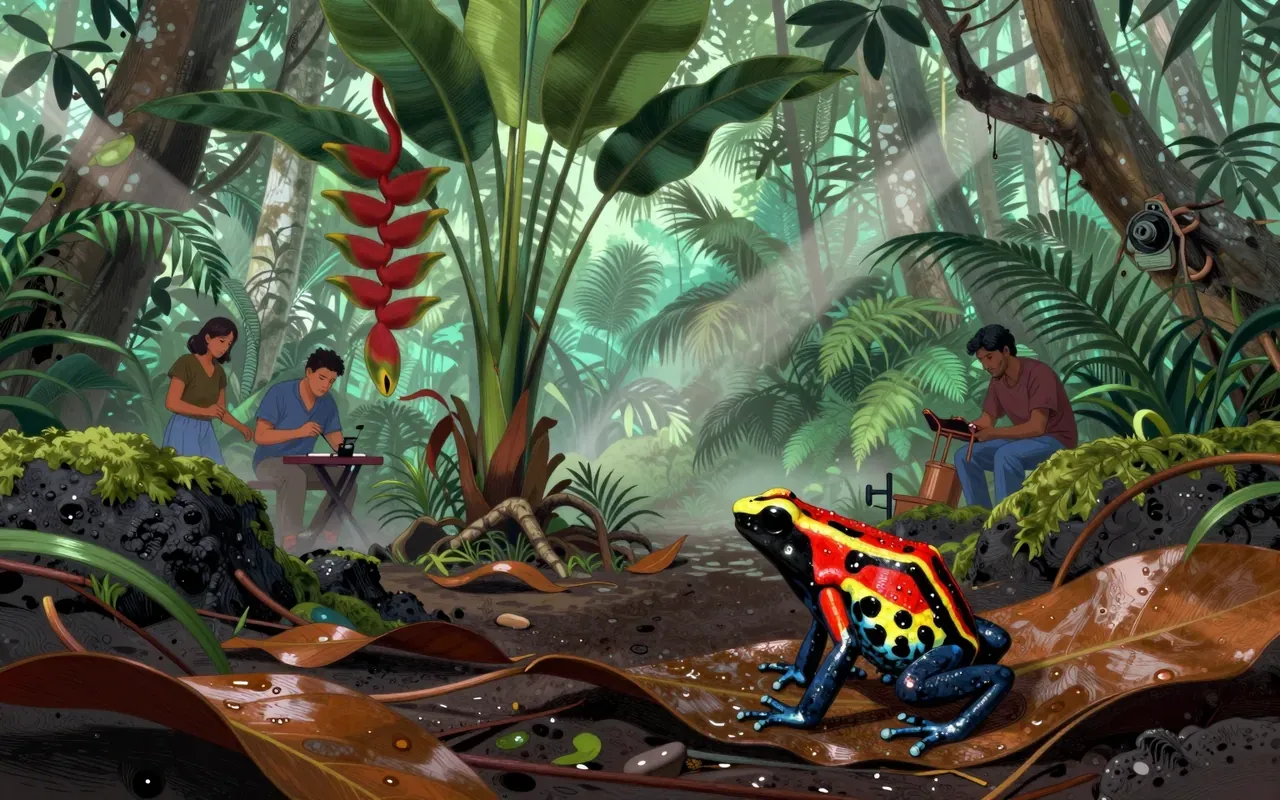
AposematismAposematism is a functional, empirically tested strategy — not metaphor, not speculation. It is defined by honesty, observability, and consequence.
10:00
TundraThe tundra is a biome defined by frigid temperatures and short growing seasons that inhibit tree growth. It occurs in three regional forms — Arctic, Alpine, and Antarctic. Its vegetation comprises low-growing plants such as dwarf shrubs, sedges, grasses, mosses, and lichens. Soils are nutrient-rich (nitrogen, phosphorus) and store vast amounts of carbon in permafrost, acting as a carbon sink — but warming-induced thaw releases greenhouse gases, creating a climate feedback loop.
9:16
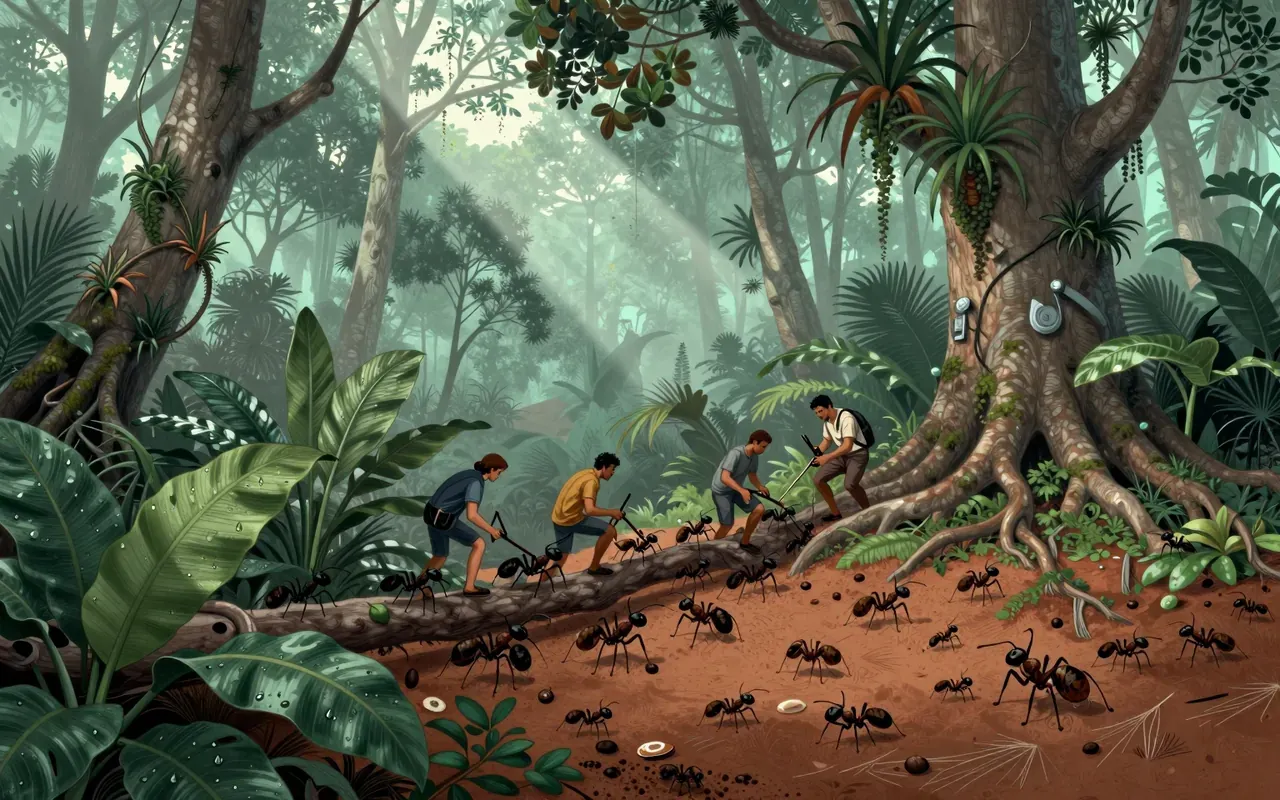
Army antArmy ants are a functional category—not a taxon—defined by nomadism, mass raiding, and monogynous, wingless queens. Genetic evidence from 2003 shows some lineages share deep ancestry; others converged. Their raids drive ecosystem dynamics across tropical forests. They offer no compromise: no stillness, no shared queens, no permanent home.
Up next in Nature

Weaver ant

· 9:50

They stitch leaves with baby silk—and run entire tree canopies like a standing army.

9:50