naturebriefs
9:58in productionCh. 1 · What yeast is not/ 9:58 · ceiling 15 min
Fungi

Yeast

Yeast isn’t a species—it’s a lifestyle adopted by at least 1,500 fungi across two phyla.

Yeast is a functional descriptor, not a biological unit. It names a growth strategy—unicellular, budding or fission-based—adopted by diverse fungi across Ascomycota and Basidiomycota. At least 1,500 species qualify. Saccharomyces cerevisiae is the most studied. It ferments carbohydrates without light, thrives in neutral-to-acid pH, and inhabits sugar-rich surfaces: fruit skins, plant sap, soil, insects. It changed genetics and food production—but offers no range, no behaviour in the wild, no conservation status, and no singular identity.

Chapters & takeaways4
  1. 0:53
    What yeast is not

    Yeast is a growth habit—not a taxon—defined by unicellular form and budding or fission.

  2. 2:52
    How many, and where they sit

    At least 1,500 species qualify; budding types cluster in Saccharomycetales, Ascomycota.

  3. 4:22
    How it runs

    It ferments carbs into CO₂ and alcohol, lives without light, and prefers neutral-to-acid pH.

  4. 5:58
    What changed because of it

    Saccharomyces cerevisiae is the most studied eukaryote—and the engine of bread, beer, and wine.

Worth your time?

Yes. See the whole thing.

4/ 5
What works
  • as a metabolic model
  • as a fermentation agent
  • as a genetic workhorse
What does not
  • form a taxonomic group
  • have a unified phylogeny
  • exhibit consistent multicellularity
  • require sunlight
See it if
  • cell biologists
  • geneticists
  • food scientists
Skip it if
  • field ecologists
  • conservation practitioners
  • wildlife observers
The written brief1 min read

What the species is and where it came from

Yeast is not a species. It is a functional category spanning at least 1,500 fungal species. These are eukaryotic microorganisms that originated hundreds of millions of years ago. Budding yeasts belong to Saccharomycetales in Ascomycota.

How it works, in terms someone would actually use

Yeast converts carbohydrates to carbon dioxide and alcohol through fermentation. It uses organic compounds for energy. It does not require sunlight. It grows best in neutral or slightly acidic pH.

What it gets right

It correctly identifies a functional growth form: unicellular, budding or fission-based reproduction. It occupies sugar-rich niches—fruit skins, plant exudates, soil, insect associations. It reflects real metabolic constraints: chemoorganotrophy, pH preference, oxygen independence.

What it does not

Yeast is not a taxonomic group. It is not phylogenetically unified. It does not form a single evolutionary lineage. It is not exclusively unicellular—some exhibit facultative multicellularity or dimorphism.

What it changed

Saccharomyces cerevisiae changed cell biology. It is one of the most thoroughly studied eukaryotic microorganisms. It underpins baking, brewing, and winemaking.

Who it is for, and who it is not

It is for microbiologists, geneticists, fermentation scientists, and ecologists studying sugar-rich microbial niches. It is not for birdwatchers, field botanists, conservation planners, or anyone seeking a discrete organism with range maps or population trends.

Is it worth your time

Yes—if you are studying eukaryotic cell biology, fermentation, or microbial ecology. No—if you expect a single species, a defined habitat, or observable behaviour beyond lab culture.
Same habitat · Fungi4 of 24
8:46
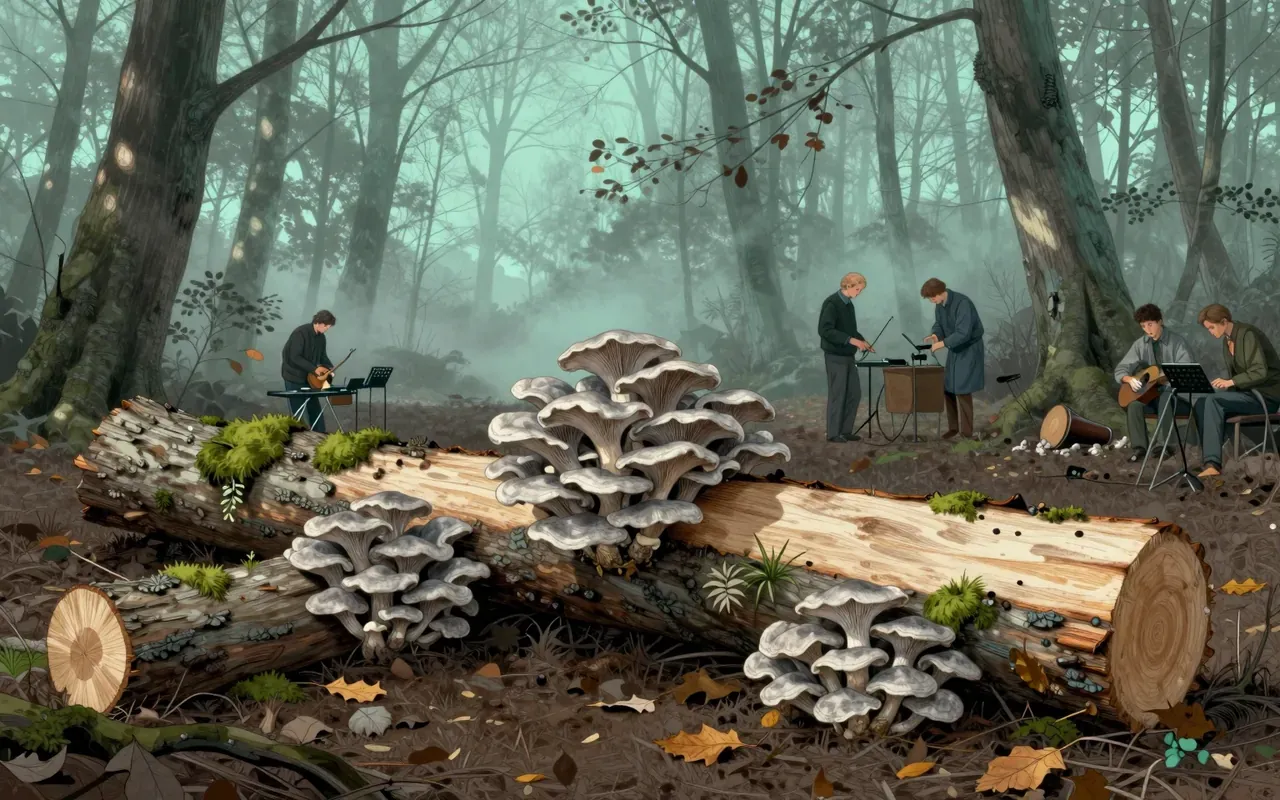
PleurotusPleurotus is a genus of gilled mushrooms. It includes some of the most commonly cultivated edible mushrooms in the world. Some species have been used in the mycoremediation of pollutants. The caps may be laterally attached (with no stipe). If there is a stipe, it is normally eccentric and the gills are decurrent along it. The spores are smooth and elongated (described as "cylindrical"). Where hyphae meet, they are joined by clamp connections. Pleurotus is not considered to be a bracket fungus, and most of the species are monomitic (with a soft consistency). However, remarkably, P. dryinus can sometimes be dimitic, meaning that it has additional skeletal hyphae, which give it a tougher consistency like bracket fungi.
8:28
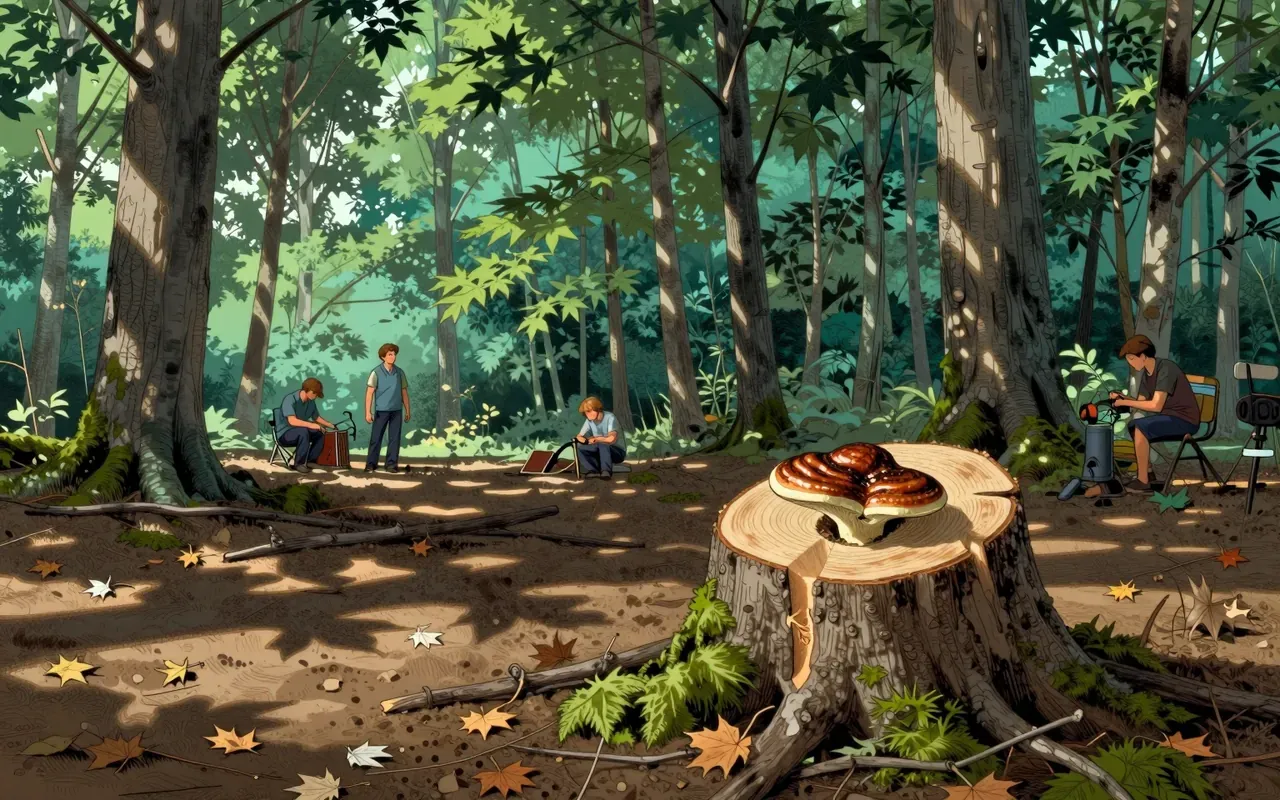
Lingzhi (mushroom)Lingzhi is a morphologically distinct polypore fungus native to East Asia, defined by its cap shape, pore structure, and substrate specificity. Its cultural role is stated, but no ecological function beyond saprotrophy/parasitism is described. No population data, lifespan, or behavioural observation beyond growth form is given. It is cultivated and traded—but not observed interacting with animals, insects, or broader food webs.
10:22
MorchellaMorchella is a genus of edible sac fungi in the order Pezizales (division Ascomycota), typified by Morchella esculenta in 1794. It exhibits a distinctive honeycomb cap morphology due to ridges and pits, and comprises over seventy molecularly supported species worldwide, most showing high continental endemism and provincialism. The genus is under active phylogenetic, biogeographical, taxonomic, and nomenclatural study, with new species recently described across multiple continents. Morels are highly valued in gourmet cuisine—especially Catalan and French—but are toxic when raw or undercooked. Commercial harvesting of wild morels constitutes a multimillion-dollar industry across the temperate Northern Hemisphere, including North America, Turkey, China, the Himalayas, India, and Pakistan. Their ecology remains poorly understood, though many species associate with trees symbiotically or saprotrophically, and some exhibit pyrophilic behavior, fruiting abundantly after wildfires. Cultivation has historically been difficult, though recent breakthroughs—including indoor cultivation using grass and climate control—have achieved reliable fruiting. Toxicity concerns include thermolabile hydrazine-based mycotoxins neutralized by cooking, and risks from environmental contaminants like lead and arsenic in certain habitats.
8:54
TruffleTruffles are subterranean ascomycete fruiting bodies—mostly Tuber, but over one hundred genera—forming obligate ectomycorrhizal bonds with trees. They depend on fungivorous animals for spore dispersal. They aid nutrient cycling and drought tolerance. Phylogenetics shows their symbiotic habit evolved convergently, not from shared ancestry.
Up next in Nature

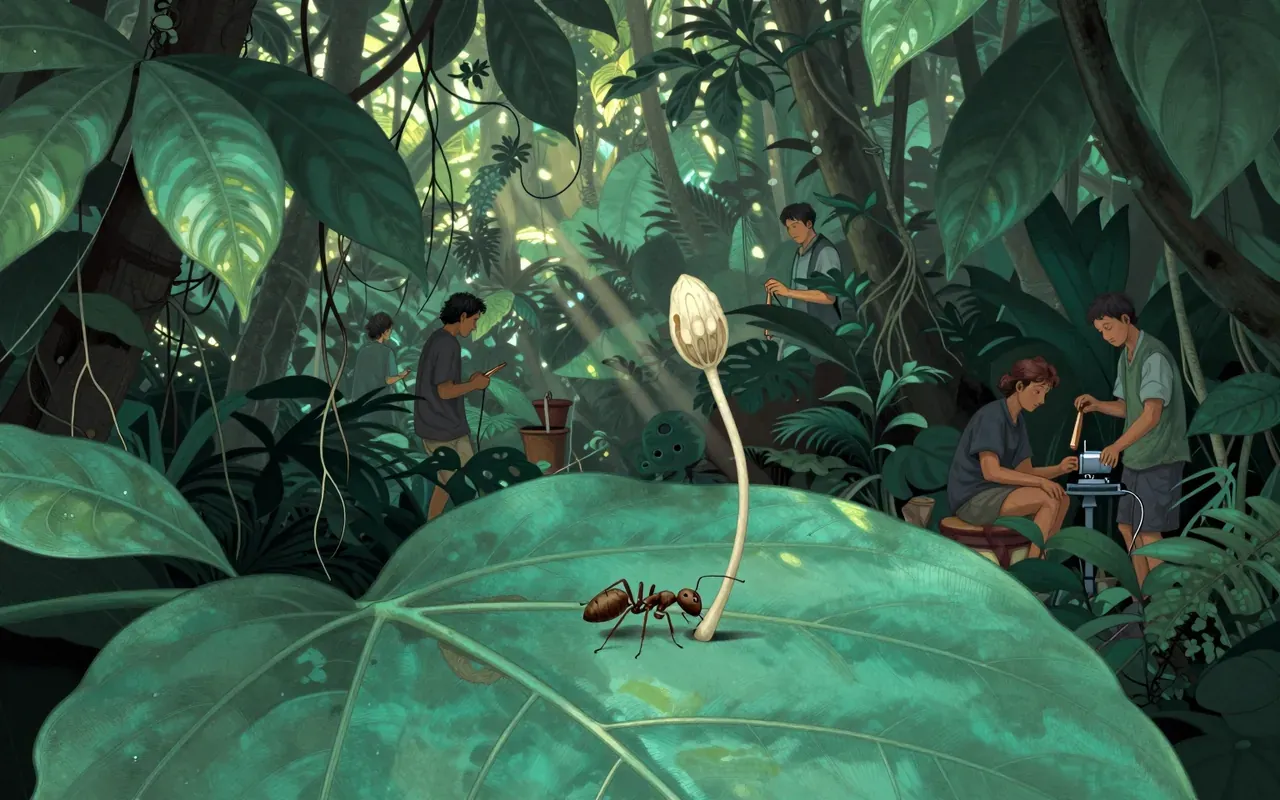
Ophiocordyceps unilateralis

· 10:42

This fungus doesn’t just kill ants—it hijacks them, then fails more often than it succeeds.

10:42