10:16in productionCh. 1 · Where They Are (and Aren’t)/ 10:16 · ceiling 15 min
Birds
Albatross
They fly farther than any bird—but only where the wind and cold water agree.
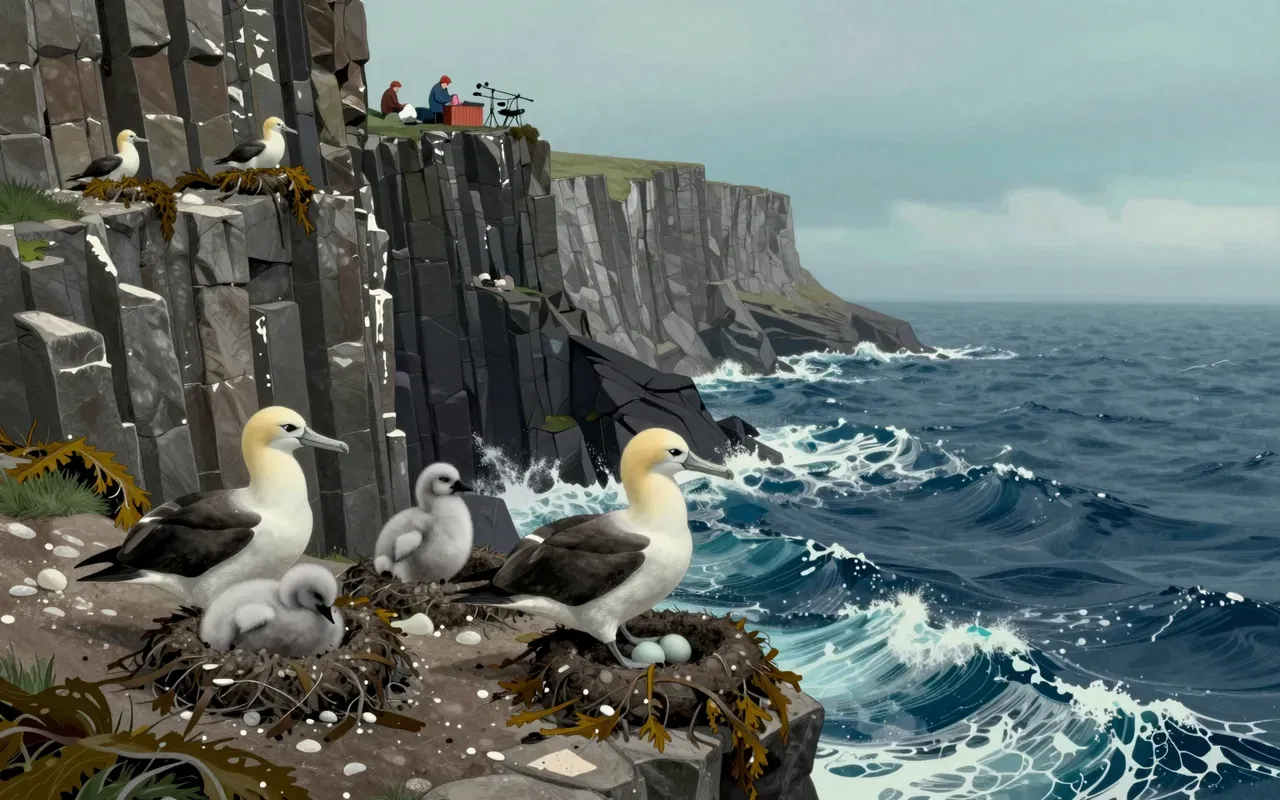
Albatrosses are large seabirds in the family Diomedeidae, order Procellariiformes. They range widely in the Southern Ocean and North Pacific. They are absent from the North Atlantic today but lived there until the Pleistocene. They depend on cold water currents for foraging and nesting. The geographically outlying genus Phoebastria—which includes three North Pacific species and an equatorial (Galapagos) species—exploits the California, Alaska, Oyashio and Humboldt currents, nesting on major oceanic islands near those currents. Great albatrosses are among the largest of flying birds, with wingspans reaching up to 2.5–3.5 metres (8.2–11.5 ft) and bodies over 1 metre (3.3 ft) in length. Albatrosses are highly efficient in the air, using dynamic soaring and slope soaring to cover great distances with little exertion. They feed on squid, fish, and krill by either scavenging, surface seizing, or diving. Twenty-one of 22 IUCN-recognized species are threatened, with conservation statuses spanning Critically Endangered to Near Threatened.
Albatrosses are tubenosed seabirds found only in the Southern Ocean and North Pacific—not the North Atlantic today.
2:06
Cold Currents, Not Coastlines
They depend on cold water currents—and some species exploit four major ones across the Pacific.
3:05
Flight Without Flapping
They cover thousands of kilometres using wind, not wingbeats—dynamic and slope soaring make it possible.
4:24
How They Feed
They eat squid, fish, and krill—by scavenging, snatching at the surface, or diving.
5:38
A Ghost Range
Their absence from the North Atlantic today contrasts with Pleistocene fossils—proof of a lost range.
7:08
Size That Sustains Soaring
Great albatrosses have wingspans up to 3.5 metres—the largest of any flying bird.
Worth your time?
Yes. See the whole thing.
4.5/ 5
What works
flight efficiency via dynamic and slope soaring
strict habitat fidelity to cold water currents
foraging on squid, fish, and krill across open ocean
What does not
nest on continental shores
use warm-water currents
occur in the North Atlantic today
See it if
observers who track ocean winds, cold currents, and remote islands
not for casual coastal birdwatchers in Europe or the eastern US
Skip it if
casual coastal birdwatchers in Europe or the eastern US
The written brief1 min read
What the species is and where it came from
Albatrosses are large seabirds in the family Diomedeidae, order Procellariiformes. They range widely in the Southern Ocean and North Pacific. They are absent from the North Atlantic today but lived there until the Pleistocene.
How it works, in terms someone would actually use
Albatrosses fly vast distances using dynamic and slope soaring. They ride wind over waves and slopes to travel with little exertion. They feed on squid, fish, and krill by scavenging, surface seizing, or diving.
What it gets right
They get flight efficiency right: wingspans up to 3.5 metres let them glide for hours without flapping. They get habitat fidelity right: they tie nesting and foraging strictly to cold water currents like the Humboldt, Oyashio, and California systems.
What it does not
Albatrosses do not nest on continental shores. They do not use warm-water currents. They do not occur in the North Atlantic today.
What it changed
Albatrosses shaped how we understand avian flight efficiency and oceanic foraging ecology. Their absence from the North Atlantic today—despite Pleistocene presence there—marks a major biogeographic shift.
Who it is for, and who it is not
It is for observers who track ocean winds, cold currents, and remote islands. It is not for casual coastal birdwatchers in Europe or the eastern US.
Is it worth your time
Yes—if you want to see a seabird that exploits cold ocean currents and wind physics in real time. No—if you expect to find one in the North Atlantic or near warm coasts.