What the species is and where it came from
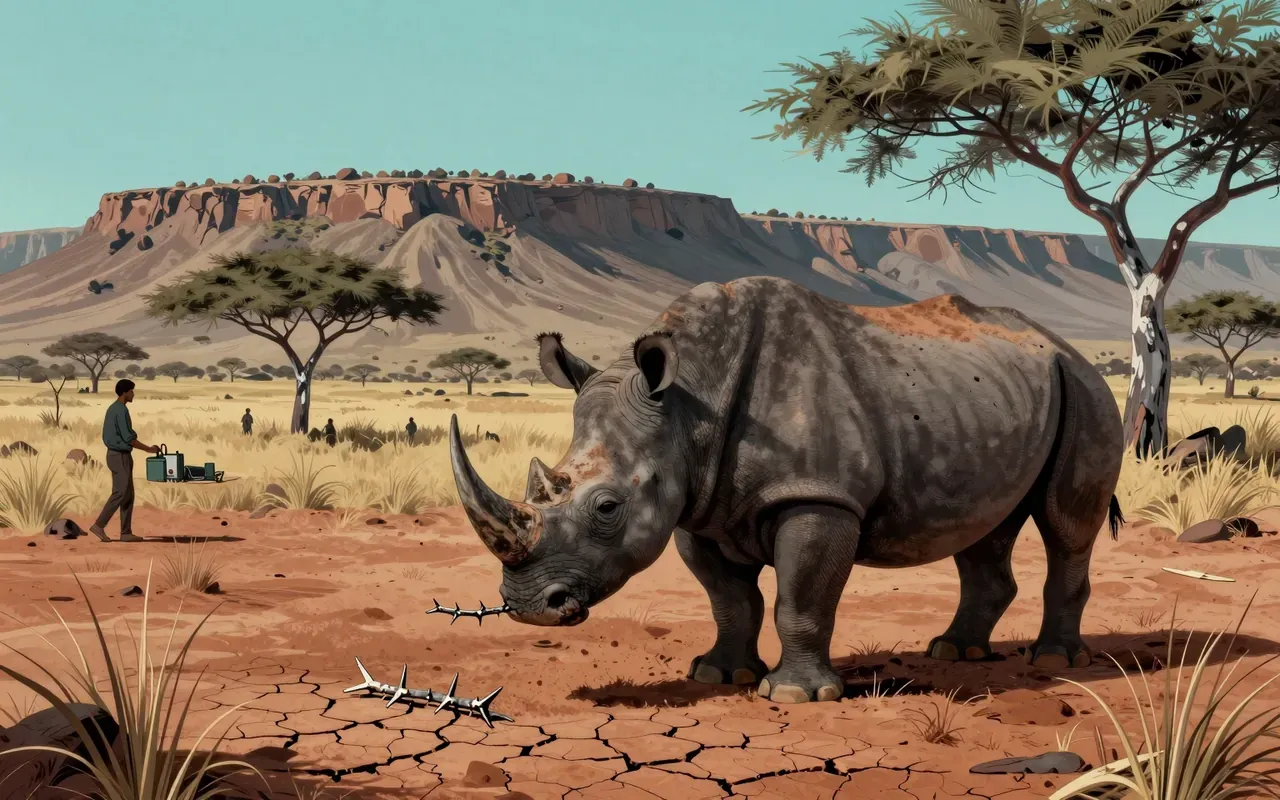
The black rhinoceros (Diceros bicornis) is a critically endangered mammal native to East and Southern Africa—including Angola, Botswana, Eswatini, Kenya, Lesotho, Malawi, Mozambique, Namibia, South Africa, Tanzania, Zambia and Zimbabwe. It is the only extant species of the genus Diceros. Its colour ranges from brown to grey.
How it works, in terms someone would actually use
It uses a pointed, prehensile upper lip to grasp leafy plants, twigs and woody vegetation. It browses selectively. It is herbivorous.
What it gets right
It gets browsing right. Its hooked lip lets it strip leaves from Acacia and other spiny shrubs no other large herbivore handles as efficiently.
What it does not
It does not survive outside protected areas or where anti-poaching enforcement is weak. It does not tolerate habitat fragmentation. It does not recover quickly from population collapse.
What it changed
It changed conservation practice: the extinction of the western black rhinoceros in 2011 became a global benchmark for irreversible loss driven by poaching.
Who it is for, and who it is not
It is for field biologists, rangers, and ecotourists in its range who understand that seeing one means witnessing both ecological function and acute vulnerability. It is not for casual viewers expecting easy sightings or stable populations.
Is it worth your time
Yes—if you are in East or Southern Africa and want to see a large, critically endangered mammal that shapes its habitat by browsing tough, thorny vegetation others avoid.