naturebriefs
7:58in productionCh. 1 · Where it lives/ 7:58 · ceiling 15 min
Fish & sea life · Evolution

Blue-ringed octopus

It doesn’t bite — it paralyses. And it flashes blue first.

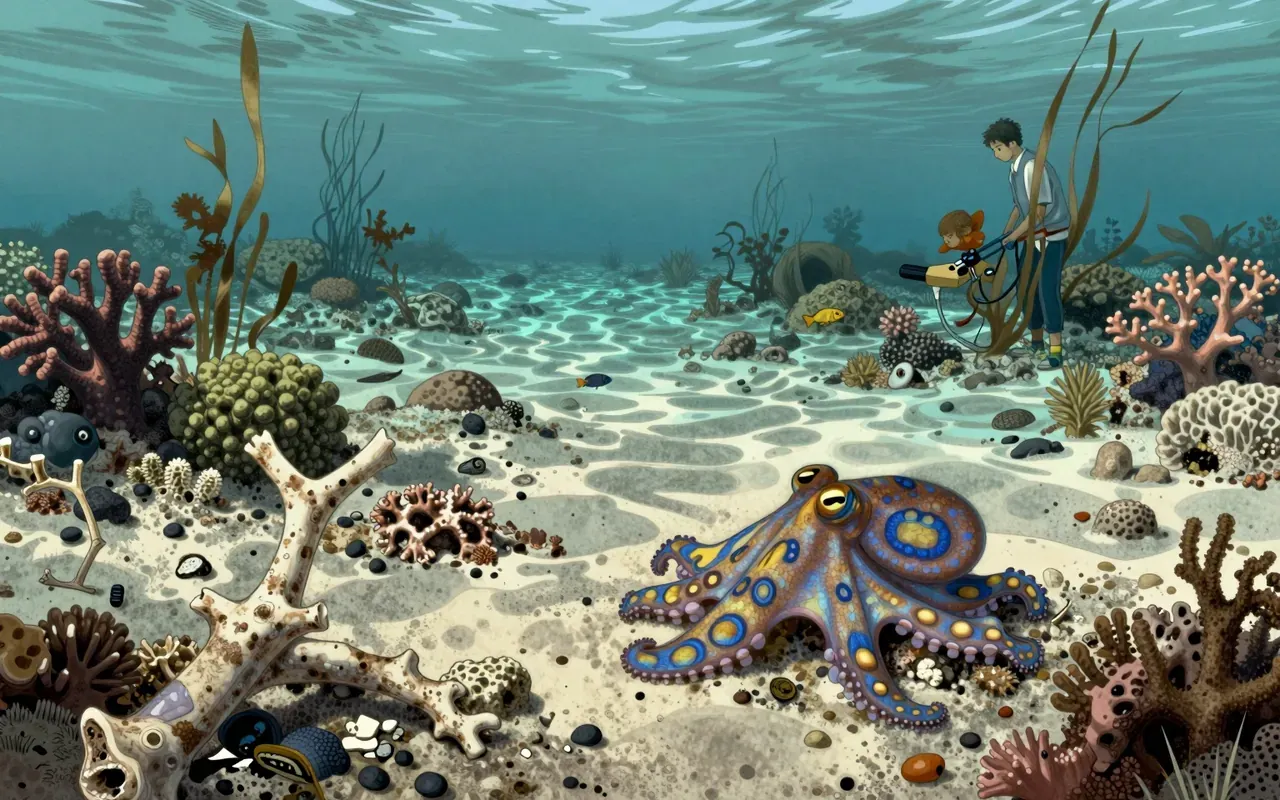
The blue-ringed octopus is a compact, cryptic predator that turns danger into signal: it hides until threatened, then flashes unmistakable blue rings while deploying tetrodotoxin — a bacterial-synthesised neurotoxin stored throughout its body and even in its eggs. It occupies a narrow ecological niche — shallow Indo-Pacific reefs and tide pools — and offers no spectacle unless provoked. Its evolutionary innovations are biochemical and behavioural, not visual or vocal. It demands attention not because it is showy, but because it is lethal, precise, and utterly self-contained.

Chapters & takeaways4
  1. 0:56
    Where it lives

    Four confirmed species — Hapalochlaena — live across the Indo-Pacific, from Japan to Australia.

  2. 2:20
    How it warns

    It hides in crevices. It flashes blue rings only when threatened.

  3. 3:40
    What it eats — and what eats back

    It eats crabs and shrimp. Its venom contains tetrodotoxin — one of the most potent neurotoxins known.

  4. 4:45
    How long it lasts — and how fast it ends

    It lives two to three years. Its venom kills without antivenom — treatment is respiratory support alone.

Worth your time?

Yes. See the whole thing.

4.5/ 5
What works
  • camouflage
  • aposematism
  • bacterial-venom-synthesis
  • neurotoxin-delivery
What does not
  • antivenom
  • large-prey-hunting
  • surface-dwelling-behaviour
  • long-distance-migration
See it if
  • reef-snorkellers
  • toxicology-students
  • marine-biologists
Skip it if
  • casual-beachcombers
  • wildlife-photographers-seeking-action
The written brief1 min read

What the species is and where it came from

Blue-ringed octopus is a genus (Hapalochlaena) of four confirmed species. It was described by British zoologist Guy Coburn Robson in 1929. It lives in tide pools and coral reefs across the Pacific and Indian Oceans, from Japan to Australia.

How it works, in terms someone would actually use

It hides in crevices. It flashes blue rings when threatened. It paralyses prey and predators with tetrodotoxin. It eats crabs, hermit crabs, shrimp, and other small sea animals. It synthesises venom via endosymbiotic bacteria — stored in its body and eggs — without self-harm.

What it gets right

It gets camouflage right — dermal chromatophores match rock and coral. It gets aposematism right — blue rings flash unambiguously. It gets chemical defence right — tetrodotoxin acts fast, reliably, and universally on nervous systems.

What it does not

It does not warn with sound or movement before flashing rings. It does not hunt large prey. It does not survive outside shallow marine habitats. It does not have antivenom.

What it changed

It changed how we see venom delivery in cephalopods: not just for defence, but pre-emptively stored in eggs, produced by bacteria, and deployed without self-toxicity.

Who it is for, and who it is not

It is for tide-pool foragers, reef snorkellers, toxicology students, and marine biologists studying bacterial symbiosis. It is not for casual beachcombers expecting visible drama or photographers seeking posed subjects.

Is it worth your time

Yes, if you dive or wade in Pacific or Indian Ocean tide pools and coral reefs from Japan to Australia. No, if you seek spectacle: it is small, still, and rarely seen unless provoked.

Same habitat · Fish & sea life4 of 46
10:23
MacrocystisMacrocystis pyrifera is a monospecific brown alga that forms extensive underwater forests on rocky substrata in cool, nutrient-rich waters across the Southern Hemisphere and northeast Pacific. It grows up to 60 cm per day, reaches over 45 m in length, and uses pneumatocysts to maintain canopy structure. It supports biodiversity, alters hydrodynamics, and locally raises pH—but only where temperatures stay below 21 °C and urchin pressure remains low. Its taxonomy was consolidated in 2009–2010. Conservation status varies: endangered in Australia, At Risk–Declining in New Zealand.
8:47
OrcaOrca is a cosmopolitan toothed whale—the largest oceanic dolphin—with population-specific diets and intergenerationally transmitted behaviours. Its individual identification via dorsal fin and saddle patch enables precise photographic census. The IUCN lists it as data deficient due to unresolved taxonomic questions. Indigenous peoples in the Pacific Northwest, Australia, and Peru revere it; Western cultures historically feared it.
8:36
TetraodontidaeTetraodontidae is a family of marine and freshwater fish in the order Tetraodontiformes, characterised by four fused beak-like teeth, absence of ribs and pelvic fins, and a specialised defence mechanism involving stomach inflation and dermal spines. Most species are toxic due to tetrodotoxin concentrated in liver and skin, though some — like Sphoeroides maculatus — are nontoxic and consumed as delicacies. They inhabit tropical, temperate, and freshwater ecosystems; diet centres on algae and small invertebrates; and key adaptations include inflation, independent eye movement, colour change, and aposematic colouration.
8:27
Rogue waveRogue waves are transient, non-biological oceanic events—defined, observed, replicated, and hazardous. They do not inhabit, reproduce, migrate, or evolve. They are physics made visible.
Up next in Nature

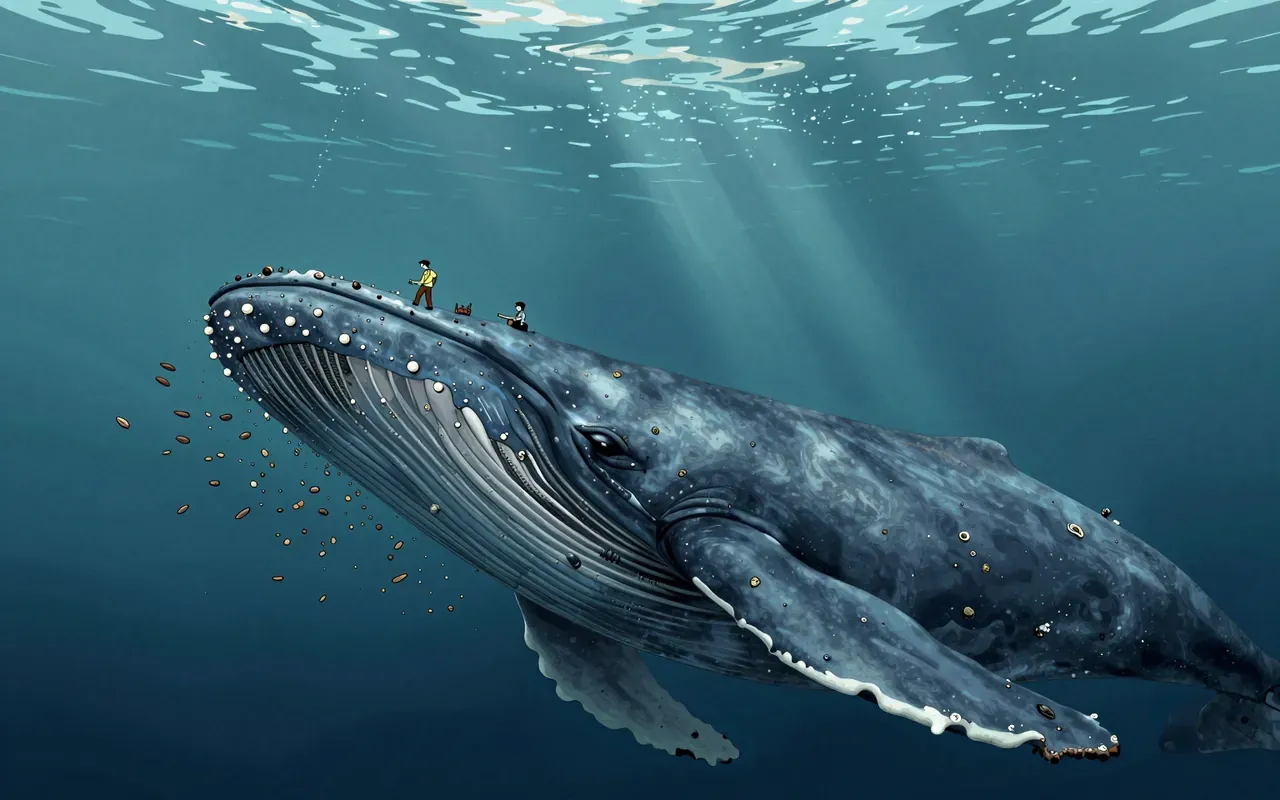
Blue whale

· 8:59

The largest animal ever confirmed doesn’t roar—it hums at frequencies humans can barely feel, and records its life in wax.

8:59