What the species is and where it came from
Seahorses are 47 species of small marine bony fish in the genus Hippocampus. They evolved from pipefish. Their earliest fossils—H. sarmaticus and H. slovenicus—date to the middle Miocene, ~13 Ma, in Slovenia.
How it works, in terms someone would actually use
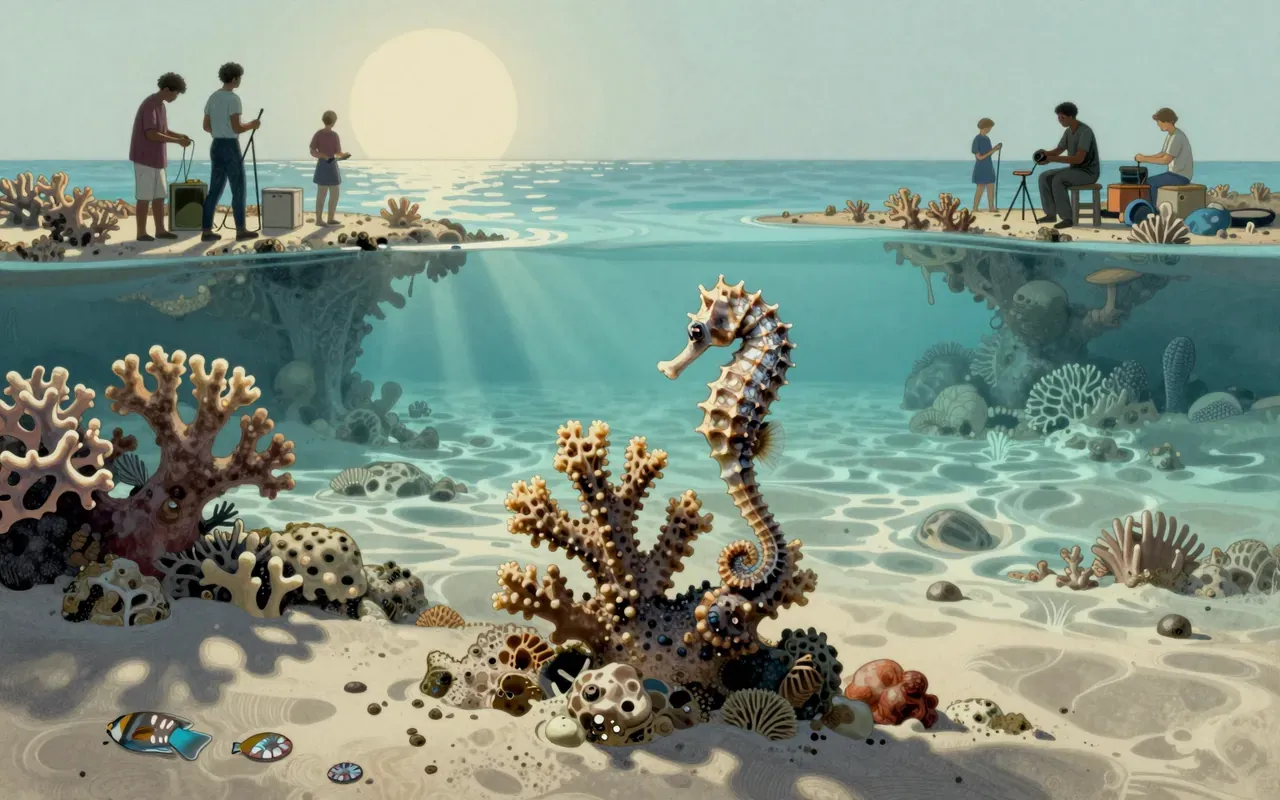
Seahorses grip seagrass, coral, or mangrove roots with their prehensile tails. They swim upright using a single dorsal fin. They feed by sucking small crustaceans through tubular snouts.
What it gets right
Seahorses anchor themselves precisely where flow is low and food accumulates. Their bony armour deters many predators. Their upright stance and camouflage work in vertical habitats like seagrass meadows.
What it does not
Seahorses do not swim well. They do not migrate long distances. They do not tolerate strong currents or open ocean. They do not appear in the fossil record before 13 million years ago.
What it changed
Seahorses reconfigured pipefish anatomy: upright posture, fused vertebrae, reduced pelvis, and male pregnancy evolved from ancestral pipefish form.
Who it is for, and who it is not
It is for divers, intertidal naturalists, and marine ecologists working in shallow coastal habitats. It is not for pelagic observers, freshwater biologists, or anyone expecting rapid movement or wide distribution.
Is it worth your time
Yes—if you are diving or snorkelling in shallow seas, brackish estuaries or lagoons where seagrass or coral holds steady. They are cryptic, slow, and visible only when still.