10:03in productionCh. 1 · Origin/ 10:03 · ceiling 15 min
Reptiles & amphibians
Boa constrictor
A constrictor that proves size isn’t fixed—it’s negotiated by sex, place, and prey.
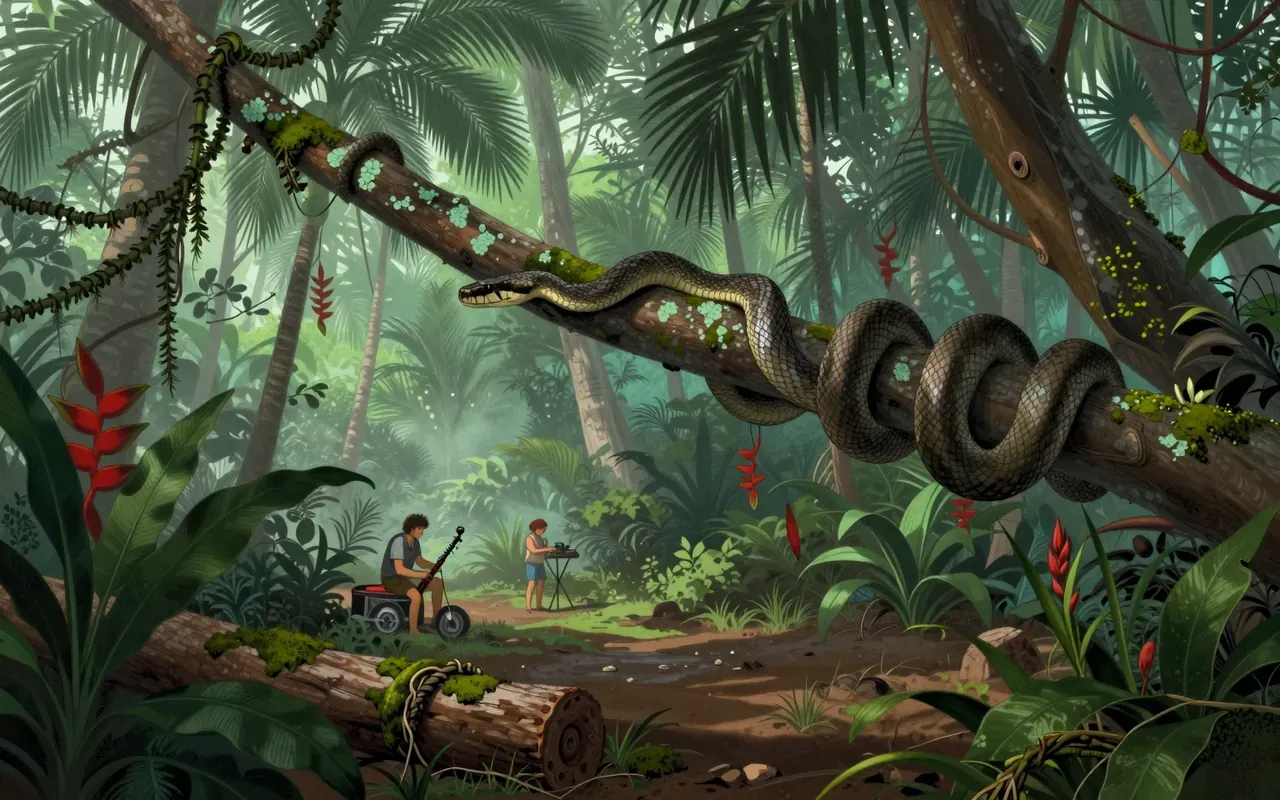
Boa constrictor is a large, non-venomous, heavy-bodied boid native to tropical South America. It exhibits clear sexual dimorphism: females are larger in both length and girth than males. Mature females usually measure 7–10 ft; males 6–8 ft. Females commonly exceed 10 ft in captivity, with verified lengths up to 14 ft. The largest documented non-stretched dry skin measures 14.6 ft without head. A report of an 18.5 ft specimen was misidentified as a green anaconda. It feeds on small-to-medium mammals and birds. It inhabits tropical rainforests and arid semidesert. It is frequently kept and bred in captivity. A verified lifespan in captivity is 40 years, 3 months, and 14 days. It is listed under CITES Appendix II (except B. c. occidentalis).
It comes from tropical South America—not Central America, not the Caribbean, not North America.
1:58
Sexual Dimorphism
Females are larger than males—consistently, visibly, and measurably.
3:08
Size Range
Length ranges from 3 to 13 ft in the wild—but captive females regularly hit 12–14 ft.
4:26
Maximum Size
The largest verified skin is 14.6 ft—no credible record exceeds it.
5:31
Captivity
It is one of the most frequently kept and bred boids in captivity.
7:04
Record Specimen
The largest documented non-stretched dry skin is held at Zoologische Staatssammlung München.
Worth your time?
Yes. See the whole thing.
4/ 5
What works
shows predictable size variation by sex and environment
thrives in captivity with long verified lifespans
provides clear, observable behavioural contrast between sexes
What does not
reach 18.5 ft
have venom
show no sexual dimorphism
See it if
reptile keepers
field biologists in tropical South America
CITES educators
Skip it if
those seeking venom data
those needing population figures
those requiring conservation status details
The written brief1 min read
What the species is and where it came from
Boa constrictor is a large, non-venomous, heavy-bodied boid native to tropical South America.
How it works, in terms someone would actually use
It kills prey by coiling and tightening until circulation stops. It eats small-to-medium mammals and birds. It lives in tropical rainforests and arid semidesert.
What it gets right
It gets right the balance of power and control: females reliably exceed 10 ft, especially in captivity; males stay smaller; length varies predictably with locality and prey.
What it does not
It does not reach 18.5 ft—the reported specimen was misidentified as a green anaconda.
What it changed
It changed how people keep and breed boids in captivity—verified records include a lifespan of 40 years, 3 months, and 14 days.
Who it is for, and who it is not
It is for reptile keepers, field biologists working in tropical South America, and educators using CITES Appendix II species as case studies. It is not for those seeking venom, extreme longevity data, or population trends—none are provided.
Is it worth your time
Yes—if you want to see a large, non-venomous constrictor that thrives in captivity and shows clear sexual dimorphism in the wild.