8:38in productionCh. 1 · Where it lives/ 8:38 · ceiling 15 min
Insects & invertebrates · Habitats
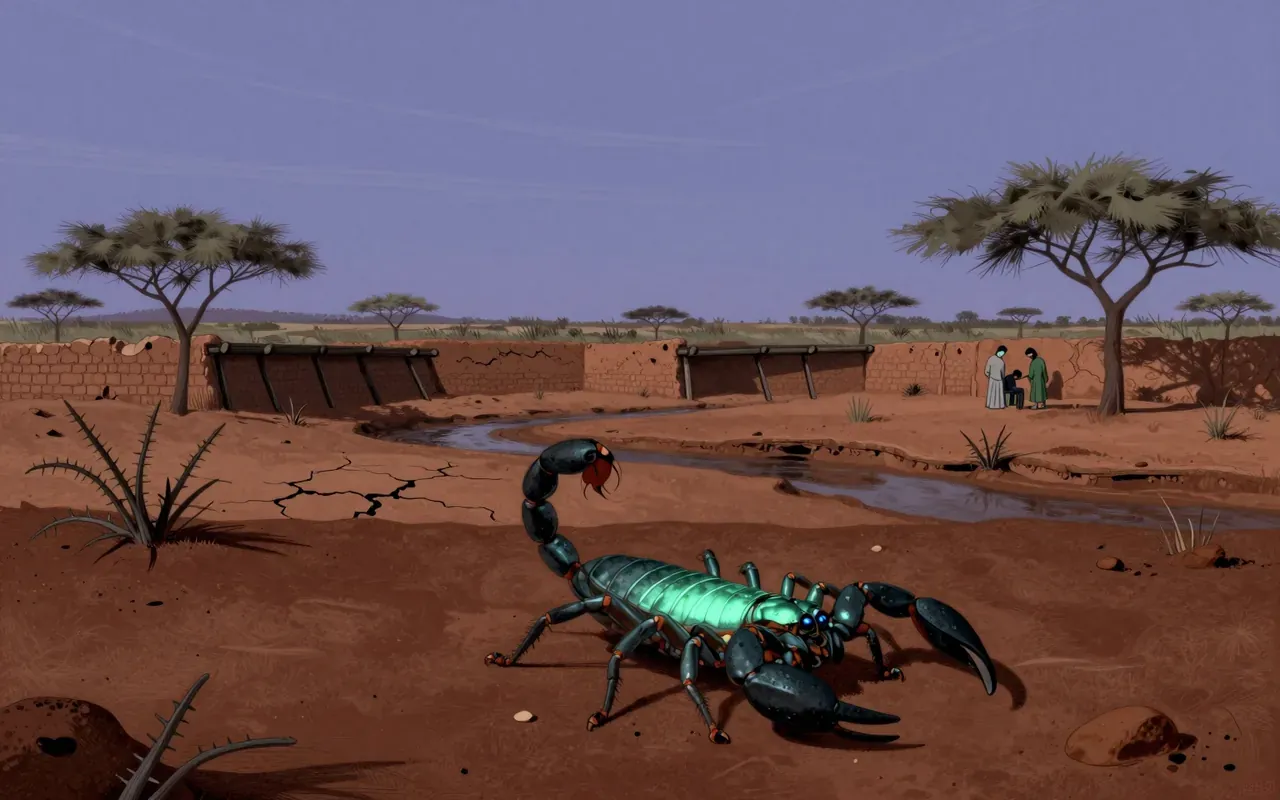
Emperor scorpion
Big, black, and glowing—but it won’t sting you back.
The emperor scorpion is a large, black, UV-fluorescent scorpion native to West African rainforests and savannas. It detects prey via vibration-sensing hairs. Adults do not use their sting defensively. Its sting rarely affects people severely. It lives six to eight years and averages 20 cm and 30 g.
It lives only in West African rainforests and savannas.
1:49
How big and how long
Adults average 20 cm and 30 g—and live six to eight years.
2:57
What makes it stand out
It glows under UV light and stays calm even when handled.
4:29
How it hunts and defends
It hunts with vibration-sensing hairs—not venom—and stops using its sting as an adult.
5:29
Why it’s safe
Its sting is almost harmless to most people.
Worth your time?
Yes. See the whole thing.
3.5/ 5
What works
detects prey through vibrations in air and ground using sensory hairs on its pincers and tail
glows pastel green or blue under UV light
is large, heavy, long-lived, and behaviourally calm for a scorpion
What does not
use its sting for defence as an adult
severely affect most people when it stings
See it if
observers who value clear sensory contrast—size, glow, stillness
those who tolerate low-stakes interaction
Skip it if
those seeking dramatic predation
those seeking complex social behaviour
those seeking ecological leverage
The written brief1 min read
What the species is and where it came from
The emperor scorpion (Pandinus imperator) is a large black scorpion native to rainforests and savannas in West Africa.
How it works, in terms someone would actually use
It detects prey through vibrations in air and ground using sensory hairs on its pincers and tail.
What it gets right
It reliably glows pastel green or blue under UV light. It is large, heavy, long-lived, and behaviourally calm for a scorpion.
What it does not
It does not use its sting for defence as an adult. It does not severely affect most people when it stings.
What it changed
Nothing in the material. No claim describes a change it caused or participated in.
Who it is for, and who it is not
It is for observers who value clear sensory contrast—size, glow, stillness—and tolerate low-stakes interaction. It is not for those seeking dramatic predation, complex social behaviour, or ecological leverage.
Is it worth your time
Yes—if you want to see a large, docile, UV-glowing scorpion native to West African rainforests and savannas.