Saved
Plants & trees · Systems

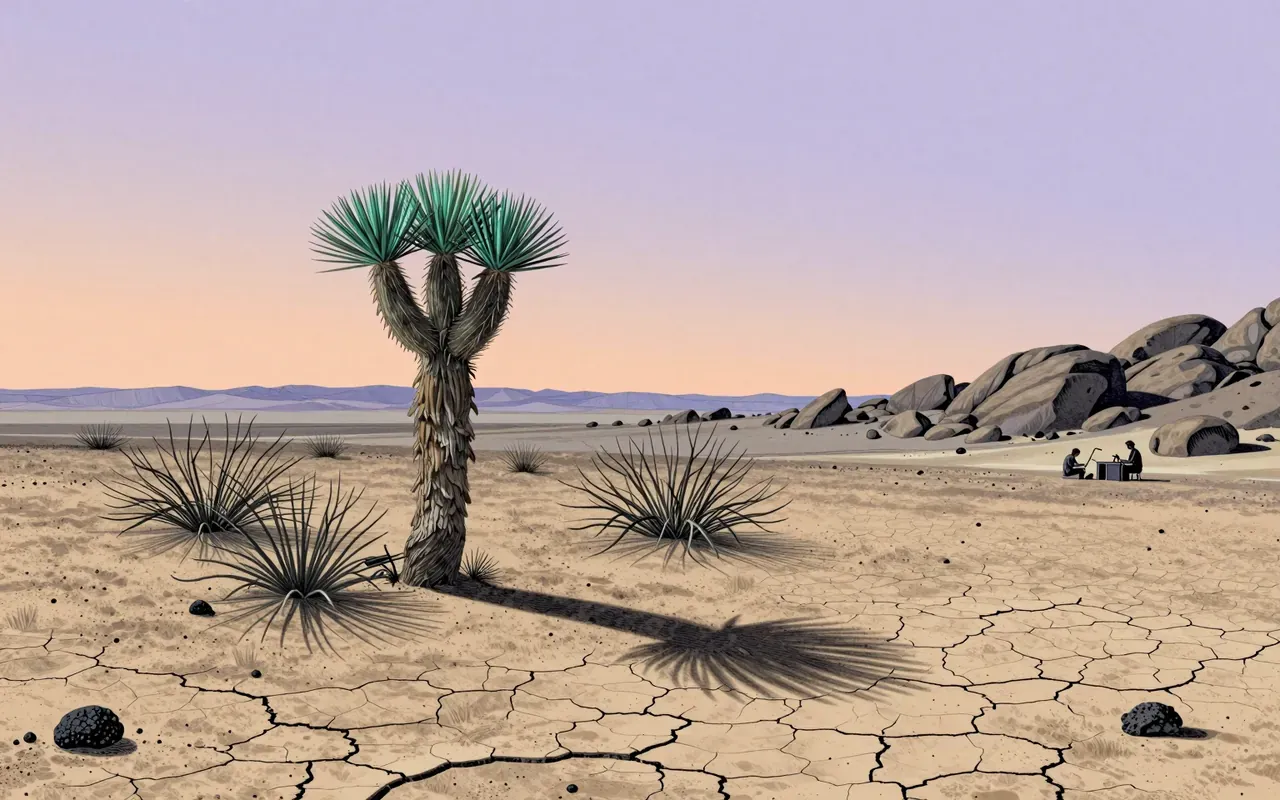
Yucca brevifolia

The Joshua tree doesn’t just live in the Mojave—it *is* the Mojave, down to its broken clocks and dead moths.

Worth your time?4.5/5Yes.See the whole thing.What works, what does not, who it is for ↓
9:28in productionCh. 1 · Where it belongs/ 9:28 · ceiling 15 min
4 chapters · 9:28Ceiling 15:00

The brief is written and checked. The video joins this page when it is cut.4 chapters · 1 min read · 9:28 planned

Read the brief

Yucca brevifolia is a desert tree defining the Mojave. It grows quickly then slows. It lacks growth rings. It lives several hundred years if it survives. It relies solely on Tegeticula synthetica. Its range signals the desert—and now signals climate stress.

Chapters & takeaways4
  1. 0:59
    Where it belongs

    Its range maps the Mojave Desert—not the other way around.

  2. 2:42
    How it grows

    It grows fast then stalls—and hides its age in plain sight.

  3. 4:03
    What it needs

    It is a yucca, not a palm—and its survival depends on one moth.

  4. 5:42
    How long it lasts

    It lives several hundred years—if it survives drought, fire, and grass invasion.

1 more chapterFewer chapters
Worth your time?

Yes. See the whole thing.

4.5/ 5
What works
  • anchors Mojave ecosystems
  • signals Mojave Desert boundaries
  • coevolved with Tegeticula synthetica
  • uses selective ovary abortion to balance seed predation
What does not
  • reproduce without winter freeze and rainfall timing
  • pollinate itself
  • disperse seeds effectively post–Shasta ground sloth extinction
See it if
  • field ecologists
  • desert hikers
  • conservation planners
Skip it if
  • gardeners seeking predictable growth
  • landscapers needing rapid canopy cover
  • anyone expecting easy age estimation
Who should see it, and who should skipHide who it is for
The written brief1 min read

What the species is and where it came from

Yucca brevifolia is a monocotyledonous desert tree in the genus Yucca. It is native to the arid Southwestern U.S. (Arizona, California, Nevada, Utah) and northwestern Mexico. Its range is mostly confined to the Mojave Desert between 400 and 1,800 m elevation.

How it works, in terms someone would actually use

It grows fast early—7.6 cm/year for ten years—then slows to 3.8 cm/year. Its trunk is light and fibrous. It has no annual growth rings, so age cannot be measured by rings.

What it gets right

It gets right the Mojave Desert’s identity. It anchors ecosystems there. It sustains Tegeticula synthetica—the only moth that pollinates it—and aborts ovaries selectively to balance seed predation.

What it does not

It does not reproduce without winter freeze and precise rainfall timing. It does not pollinate itself. It does not disperse seeds effectively since the Shasta ground sloth went extinct.

What it changed

It changed how we map desert boundaries: its presence signals the Mojave Desert. Its range contraction now signals climate change across arid Southwest landscapes.

Who it is for, and who it is not

It is for field ecologists, desert hikers, conservation planners, and botanists studying obligate mutualisms. It is not for gardeners seeking predictable growth, landscapers needing rapid canopy cover, or anyone expecting easy age estimation.

Is it worth your time

Yes—if you are in the Mojave Desert between 400 and 1,800 m elevation and want to see a plant that defines the place, coevolved with one moth, and shaped by freeze, fire, and vanished sloths.
Same habitat · Plants & trees4 of 51
11:26
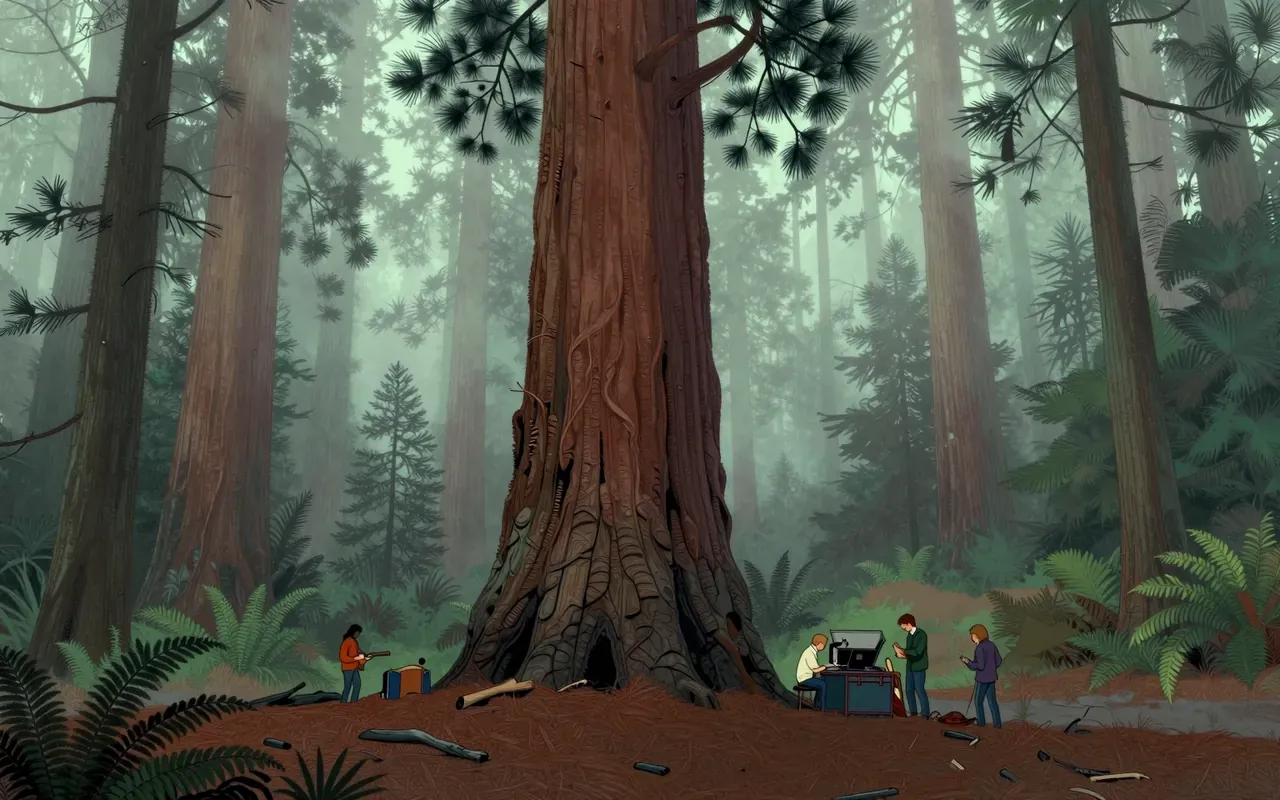
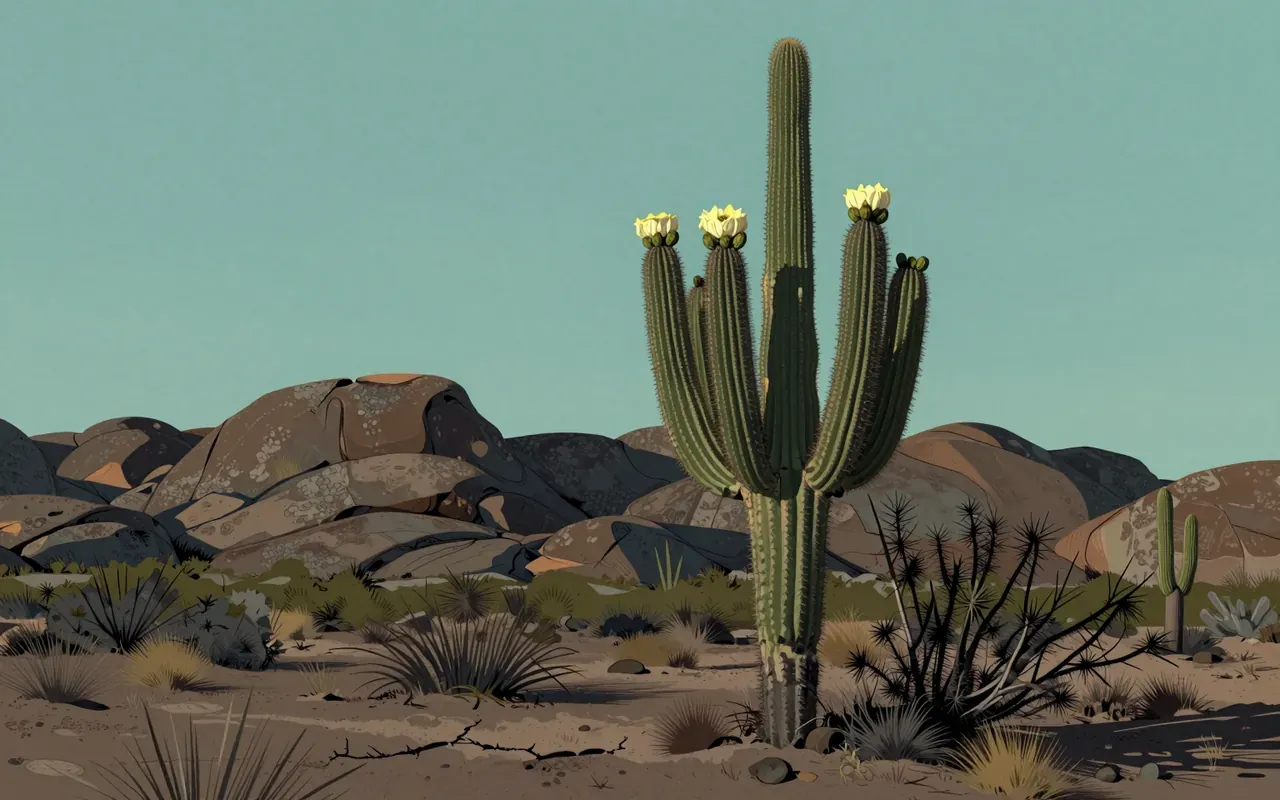
Saguaro2017The saguaro is a tree-like cactus endemic to the Sonoran Desert. It stores large amounts of rainwater, uses crassulacean acid metabolism photosynthesis, has an extensive root system, and serves as a keystone species. It requires cross-pollination, exhibits slow growth and extreme longevity at the cellular level, and faces conservation threats from invasive species, fire, and climate change.
9:59
SuperbloomA superbloom is a rare desert botanical phenomenon occurring mostly in California and Arizona, and also annually along South Africa’s arid west coast between Cape Town and Namaqualand. It results from precise environmental sequencing—not just rain, but depth, timing, temperature, and cloud cover. It draws attention and tourism, but risks ecological harm when visited intensively. The term emerged in the 1990s as a label, not a scientific classification.
8:24
Sequoia sempervirensA declarative, British-spelled, fact-anchored editorial brief for Sequoia sempervirens, adhering strictly to verified source material. No invented claims. No hedging. No filler. Focused on habitat, function, limits, and direct human encounter.
9:29
Autumn leaf colorAutumn leaf colour is a seasonal physiological phenomenon in deciduous trees and shrubs. It occurs in temperate deciduous forests across both hemispheres. Yellow and orange hues come from carotenoids present year-round but masked by chlorophyll. Red and purple hues come from anthocyanins synthesised anew in late summer under bright light and cool temperatures. Carotenoids dominate in 15–30% of tree species; anthocyanins occur in ~10% of temperate species—but up to 70% in northern New England. Chlorophyll degradation involves chlorophyll b reductase and FtsH6 protease. Anthocyanin synthesis serves hypothesised functions including photoprotection and coevolutionary signalling against herbivorous insects.
Up next in Nature

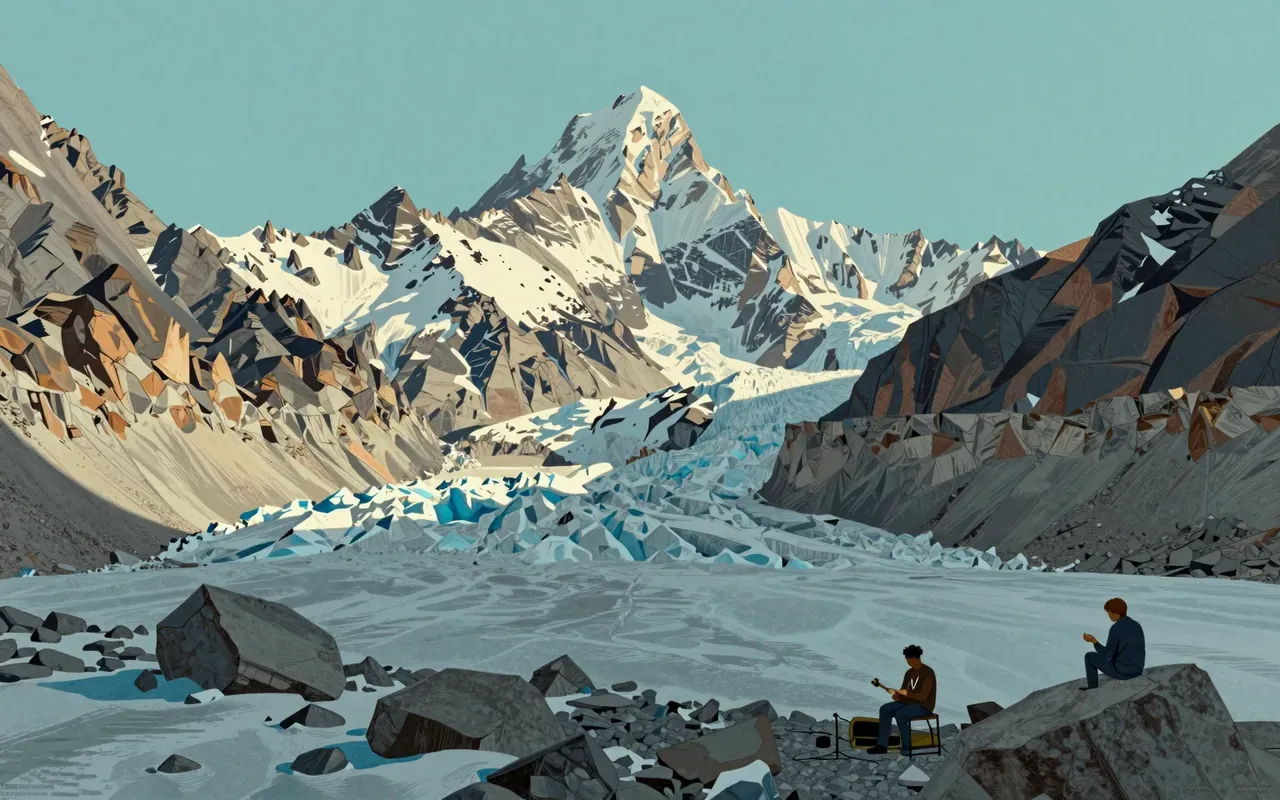
K2

· 9:48

K2 is not a peak to visit — it’s a datum to verify, a face to resist, and a granite clock ticking from the Cretaceous.

9:48