naturebriefs
10:14in productionCh. 1 · Named for the crater/ 10:14 · ceiling 15 min
Habitats · Migration

Ngorongoro Conservation Area

1959

A conservation area that lets people live with lions—but only on its terms.

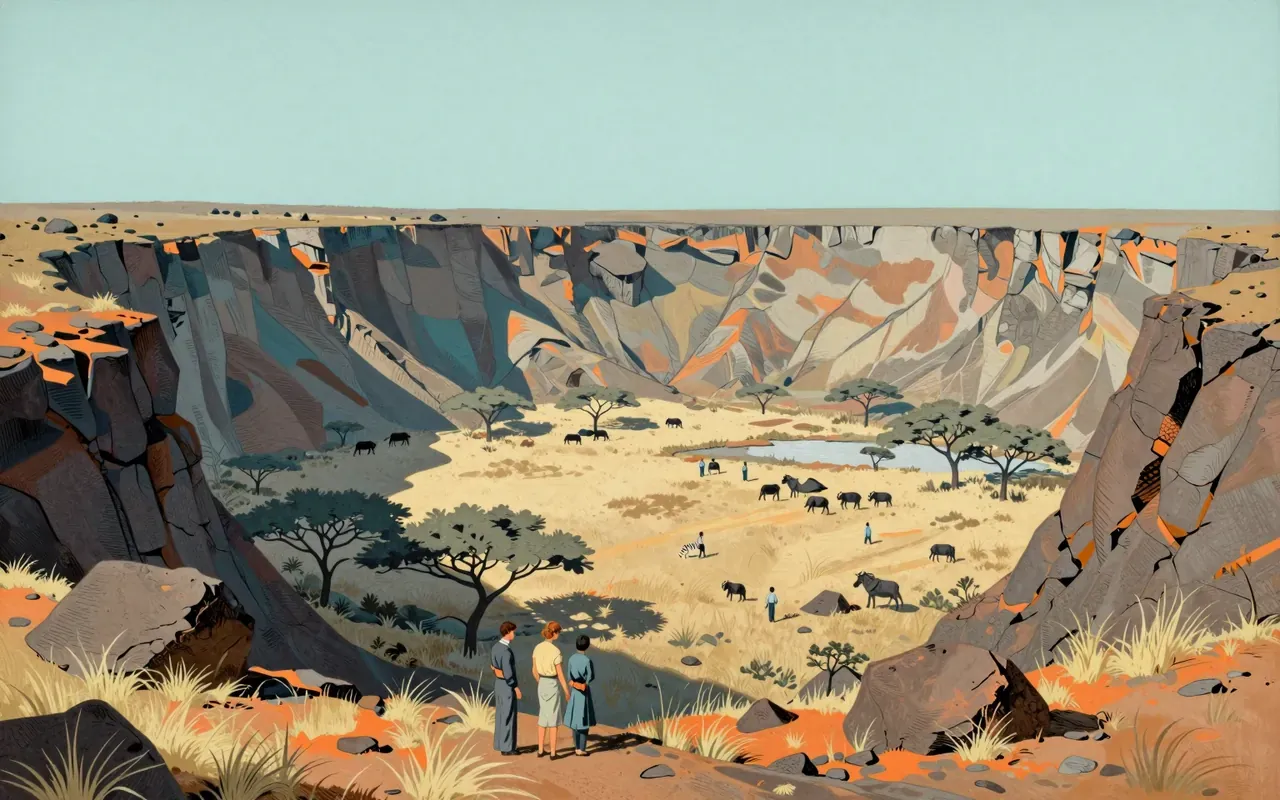
The Ngorongoro Conservation Area is a Tanzanian multi-use protected area centred on the Ngorongoro Crater. It permits Maasai pastoralism alongside wildlife conservation—a model that enables tourism, supports the Great Migration, and safeguards Olduvai Gorge. But it also enforces displacement through legislation like the 2009 Wildlife Conservation Act, revealing structural tension between conservation authority and Indigenous land rights.

Chapters & takeaways4
  1. 1:00
    Named for the crater

    The area takes its name from the Ngorongoro Crater—a massive, ancient volcanic caldera.

  2. 2:25
    Migration anchor

    It forms one leg of the Great Migration corridor alongside Serengeti National Park and Maasai Mara.

  3. 3:58
    Where humans began

    It contains Olduvai Gorge—the world’s most important paleoanthropological site.

  4. 5:53
    Displaced by law

    The 2009 Wildlife Conservation Act displaced Maasai pastoralists from the Crater.

Worth your time?

Yes. See the whole thing.

3.5/ 5
What works
  • anchors the Great Migration corridor
  • protects Olduvai Gorge
  • maintains high-density large mammal populations in the Crater
What does not
  • resolve governance conflicts between state conservation mandates and Maasai land tenure
See it if
  • wildlife tourists
  • paleoanthropologists
  • conservation policy analysts
Skip it if
  • Maasai pastoralists seeking unrestricted Crater access
The written brief1 min read

What the species is and where it came from

It is not a species. It is a habitat: the Ngorongoro Conservation Area, named after the Ngorongoro Crater—a large, intact volcanic caldera formed 2–3 million years ago in northeastern Tanzania.

How it works, in terms someone would actually use

The Ngorongoro Conservation Area functions as a multi-use zone where wildlife conservation and Maasai pastoralism coexist under Tanzanian government administration via the Ngorongoro Conservation Area Authority.

What it gets right

It protects a globally significant paleoanthropological site—Olduvai Gorge—and anchors the Great Migration corridor across Tanzania and Kenya.

What it does not

It does not resolve conflict between conservation goals and Maasai pastoralism. It displaces Maasai from the Crater under the 2009 Wildlife Conservation Act, despite their long-standing presence.

What it changed

It changed how protected areas could be governed by permitting human habitation and livestock grazing inside a UNESCO World Heritage Site—unlike Serengeti National Park, which banned settlement in 1959.

Who it is for, and who it is not

It is for visitors seeking concentrated wildlife viewing in the Crater, researchers studying migration or paleoanthropology, and policymakers examining co-management models. It is not for Maasai pastoralists seeking secure, unregulated access to Crater grazing land.

Is it worth your time

Yes—if you want to see high-density large mammals in a volcanic caldera, witness seasonal migration linked to rainfall, or observe tensions between conservation policy and Indigenous land use.
Same habitat · Habitats4 of 128
Up next in Nature

Olive

· 9:50

The olive is not a wild tree—it’s a 6,000-year-old contract between humans and a drupe.

9:50