naturebriefs
9:32in productionCh. 1 · Where it goes/ 9:32 · ceiling 15 min
Migration · Insects & invertebrates

Monarch butterfly migration

A four-generation relay race across continents — powered by hormones, sun position, and fir trees.

Monarch butterfly migration is a multi-generational, seasonal movement across North America. It is defined by physiological adaptation, precise navigation, and dependence on specific habitats — and it is now endangered.

Chapters & takeaways4
  1. 1:00
    Where it goes

    Monarchs migrate annually from southern Canada and the northern US to overwintering sites in central Mexico or coastal California.

  2. 2:18
    How it cycles

    They roost on oyamel firs from November to March, then return north via two to three generations.

  3. 3:54
    Why it lasts

    The southbound generation lives eight times longer due to a regulatory age-inducing hormone.

  4. 5:11
    How we found out

    Fred Urquhart’s tagging program and Mexican press outreach led to the 1975 discovery of overwintering sites.

Worth your time?

Yes. See the whole thing.

4.5/ 5
What works
  • diapause physiology
  • time-compensated sun compass
  • magnetic sensing
  • antennal circadian clocks
What does not
  • survive without oyamel fir forests in central Mexico or coastal California roosts
  • involve navigation by memory — no individual butterfly repeats the full round trip
See it if
  • field biologists
  • conservation planners
  • anyone willing to stand under a fir tree in Michoacán in November
Skip it if
  • those who expect to witness the full migration in one season or one location
The written brief1 min read

What the species is and where it came from

Danaus plexippus plexippus is a North American subspecies of monarch butterfly. Its range spans southern Canada, the northern US, central Mexico, and coastal California.

How it works, in terms someone would actually use

Monarchs from southern Canada and the northern US fly thousands of kilometres to central Mexico each autumn. They roost on oyamel fir trees from November to March. Their southbound generation lives eight times longer than non-migratory generations. The northward return is completed by two to three successive generations, with four generations total per year.

What it gets right

It gets diapause physiology right: suppressed reproduction, lipid accumulation, extended lifespan. It gets navigation right: time-compensated sun compass, magnetic sensing, antennal circadian clocks. It gets generational relay right: no single butterfly completes the full annual cycle.

What it does not

It does not sustain itself without intact habitat corridors. It does not survive without oyamel fir forests in central Mexico or coastal California roosts. It does not involve navigation by memory — no individual butterfly repeats the full round trip.

What it changed

Fred Urquhart’s tagging program and public outreach in the Mexican press led directly to the 1975 discovery of major overwintering sites. His work transformed monarch migration from folklore into a documented, mechanistic phenomenon.

Who it is for, and who it is not

It is for field biologists, conservation planners, and anyone willing to stand under a fir tree in Michoacán in November. It is not for those who expect to witness the full migration in one season or one location.

Is it worth your time

Yes — if you want to see a multi-generational migration driven by circadian clocks, sun compasses, and lipid-fuelled endurance across national borders.
Same habitat · Migration4 of 21
8:53
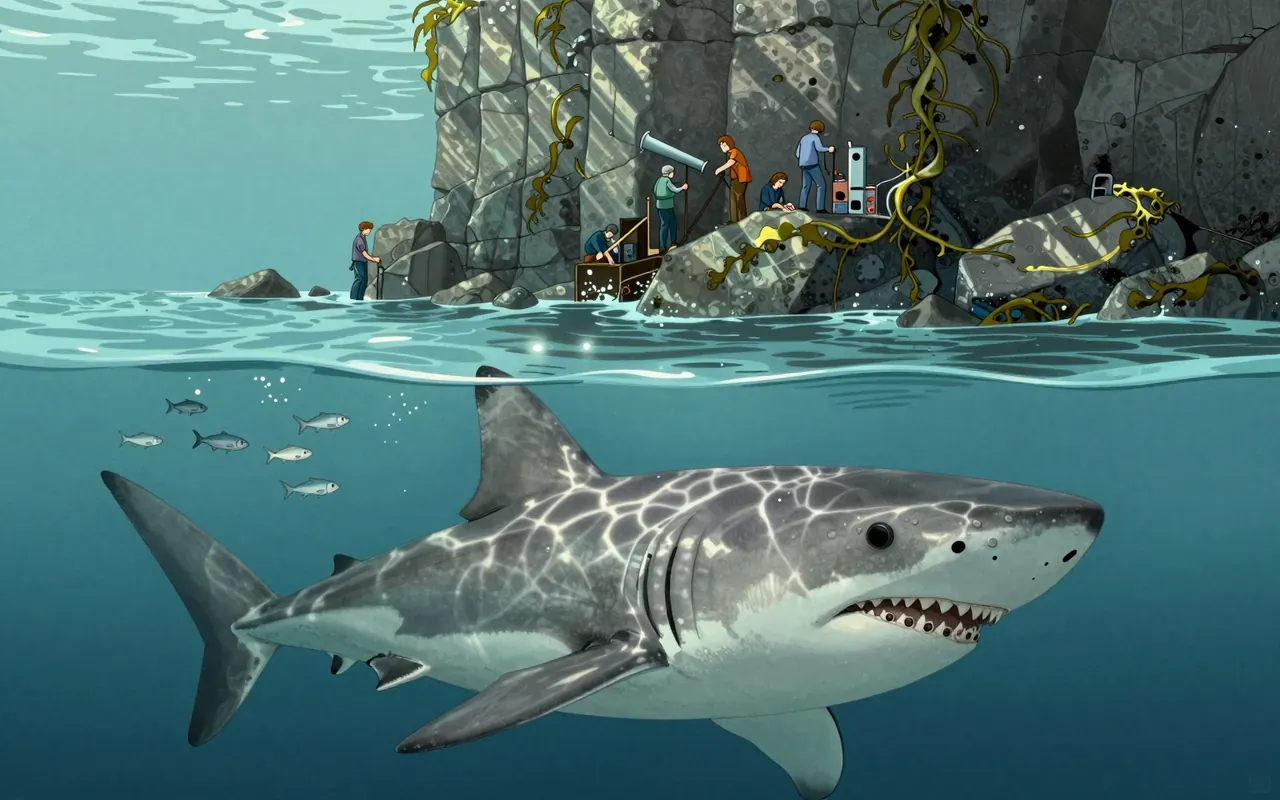
Giant oceanic manta rayMobula birostris is the world’s largest ray. It swims open ocean globally—in tropical, subtropical, and temperate waters. It feeds on zooplankton and mesopelagic fish by flaring cephalic fins to direct flow into its mouth. It migrates to upwellings. Its 2017 reclassification from Manta to Mobula followed DNA evidence. It faces severe overfishing pressure and bioaccumulates pollutants. IUCN classifies it as Endangered.
9:04
Migration (ecology)Migration is large-scale, often cyclical movement to a different environment. It serves food, safety, and mating needs. It occurs across birds, fish, insects, mammals, reptiles, amphibians, crustaceans, and plants via seed dispersal. Routes are learned or inherited. Cues—photoperiod, weather, hormones—are surprisingly consistent across taxa.
9:06
MagnetoreceptionMagnetoreception is a verified sensory modality used for orientation and navigation across diverse animal groups. Its mechanisms are taxonomically scattered and physically distinct: quantum chemistry in bird eyes, electromagnetic induction in shark snouts, and unconfirmed iron-based alignment elsewhere. It delivers no unified theory—but it does deliver concrete, testable biology.
10:14
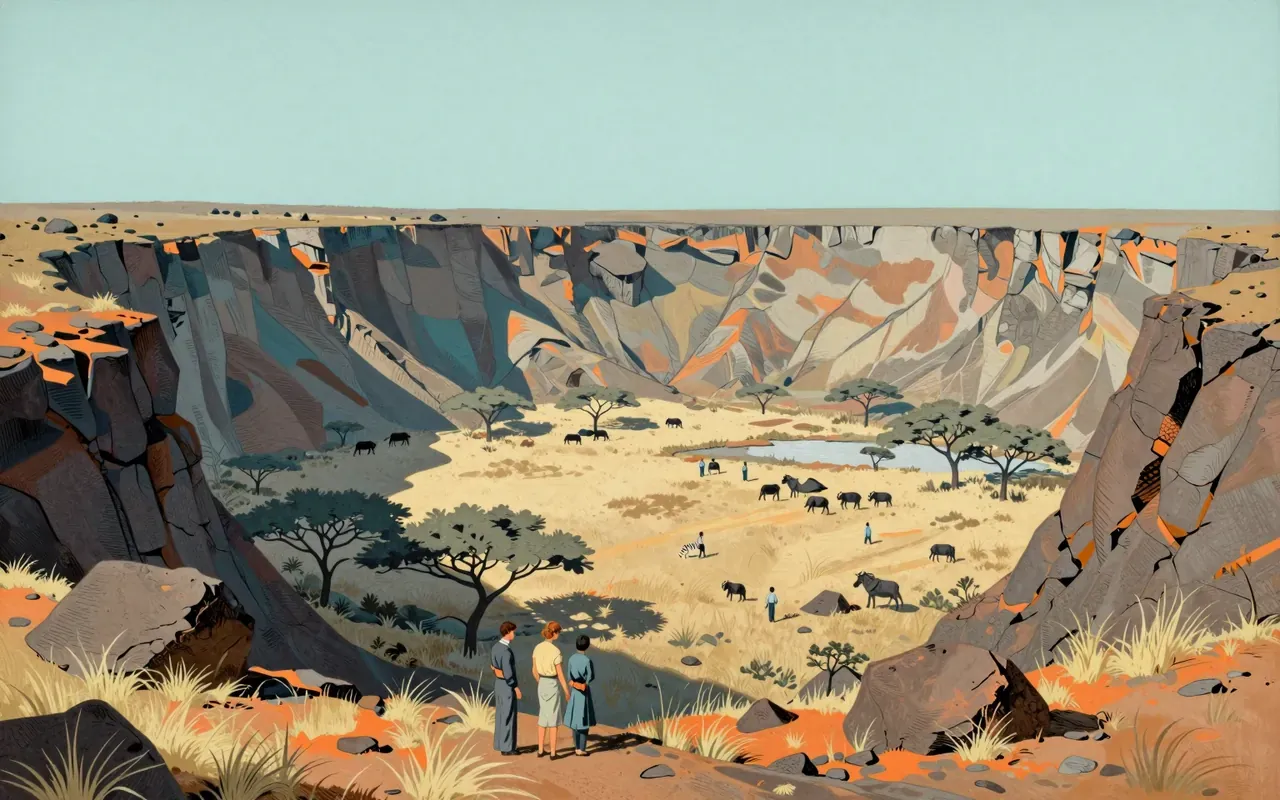
Ngorongoro Conservation Area1959The Ngorongoro Conservation Area is a Tanzanian multi-use protected area centred on the Ngorongoro Crater. It permits Maasai pastoralism alongside wildlife conservation—a model that enables tourism, supports the Great Migration, and safeguards Olduvai Gorge. But it also enforces displacement through legislation like the 2009 Wildlife Conservation Act, revealing structural tension between conservation authority and Indigenous land rights.
Up next in Nature

Monument Valley

· 10:12

Monument Valley isn’t nature—it’s a stage set carved by time and claimed by culture.

10:12