naturebriefs
10:10in productionCh. 1 · What it is/ 10:10 · ceiling 15 min
Systems

Trophic cascade

Predators don’t just eat prey — they grow forests, clear lakes, and rebuild rivers.

Trophic cascade is a precise, empirically grounded concept that explains how suppressing one trophic level triggers indirect effects across an ecosystem — but only in simplified, observable cases. It fails where food webs are complex, yet remains indispensable for diagnosing ecosystem collapse and recovery.

Chapters & takeaways6
  1. 0:47
    What it is

    A trophic cascade is not direct predation — it’s suppression at one level causing ripple effects across the web.

  2. 2:03
    Top-down: wolves, elk, willows

    Top predators hold herbivores in check — and when they vanish, plants suffer.

  3. 3:36
    Bottom-up and sideways: lakes and plankton

    Fish in lakes suppress zooplanktivores — which boosts zooplankton — which clears water by eating phytoplankton.

  4. 4:43
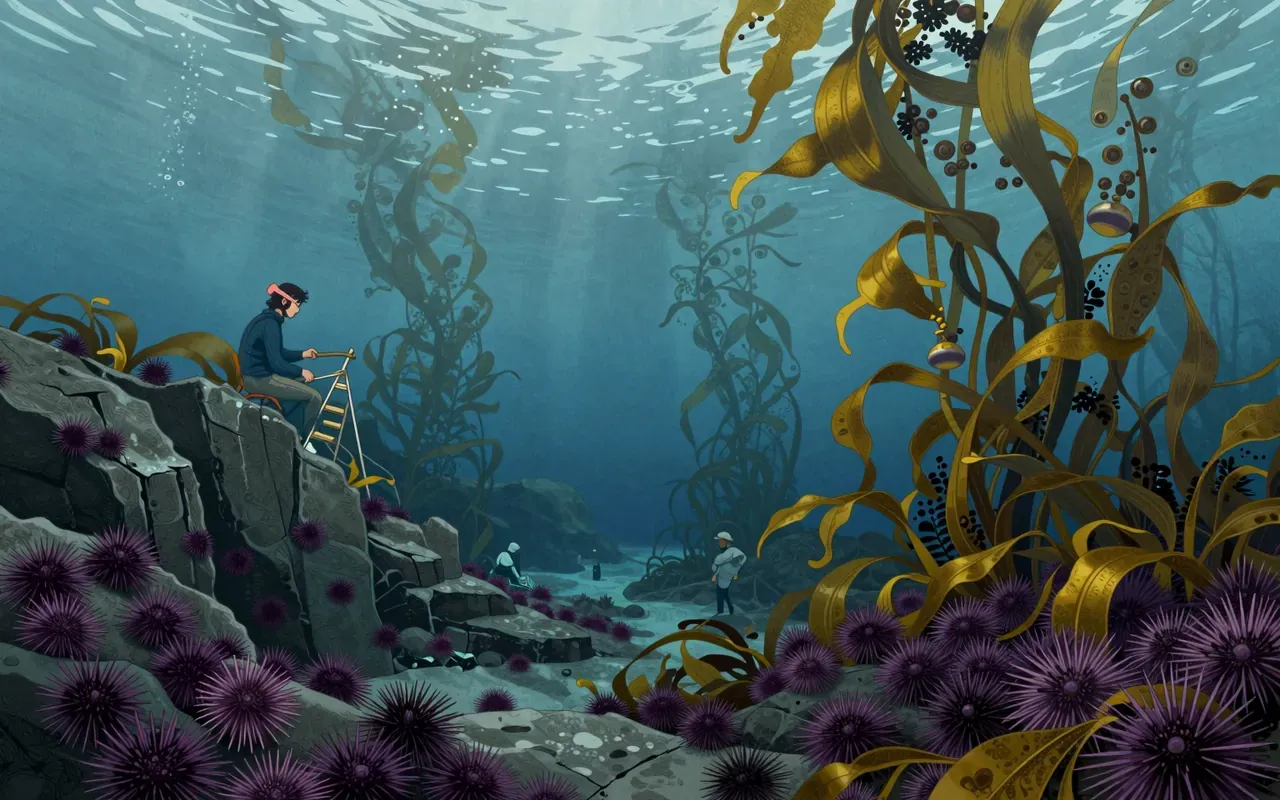
    Sea otters, urchins, kelp

    No otters means urchins explode — and kelp forests vanish along the California coast.

  5. 5:56
    Subsidy and bottom-up limits

    External food — or scarce nutrients — can override predator control and flip the whole cascade.

  6. 7:15
    Where it breaks

    Real food webs resist simple cascades — omnivory, life-stage diets, and outside inputs scramble the model.

Worth your time?

Yes. See the whole thing.

4/ 5
What works
  • explains kelp forest collapse after otter removal
  • links wolf absence to willow decline in Yellowstone
  • clarifies fish–zooplankton–phytoplankton dynamics in lakes
What does not
  • describe omnivory
  • account for ontogenetic diet shifts
  • model external subsidies accurately
  • apply universally to real food webs
See it if
  • ecologists
  • conservation practitioners
  • policy makers managing predator reintroductions
Skip it if
  • those seeking universal ecological laws
  • general audiences without food-web literacy
The written brief1 min read

What the species is and where it came from

Trophic cascade is not a species. It is a process observed in ecosystems: Pacific coast kelp forests, North American lakes, Yellowstone’s willow stands.

How it works, in terms someone would actually use

A trophic cascade is a chain reaction in a food web, triggered when one level is suppressed — predators vanish, plants starve, or outside food floods in.

What it gets right

It correctly identifies that suppressing one trophic level — sea otters, piscivorous fish, wolves — can indirectly benefit plants or phytoplankton through herbivore release or reduction.

What it does not

It does not describe most real food webs. Omnivory, diet shifts, and external subsidies break its simple three- or four-level logic.

What it changed

It shifted ecology from linear food chains to dynamic, indirect control — showing predators can shape landscapes, not just kill prey.

Who it is for, and who it is not

Ecologists, conservation practitioners, and policy makers who manage predator reintroductions or marine protected areas. Not for those seeking universal laws of nature.

Is it worth your time

Yes — if you need to explain why removing wolves changes rivers, or why kelp forests collapse without otters.
Same habitat · Systems4 of 81
8:09
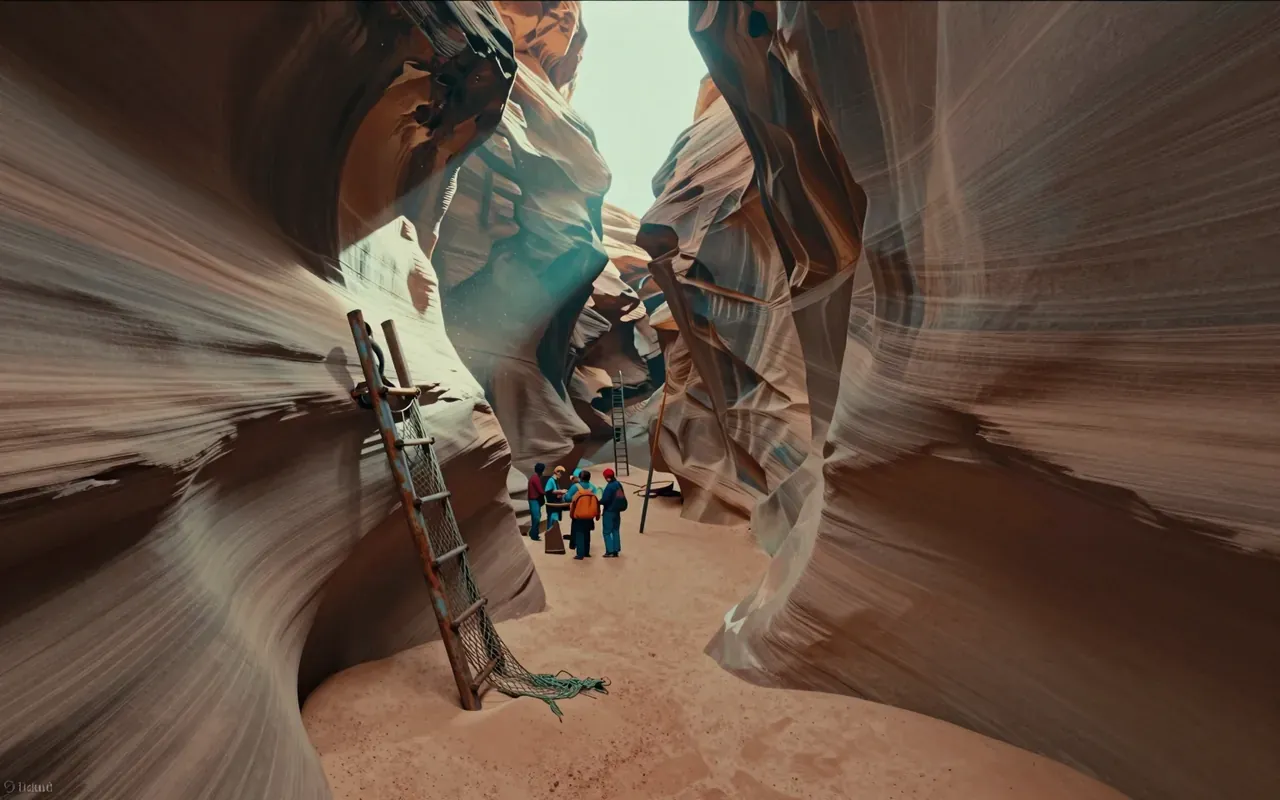
Antelope CanyonAntelope Canyon is a slot canyon on Navajo land in the American Southwest, formed by flash flood erosion of Navajo Sandstone. Monsoon rainwater carries sand into narrow passageways, deepening corridors and smoothing edges into flowing shapes. A flash flood on August 12, 1997 killed eleven tourists in Lower Antelope Canyon — triggered by an upstream thunderstorm 7 miles away. That event replaced amateur wood ladders with bolted systems and cargo nets. Today, a NOAA Weather Radio and alarm horn stand at the fee booth to warn of incoming floods. The canyon remains dangerous, managed, and visually singular.
9:40
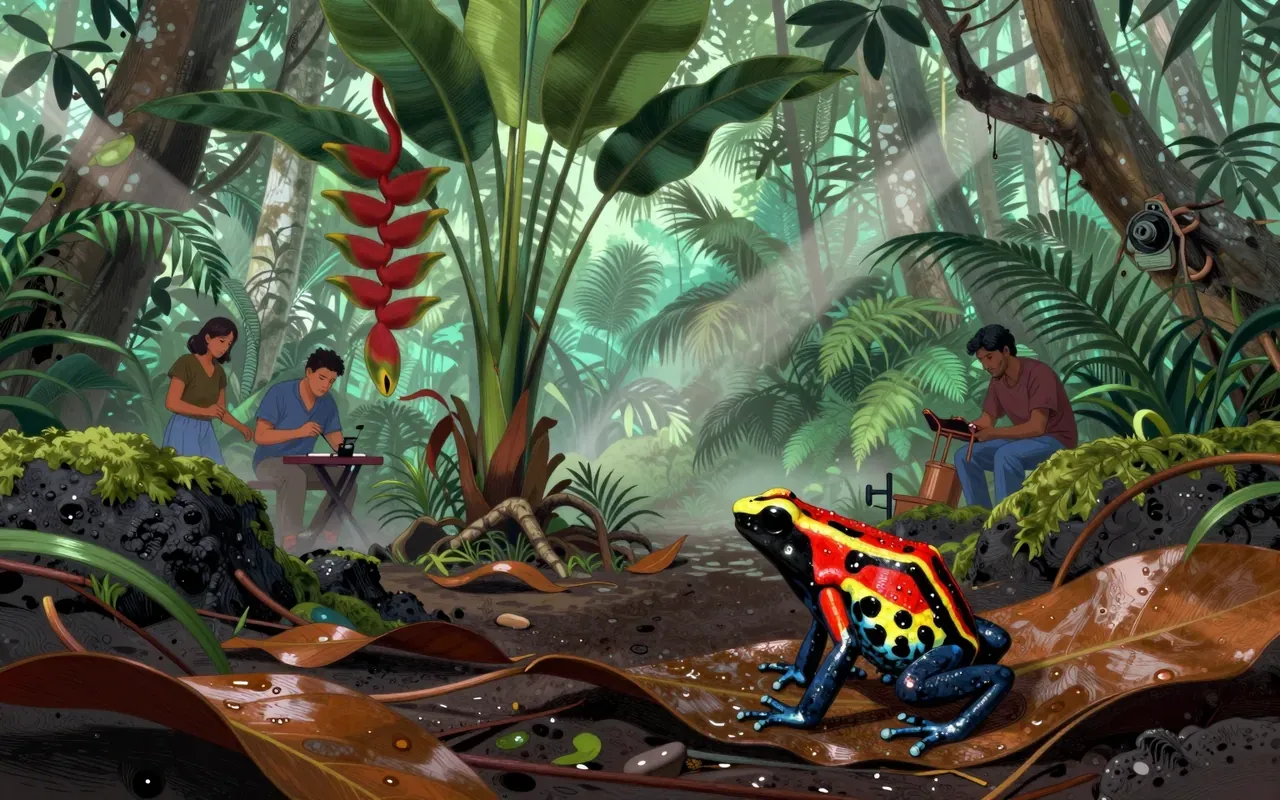
AposematismAposematism is a functional, empirically tested strategy — not metaphor, not speculation. It is defined by honesty, observability, and consequence.
10:00
TundraThe tundra is a biome defined by frigid temperatures and short growing seasons that inhibit tree growth. It occurs in three regional forms — Arctic, Alpine, and Antarctic. Its vegetation comprises low-growing plants such as dwarf shrubs, sedges, grasses, mosses, and lichens. Soils are nutrient-rich (nitrogen, phosphorus) and store vast amounts of carbon in permafrost, acting as a carbon sink — but warming-induced thaw releases greenhouse gases, creating a climate feedback loop.
9:16
Army antArmy ants are a functional category—not a taxon—defined by nomadism, mass raiding, and monogynous, wingless queens. Genetic evidence from 2003 shows some lineages share deep ancestry; others converged. Their raids drive ecosystem dynamics across tropical forests. They offer no compromise: no stillness, no shared queens, no permanent home.
Up next in Nature

Tsunami

· 8:55

A tsunami is not a wave — it’s water’s delayed recoil from a massive underwater jolt.

8:55