naturebriefs
10:00in productionCh. 1 · The First Line on the Map/ 10:00 · ceiling 15 min
Habitats · Systems

Yellowstone National Park

1872

The world’s first national park isn’t a model — it’s a boundary line drawn around a volcano, a forest, and 11,000 years of human presence.

Yellowstone National Park is a legal and ecological artifact — not a natural species, but a habitat defined by statute, geology and long human presence. It works by holding land in federal trust for specific purposes: protection of geothermal features and megafauna, not recreation alone. It gets scale, continuity and volcanic uniqueness right. It falls short on representing full cultural history or non-subalpine biomes. It changed conservation globally by proving that statutory protection could anchor an entire ecosystem. It is for observers of wild systems, not curated exhibits. It is worth your time if you accept its limits — and its power — as given.

Chapters & takeaways4
  1. 1:10
    The First Line on the Map

    Yellowstone was the first national park in the US and is widely considered the first in the world.

  2. 2:43
    A Landscape at Scale

    It spans 3,468.4 square miles across three states and contains rivers, canyons, mountains and lakes.

  3. 3:36
    What Grows Here, What Boils Here

    Subalpine forest dominates. It belongs to the South Central Rockies forests ecoregion. Its geysers — especially Old Faithful — define its global reputation.

  4. 5:27
    Before the Park, There Was People

    Native Americans have lived in the region for at least 11,000 years — longer than the park has existed.

Worth your time?

Yes. See the whole thing.

4.5/ 5
What works
  • protects the Yellowstone Caldera
  • anchors the Greater Yellowstone Ecosystem
  • holds land across three states under unified statute
What does not
  • represents all biomes
  • eliminates infrastructure
  • fully incorporates Indigenous governance
See it if
  • field ecologists
  • geothermal observers
  • wildlife photographers
Skip it if
  • marine biologists
  • tropical botanists
  • urban historians
The written brief2 min read

What the species is and where it came from

Yellowstone National Park is not a species. It is a habitat: a federally designated protected area established in 1872. It lies atop the Yellowstone Caldera. It spans northwestern Wyoming, with extensions into Montana and Idaho.

How it works, in terms someone would actually use

Yellowstone National Park works as a legally protected landscape. It covers 3,468.4 square miles across northwestern Wyoming, Montana and Idaho. It contains lakes, rivers, canyons and mountain ranges. Its dominant biome is subalpine forest. It sits within the South Central Rockies forests ecoregion.

What it gets right

It gets right the scale and integrity of a functioning temperate ecosystem. It protects the Yellowstone Caldera — the largest supervolcano on the continent — and its unparalleled concentration of geysers and hydrothermal features. It anchors the Greater Yellowstone Ecosystem, the largest intact temperate-zone ecosystem in the Northern Hemisphere.

What it does not

It does not protect all native species equally. It does not cover the full historical range of Native American use. It does not eliminate human impact: roads, visitor centres and infrastructure are present. It does not represent every biome — only those found within its volcanic, mountainous, subalpine setting.

What it changed

Yellowstone changed conservation law. It became the first national park in the United States. It is widely regarded as the world’s first national park. It established a precedent for protecting land by federal statute rather than private or state control.

Who it is for, and who it is not

It is for people who seek direct observation of geothermal activity, large carnivores and wide-ranging herbivores in a single, contiguous landscape. It is not for people seeking dense human history interpretation, marine environments, or biodiversity hotspots outside the Rocky Mountain bioregion.

Is it worth your time

Yes — if you want to see geysers, wolves, bison and grizzly bears in one intact temperate-zone ecosystem. No — if you expect tropical forests, coastal habitats or lowland grasslands.
Same habitat · Habitats4 of 107
8:09
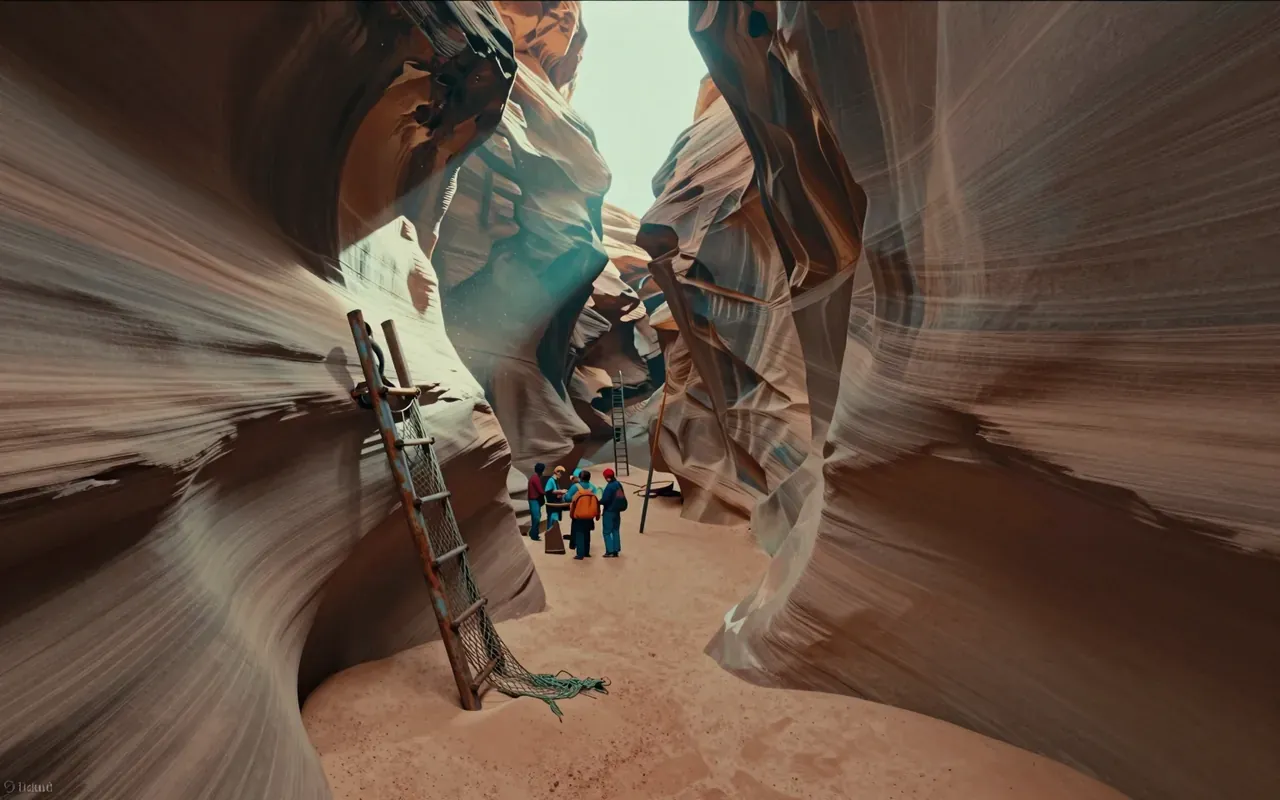
Antelope CanyonAntelope Canyon is a slot canyon on Navajo land in the American Southwest, formed by flash flood erosion of Navajo Sandstone. Monsoon rainwater carries sand into narrow passageways, deepening corridors and smoothing edges into flowing shapes. A flash flood on August 12, 1997 killed eleven tourists in Lower Antelope Canyon — triggered by an upstream thunderstorm 7 miles away. That event replaced amateur wood ladders with bolted systems and cargo nets. Today, a NOAA Weather Radio and alarm horn stand at the fee booth to warn of incoming floods. The canyon remains dangerous, managed, and visually singular.
10:00
TundraThe tundra is a biome defined by frigid temperatures and short growing seasons that inhibit tree growth. It occurs in three regional forms — Arctic, Alpine, and Antarctic. Its vegetation comprises low-growing plants such as dwarf shrubs, sedges, grasses, mosses, and lichens. Soils are nutrient-rich (nitrogen, phosphorus) and store vast amounts of carbon in permafrost, acting as a carbon sink — but warming-induced thaw releases greenhouse gases, creating a climate feedback loop.
9:39
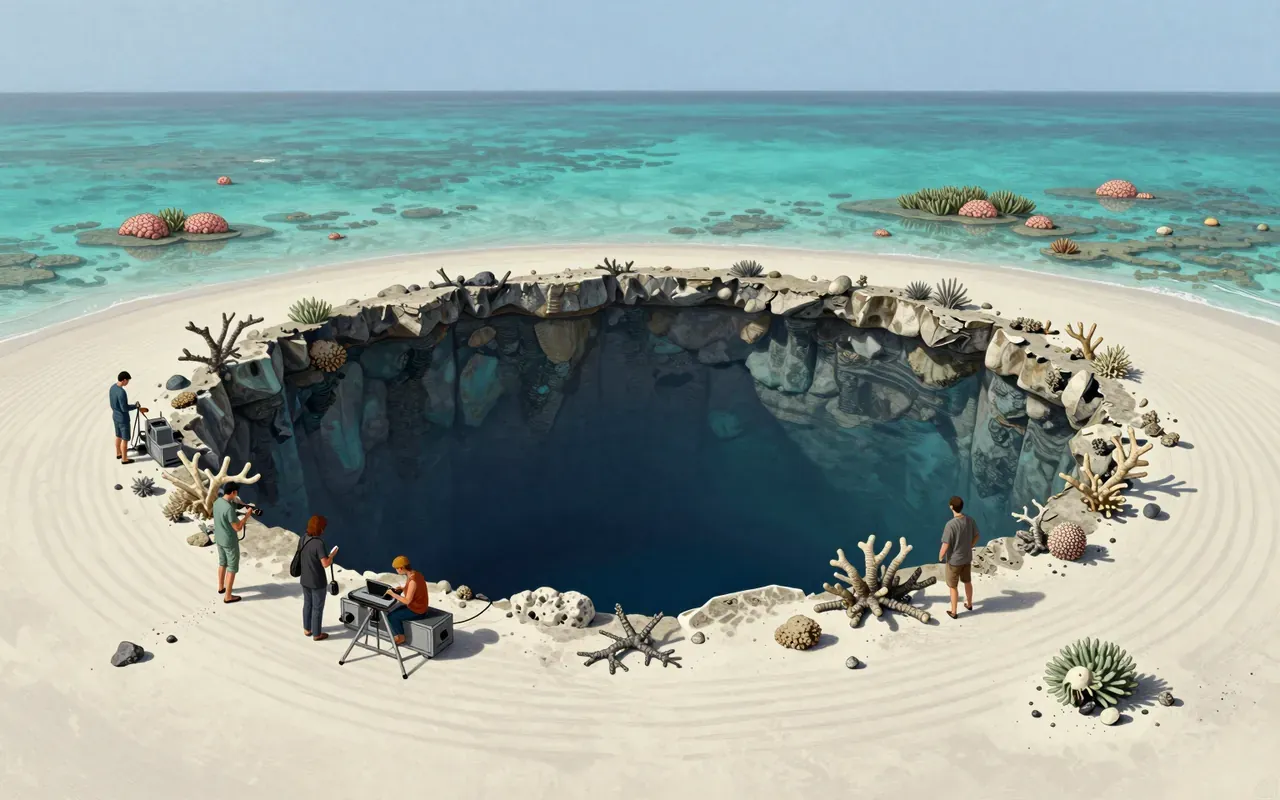
Blue holeBlue holes are marine sinkholes in carbonate bedrock, formed during ice ages when lower sea levels exposed limestone to rain and chemical weathering. They contain tidally influenced but poorly circulated water — fresh, marine or mixed — with sharp haloclines and anoxic deep zones that host bacteria but exclude most marine life. Their high transparency and white carbonate sand produce the signature deep blue colour. They differ from cenotes by holding seawater, not freshwater. They serve as sediment traps preserving climate and fossil records.
8:12
Bryce Canyon National Park1928Bryce Canyon National Park (1928) is a U.S. national park in southwestern Utah. It lies on the Paunsaugunt Plateau within the Colorado Plateau. Its defining features are amphitheater-shaped erosional basins—not canyons—and hoodoos formed by frost weathering and stream erosion of Cenozoic sedimentary rock. Colours derive from hematite (orange), limonite (yellow), and pyrolusite (purple). It experiences a Dsb continental climate. Elevations range from 6,620 to 9,105 feet.
Up next in Nature

Acacia

· 11:41

Acacia isn’t a plant — it’s a geopolitical settlement disguised as a genus.

11:41