What the species is and where it came from
Orangutans are three critically endangered great ape species—Bornean (P. pygmaeus), Sumatran (P. abelii), and Tapanuli (P. tapanuliensis)—native to Indonesia and Malaysia, now restricted to Borneo and Sumatra.
How it works, in terms someone would actually use
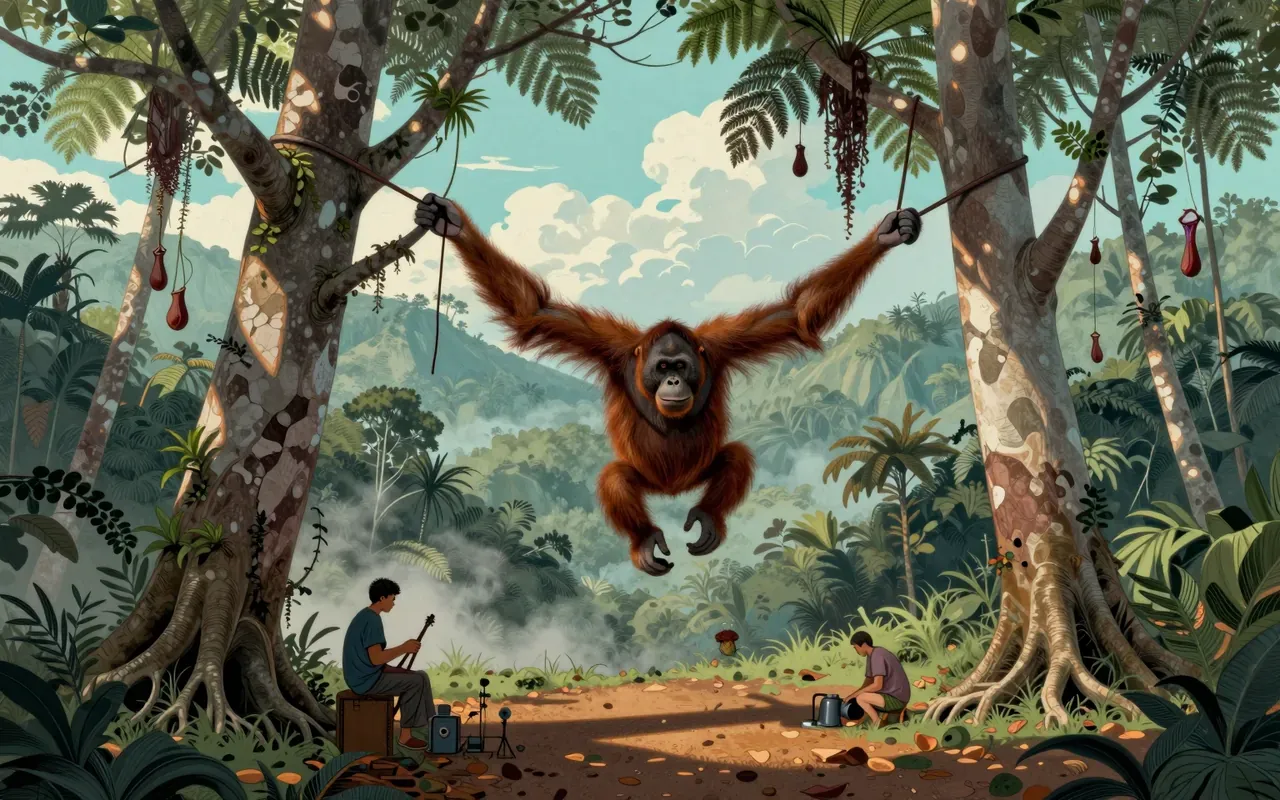
Orangutans move through rainforest canopies using long arms and short legs. They eat fruit first, then supplement with other plant and animal matter. Dominant males call loudly from high branches; females and young males stay quieter and more mobile.
What it gets right
Orangutans get arboreal life right: they spend most of their time in trees, adapted with long arms, grasping hands, and cautious, deliberate movement across unstable canopy gaps.
What it does not
Orangutans do not form lasting social groups beyond mother–offspring bonds. They do not share territory, hunt cooperatively, or use tools in the wild at scale documented for chimpanzees or humans.
What it changed
Orangutans changed how we define hominid divergence: they are the only surviving Ponginae, splitting from other hominids 19.3–15.7 million years ago.
Who it is for, and who it is not
It is for field biologists, canopy ecologists, and conservation practitioners working in Southeast Asian rainforests. It is not for zoo visitors expecting daily social interaction or for general wildlife tourists seeking easy observation.
Is it worth your time
Yes—if you want to see a great ape that lives almost entirely in trees, moves alone, and has no close living relatives. No—if you expect group behaviour, ground travel, or frequent sightings.