10:09in productionCh. 1 · Which moth is which/ 10:09 · ceiling 15 min
Insects & invertebrates · Evolution
Death's-head hawkmoth
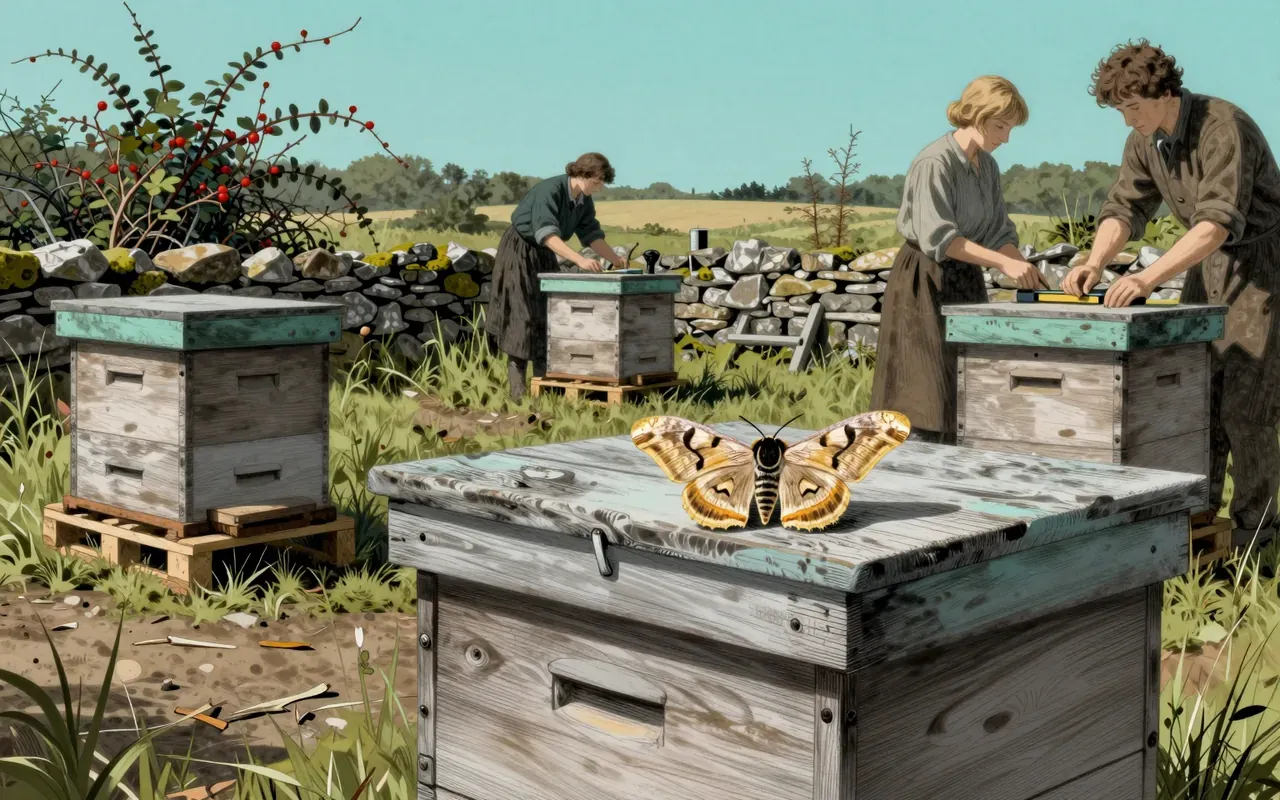
A moth that smells like a bee, screams like a hinge, and wears a skull that only works upside-down.
The death's-head hawkmoth is three species defined by a skull-shaped thoracic mark. Only A. atropos occurs in Africa and Europe; the others are Asian. It infiltrates Apis mellifera hives using olfactory mimicry. A 2020 study showed its upside-down posture creates a head-with-eyes illusion to deter predators. Its epipharynx evolved from honey-sucking to sound production. It emits a loud, brief chirp when disturbed.
Three species—but only A. atropos raids European and African beehives.
2:49
The bee heist
It walks into Apis mellifera hives undetected by copying their scent.
4:33
The head that isn't there
Its 'skull' is part of an upside-down face illusion that deters predators.
6:19
From honey to honk
It squeaks by vibrating a repurposed feeding organ—the epipharynx.
Worth your time?
Yes. See the whole thing.
4.5/ 5
What works
olfactory mimicry to enter Apis mellifera hives undetected
upside-down head illusion to deter predators
chirp production via repurposed epipharynx
What does not
raids hives of any honey bee species except Apis mellifera
uses the epipharynx for feeding
creates the head illusion when upright
See it if
people who watch moths land on hives
people who listen for chirps in gardens
people who turn specimens upside-down to see the illusion
Skip it if
those expecting broad ecological impact
those expecting migratory behaviour
those expecting human-scale charisma
The written brief1 min read
What the species is and where it came from
The death’s-head hawkmoth is three Acherontia species—A. atropos, A. styx, and A. lachesis—distinguished by a skull-like thoracic marking. A. atropos ranges across Africa and Europe; the other two are Asian.
How it works, in terms someone would actually use
It infiltrates Apis mellifera hives by mimicking bee scent. It emits a loud, one-fifth-second chirp by vibrating its epipharynx. When viewed upside-down, its thoracic skull marking and wing spots form an illusion of a head with eyes.
What it gets right
It gets predator deterrence right: the upside-down head illusion and the chirp both function to distract or deceive attackers. Its olfactory mimicry lets it move freely inside Apis mellifera hives.
What it does not
It does not raid hives of any honey bee species except Apis mellifera. It does not produce the skull illusion when upright. It does not use the epipharynx for feeding anymore.
What it changed
The epipharynx changed from a honey-sucking structure to a sound-producing one.
Who it is for, and who it is not
It is for people who watch moths land on hives, listen for chirps in gardens, or turn specimens upside-down to see the illusion. It is not for those expecting broad ecological impact, migratory behaviour, or human-scale charisma.
Is it worth your time
Yes—if you want to see an insect that raids beehives, sounds like a squeaking hinge, and fools predators with optical illusions.