Saved
Insects & invertebrates · Evolution

Mantis

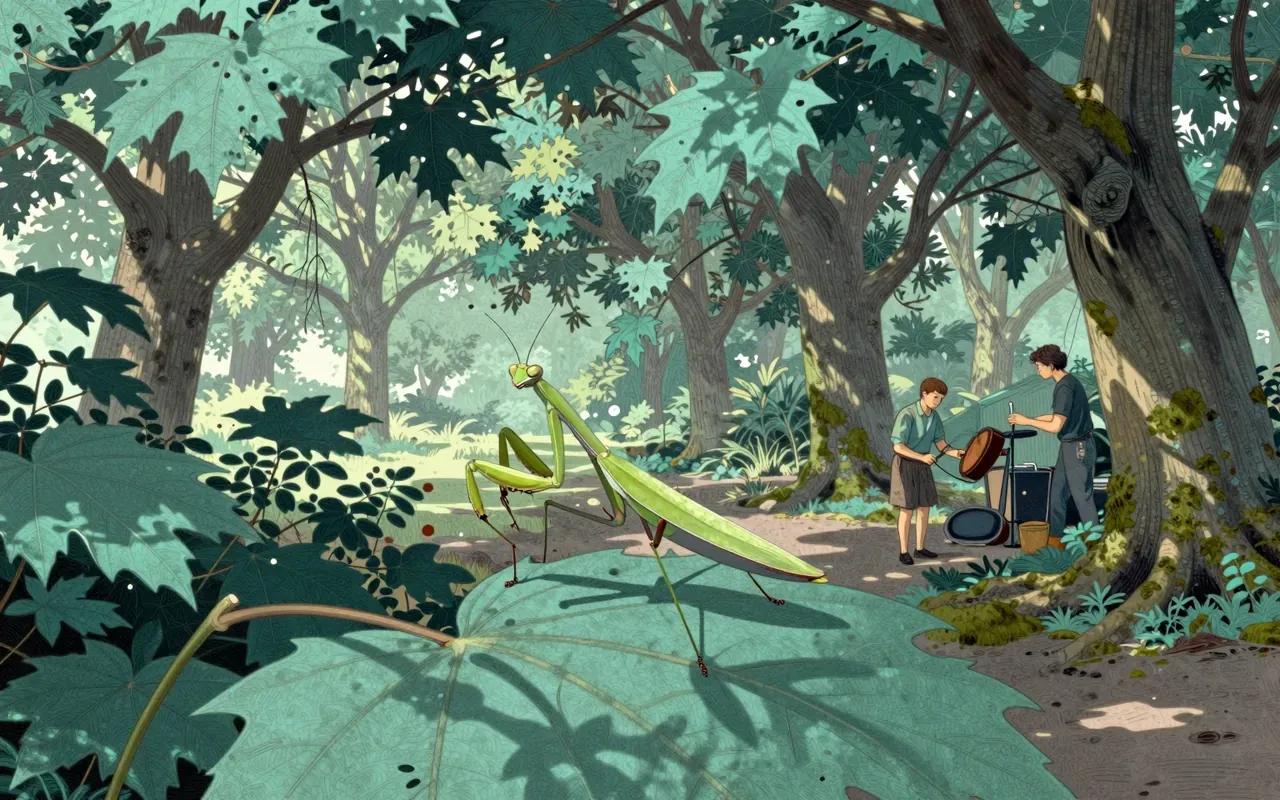
Stillness is their weapon—and every mantis uses it the same way.

Worth your time?3.5/5Yes.See the whole thing.What works, what does not, who it is for ↓
9:19in productionCh. 1 · Not a species. An order./ 9:19 · ceiling 15 min
4 chapters · 9:19Ceiling 15:00

The brief is written and checked. The video joins this page when it is cut.4 chapters · 1 min read · 9:19 planned

Read the brief

Mantises are a globally distributed insect order defined by raptorial forelegs and ambush predation. Their stillness is functional—not symbolic. They share ancestry with cockroaches and termites. No conservation status or population data is provided. Their significance lies in anatomical consistency, not ecological exception.

Chapters & takeaways4
  1. 0:48
    Not a species. An order.

    Mantises are not one species—they’re an order of over 2,400 species across 33 families.

  2. 2:12
    Prayer is camouflage. Grasping is function.

    Their folded forearms aren’t prayerful—they’re predatory tools, universal across all mantodeans.

  3. 4:21
    Ambush is default. Autumn is final.

    Most wait. A few chase. All die after laying eggs in cooler climates.

  4. 5:28
    Cousins of cockroaches. Citizens of everywhere.

    They share DNA with cockroaches and termites—and habitat with every continent except Antarctica.

1 more chapterFewer chapters
Worth your time?

Yes. See the whole thing.

3.5/ 5
What works
  • global distribution
  • raptorial leg function
  • ambush hunting mode
  • phylogenetic placement
What does not
  • establish conservation status
  • describe mating or social behaviour
  • quantify predation efficiency
  • cite field observers or studies
See it if
  • field naturalists
  • comparative anatomists
  • insect behaviour observers
Skip it if
  • conservation decision-makers
  • ecosystem modellers
  • behavioural ecologists without primary data
Who should see it, and who should skipHide who it is for
The written brief1 min read

What the species is and where it came from

Mantises are the insect order Mantodea—over 2,400 species across 33 families and ~460 genera. They evolved within Dictyoptera alongside termites and cockroaches. They are not a single species but a globally distributed order defined by shared morphology and behaviour.

How it works, in terms someone would actually use

Mantises use enlarged raptorial forelegs to catch and grip arthropod prey. Most wait motionless in ambush. A few ground-dwelling species chase prey actively.

What it gets right

It gets posture right: upright, stationary, forearms folded—a visual signature matched by function. It gets anatomy right: all mantodeans have enlarged, prey-grasping forelegs. It gets distribution right: worldwide, across temperate and tropical habitats.

What it does not

It does not establish long-term population trends. It does not specify conservation status. It does not describe mating behaviour, vocalisation, migration, or social structure. It does not quantify predation success, reproductive output, or sensory range.

What it changed

Nothing is stated in the material about what mantises changed—no cultural, ecological, technological or historical impact is documented.

Who it is for, and who it is not

It is for observers who value precision of form over spectacle of behaviour. It is not for those seeking endangered species, keystone ecosystem roles, or evolutionary novelty beyond raptorial leg adaptation.

Is it worth your time

Yes—if you want to see a globally distributed, anatomically singular predator that redefines stillness as a hunting tool. Not if you seek rarity, longevity, or ecological complexity beyond predation.
Same habitat · Insects & invertebrates4 of 40
Up next in Nature

Pronghorn

· 9:13

The pronghorn is not an antelope—it’s a running machine that outlived eleven cousins and three genera, all gone before humans wrote anything down.

9:13