naturebriefs
8:53in productionCh. 1 · Size and shape/ 8:53 · ceiling 15 min
Fish & sea life · Migration

Giant oceanic manta ray

The ocean’s largest ray doesn’t live in reefs—it lives in the current, eats fish and plankton, and got its genus changed because DNA proved taxonomists were wrong.

Mobula birostris is the world’s largest ray. It swims open ocean globally—in tropical, subtropical, and temperate waters. It feeds on zooplankton and mesopelagic fish by flaring cephalic fins to direct flow into its mouth. It migrates to upwellings. Its 2017 reclassification from Manta to Mobula followed DNA evidence. It faces severe overfishing pressure and bioaccumulates pollutants. IUCN classifies it as Endangered.

Chapters & takeaways4
  1. 0:40
    Size and shape

    It is the largest ray—up to 7 m across—and built for open water, not coral.

  2. 2:16
    Where it goes

    It ranges worldwide in warm and temperate oceans—and follows food, not coastlines.

  3. 3:27
    How it feeds

    Its cephalic fins flare like hydrodynamic scoops; its teeth sit only in the centre of the lower jaw.

  4. 4:47
    What changed its name

    In 2017, DNA evidence forced a full genus reclassification—from Manta to Mobula.

Worth your time?

Yes. See the whole thing.

4.5/ 5
What works
  • open-ocean mobility
  • zooplankton targeting via cephalic fin control
  • genetic alignment with Mobula clade
What does not
  • reef association
  • multiple offspring per brood
  • coastal residency
See it if
  • marine biologists
  • pelagic divers
  • conservation practitioners
Skip it if
  • reef ecologists
  • freshwater researchers
  • coastal habitat managers
The written brief1 min read

What the species is and where it came from

Mobula birostris is the world’s largest ray species. It is circumglobal, inhabiting tropical, subtropical, and temperate waters. It was reclassified from Manta to Mobula in 2017 based on DNA evidence.

How it works, in terms someone would actually use

It swims ocean currents, flaring cephalic fins to channel zooplankton and mesopelagic fish into its mouth. It migrates to upwelling zones where nutrients boost prey density.

What it gets right

It maximises energy intake by tracking oceanic productivity: migrating to upwellings, using cephalic fins as precise hydrodynamic funnels, and sustaining high mobility across vast pelagic ranges.

What it does not

It does not feed near reefs or coasts regularly. It does not produce multiple pups per brood. It does not avoid microplastics or heavy metals—these accumulate in its tissues.

What it changed

The 2017 DNA reclassification moved it from Manta to Mobula, aligning taxonomy with genetic evidence that it shares a clade with some Mobula species.

Who it is for, and who it is not

It is for marine biologists, pelagic divers, conservation practitioners, and fisheries policy analysts. It is not for reef ecologists, freshwater researchers, or coastal habitat managers.

Is it worth your time

Yes—if you are diving or researching in tropical or temperate open ocean, and want to observe a large, mobile filter-feeder with documented self-awareness cues and complex feeding behaviour.
Same habitat · Fish & sea life4 of 49
8:33
Cleaner shrimpCleaner shrimp are decapod crustaceans that clean parasites from fish at coral reef cleaning stations. They reduce infection, aid healing, and lower fish stress. Not all shrimp called 'cleaner' perform this role—some are cryptic and non-commensal. Their value lies in observable, repeatable symbiosis—not charisma or rarity.
9:38
Aurelia auritaAurelia aurita is a locally adapted jellyfish whose ecological success rests on polyp endurance and microbiome dependency — not wide dispersal or potent venom.
10:50
Leafy seadragonThe leafy seadragon is a marine fish found only in southern and western Australian waters. It has no close relatives—Phycodurus eques is the sole species in its genus. Its leaf-like skin lobes serve only for camouflage, not propulsion. It swims using nearly invisible pectoral and dorsal fins, creating the illusion of floating seaweed—even while moving. It changes colour depending on diet, age, location, and stress. It eats plankton and small crustaceans. It belongs to the Syngnathidae family but lacks a prehensile tail and differs from seahorses in locomotion. It is legally protected across Australian states due to pollution, industrial runoff, and aquarium trade collection.
10:23
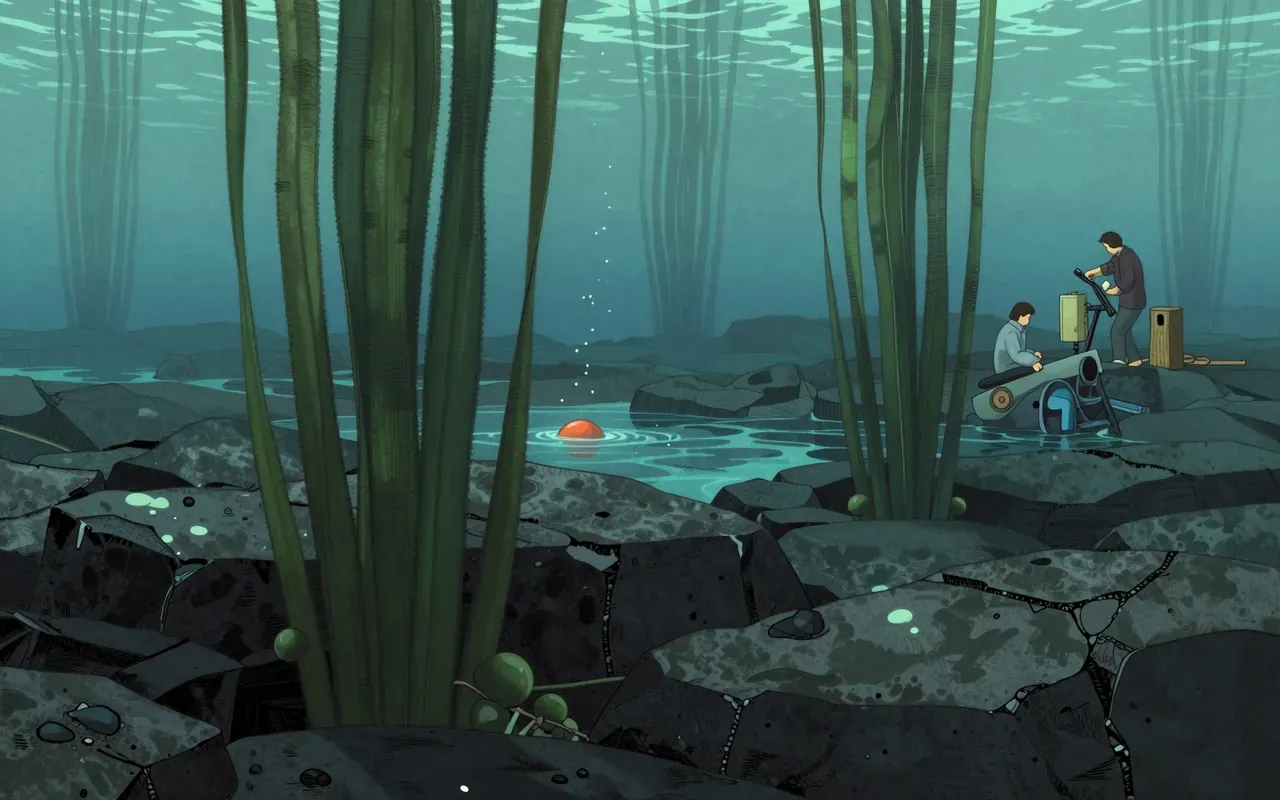
MacrocystisMacrocystis pyrifera is a monospecific brown alga that forms extensive underwater forests on rocky substrata in cool, nutrient-rich waters across the Southern Hemisphere and northeast Pacific. It grows up to 60 cm per day, reaches over 45 m in length, and uses pneumatocysts to maintain canopy structure. It supports biodiversity, alters hydrodynamics, and locally raises pH—but only where temperatures stay below 21 °C and urchin pressure remains low. Its taxonomy was consolidated in 2009–2010. Conservation status varies: endangered in Australia, At Risk–Declining in New Zealand.
Up next in Nature

Calvatia gigantea

· 8:34

A puffball so big it redefined fungal taxonomy—and so fleeting it vanishes if you blink.

8:34