naturebriefs
7:36in productionCh. 1 · Egg to stinkhorn in 60 minutes/ 7:36 · ceiling 15 min
Fungi

Phallaceae

It smells like death to make life—and it works.

Phallaceae is a fungal family—not a single species—with 21 genera and 77 species (2008). It occurs globally but thrives in tropics. All members develop from egg-shaped primordia and erupt fully within one hour. Their defining trait is a single unbranched receptaculum bearing externally attached gleba—a sticky, foul-smelling spore mass that mimics carrion or dung to attract flies and beetles. This olfactory deception relies on volatile compounds including indole and p-cresol. Only the egg stage is edible. Pharmaceutical compounds with anticancer potential have been identified—but no clinical trials or outcomes are cited.

Chapters & takeaways4
  1. 0:47
    Egg to stinkhorn in 60 minutes

    All Phallaceae begin as buried eggs—and explode into view in under an hour.

  2. 1:40
    One stalk. One smell. One job.

    A single unbranched stalk carries gleba on its surface—no branches, no caps, no ambiguity.

  3. 2:55
    Flies are the delivery service

    Carrion- and dung-like odours recruit flies and beetles—not pollinators—to move spores.

  4. 4:12
    Not a species. A family. With numbers.

    Phallaceae is a defined family—not a genus or a curiosity—with 21 genera and 77 species.

Worth your time?

Yes. See the whole thing.

4/ 5
What works
  • speed of emergence
  • precision of olfactory deception
  • structural consistency across 77 species
What does not
  • produce edible fruiting bodies
  • grow slowly
  • use wind or water for spore dispersal
  • avoid insects
See it if
  • field mycologists
  • forensic entomologists
  • observers of decomposition-as-infrastructure
Skip it if
  • gardeners seeking ornamentals
  • chefs seeking ingredients beyond the egg stage
  • visitors expecting quiet woodland encounters
The written brief1 min read

What the species is and where it came from

Phallaceae is a family of stinkhorn fungi in the order Phallales. It has worldwide distribution but peaks in tropical regions. It contains 21 genera and 77 species, per a 2008 estimate.

How it works, in terms someone would actually use

Stinkhorns erupt from underground egg-shaped primordia and open fully within one hour. They deploy a single unbranched stalk—the receptaculum—with foul-smelling, sticky gleba on top to lure flies and beetles. Insects land, pick up spores in the gleba, and carry them away.

What it gets right

It gets right the speed of emergence—up to 5 mm per minute—and the precision of olfactory deception: volatile compounds like indole and p-cresol mimic carrion and dung to attract specific insect vectors.

What it does not

It does not produce edible fruiting bodies. It does not grow slowly. It does not rely on wind or water for spore dispersal. It does not avoid insects—it recruits them.

What it changed

Nothing outside mycology. It refined understanding of phallaceous fruiting-body architecture: the unbranched receptaculum with externally attached gleba defines the family against other Phallales.

Who it is for, and who it is not

It is for field mycologists, forensic entomologists, and anyone who watches decomposition as infrastructure. It is not for gardeners seeking ornamentals, chefs seeking ingredients beyond the egg stage, or visitors expecting quiet woodland encounters.

Is it worth your time

Yes—if you want to see rapid fungal growth, chemical mimicry in action, or how decay feeds dispersal. No—if you seek visual beauty, silence, or stillness. The odour alone filters the audience.

Same habitat · Fungi4 of 15
7:57
NidulariaceaeNidulariaceae are saprobic fungi in the order Agaricales, cosmopolitan and found on decaying wood and mulched soils. Five genera are distinguished by morphology and peridiole structure. Their spores develop internally in gasteroid fruiting bodies and are dispersed by rain-splash — not springs — sometimes aided by funicular cords. Taxonomy has shifted from historical description to DNA-guided phylogeny. First mentioned by Clusius in 1601; Paulet’s 1790–1793 spring hypothesis was incorrect.
8:52
Amanita phalloidesAmanita phalloides is a European fungus now found worldwide. It forms symbiotic relationships with broadleaved trees. It produces α-amanitin — a thermostable toxin that inhibits RNA polymerase II in humans, causing fatal organ failure. Its own RNA polymerase is resistant. It is responsible for 90% of annual mushroom-related deaths. Half a fruiting body is lethal. Its toxin is now used in targeted cancer therapies.
9:11
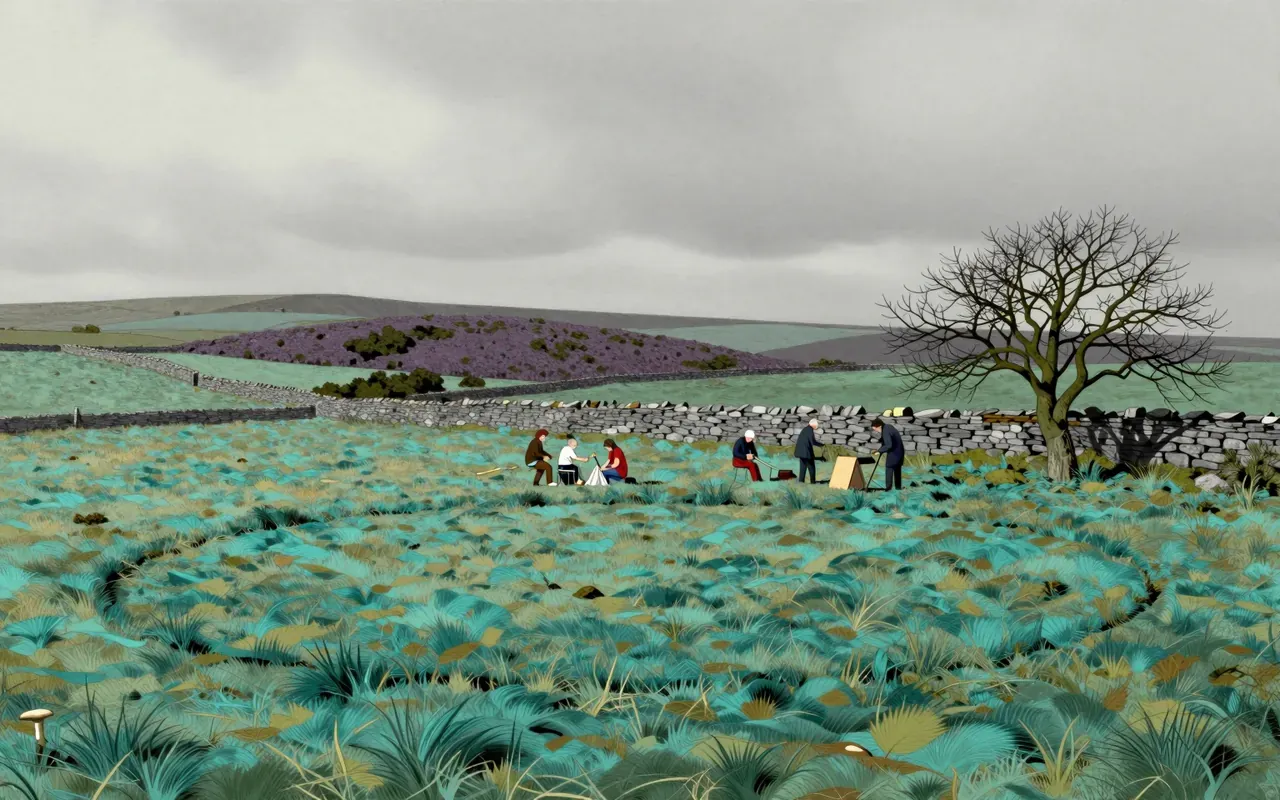
Fairy ringFairy rings are fungal growth patterns—not organisms—that reveal radial digestion and nutrient exhaustion in soils. They occur in forests, grasslands, and rangelands. Verified mechanisms include enzymatic breakdown at hyphal tips and central dieback. No lifespan, species, toxicity, or ecological impact beyond grass discoloration is stated. Folklore is noted but not endorsed.
10:22
MorchellaMorchella is a genus of edible sac fungi in the order Pezizales (division Ascomycota), typified by Morchella esculenta in 1794. It exhibits a distinctive honeycomb cap morphology due to ridges and pits, and comprises over seventy molecularly supported species worldwide, most showing high continental endemism and provincialism. The genus is under active phylogenetic, biogeographical, taxonomic, and nomenclatural study, with new species recently described across multiple continents. Morels are highly valued in gourmet cuisine—especially Catalan and French—but are toxic when raw or undercooked. Commercial harvesting of wild morels constitutes a multimillion-dollar industry across the temperate Northern Hemisphere, including North America, Turkey, China, the Himalayas, India, and Pakistan. Their ecology remains poorly understood, though many species associate with trees symbiotically or saprotrophically, and some exhibit pyrophilic behavior, fruiting abundantly after wildfires. Cultivation has historically been difficult, though recent breakthroughs—including indoor cultivation using grass and climate control—have achieved reliable fruiting. Toxicity concerns include thermolabile hydrazine-based mycotoxins neutralized by cooking, and risks from environmental contaminants like lead and arsenic in certain habitats.
Up next in Nature

Sun dog

· 10:24

A sun dog is not a creature — it is ice in the air, bending light like a prism, and it only shows up when the sky gets its geometry right.

10:24