naturebriefs
9:04in productionCh. 1 · What counts as migration?/ 9:04 · ceiling 15 min
Migration

Migration (ecology)

Migration is not wandering—it’s timed, targeted, and taxonomically universal.

Migration is large-scale, often cyclical movement to a different environment. It serves food, safety, and mating needs. It occurs across birds, fish, insects, mammals, reptiles, amphibians, crustaceans, and plants via seed dispersal. Routes are learned or inherited. Cues—photoperiod, weather, hormones—are surprisingly consistent across taxa.

Chapters & takeaways6
  1. 0:54
    What counts as migration?

    Migration is defined by scale and recurrence—not distance or speed.

  2. 2:13
    How do they know when to go?

    Organisms migrate when light, weather, and hormones align—not when they feel like it.

  3. 3:06
    How is the path passed on?

    Some migrants learn the route; others inherit it—no trial runs needed.

  4. 3:51
    Do plants migrate?

    Plants migrate too—via seeds that shift forests over decades.

  5. 4:55
    Why do butterflies and whales respond to the same signals?

    Despite wildly different bodies, migrants use eerily similar cues.

  6. 6:00
    What’s the point?

    It’s not escape. It’s strategy—food, safety, and mating, timed to the year.

Worth your time?

Yes. See the whole thing.

4.5/ 5
What works
  • unifies plant and animal movement under one functional frame
  • identifies cross-taxa cue convergence
  • distinguishes migration from dispersal by recurrence and scale
  • links timing to measurable biological and environmental triggers
What does not
  • describe non-cyclical movement
  • cover human migration
  • define conservation status
  • quantify population impact
See it if
  • field ecologists
  • conservation biologists
  • wildlife managers
Skip it if
  • urban planners
  • policy generalists
  • primary-school educators
The written brief1 min read

What the species is and where it came from

Migration is not a species. It is a behaviour: large-scale, often cyclical movement of mobile organisms to more favorable environments for food, safety, or reproduction.

How it works, in terms someone would actually use

Migration is large-scale movement to a different environment. It is often cyclical—seasonal or daily. Organisms use photoperiod, weather, and internal hormone levels to time it. Routes are learned socially or inherited genetically.

What it gets right

It correctly unifies birds, fish, insects, mammals, reptiles, amphibians, crustaceans, and plants under one functional definition. It identifies shared cues—photoperiod, hormones, weather—across taxa.

What it does not

It does not describe permanent range expansion, local foraging, or human-led translocation. It excludes non-cyclical, one-way movements without seasonal or annual recurrence.

What it changed

It reframes dispersal as adaptive, cyclical, and taxonomically broad—not just animal flight, but seed-driven forest shifts and daily vertical movements in plankton.

Who it is for, and who it is not

It is for ecologists, conservation planners, and field biologists tracking seasonal habitat use. It is not for urban planners, policy drafters, or educators needing simplified definitions without ecological context.

Is it worth your time

Yes—if you need to understand how species respond to environmental change, predator–prey dynamics, or disease spread across habitats. No—if you seek fixed boundaries, individual behaviour, or non-cyclical movement.
Same habitat · Migration4 of 21
8:53
Giant oceanic manta rayMobula birostris is the world’s largest ray. It swims open ocean globally—in tropical, subtropical, and temperate waters. It feeds on zooplankton and mesopelagic fish by flaring cephalic fins to direct flow into its mouth. It migrates to upwellings. Its 2017 reclassification from Manta to Mobula followed DNA evidence. It faces severe overfishing pressure and bioaccumulates pollutants. IUCN classifies it as Endangered.
9:32
Monarch butterfly migrationMonarch butterfly migration is a multi-generational, seasonal movement across North America. It is defined by physiological adaptation, precise navigation, and dependence on specific habitats — and it is now endangered.
9:06
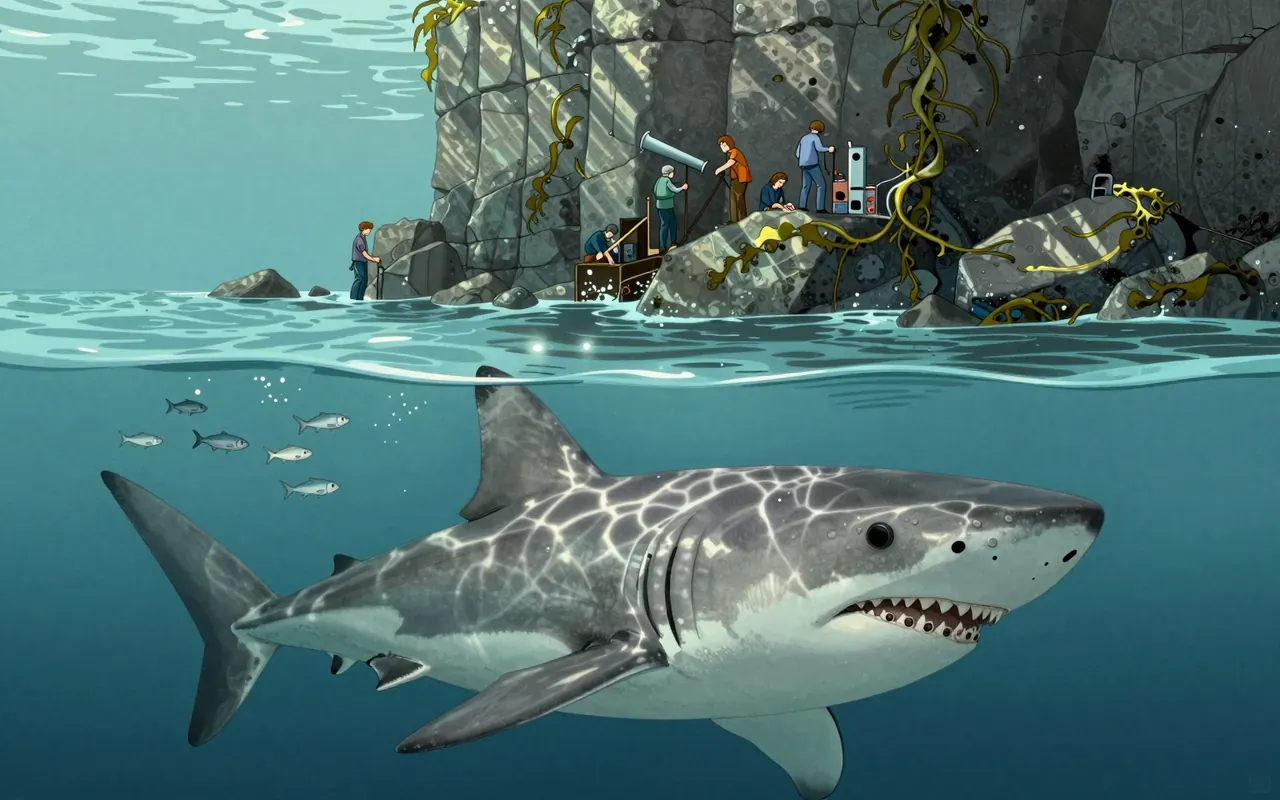
MagnetoreceptionMagnetoreception is a verified sensory modality used for orientation and navigation across diverse animal groups. Its mechanisms are taxonomically scattered and physically distinct: quantum chemistry in bird eyes, electromagnetic induction in shark snouts, and unconfirmed iron-based alignment elsewhere. It delivers no unified theory—but it does deliver concrete, testable biology.
10:14
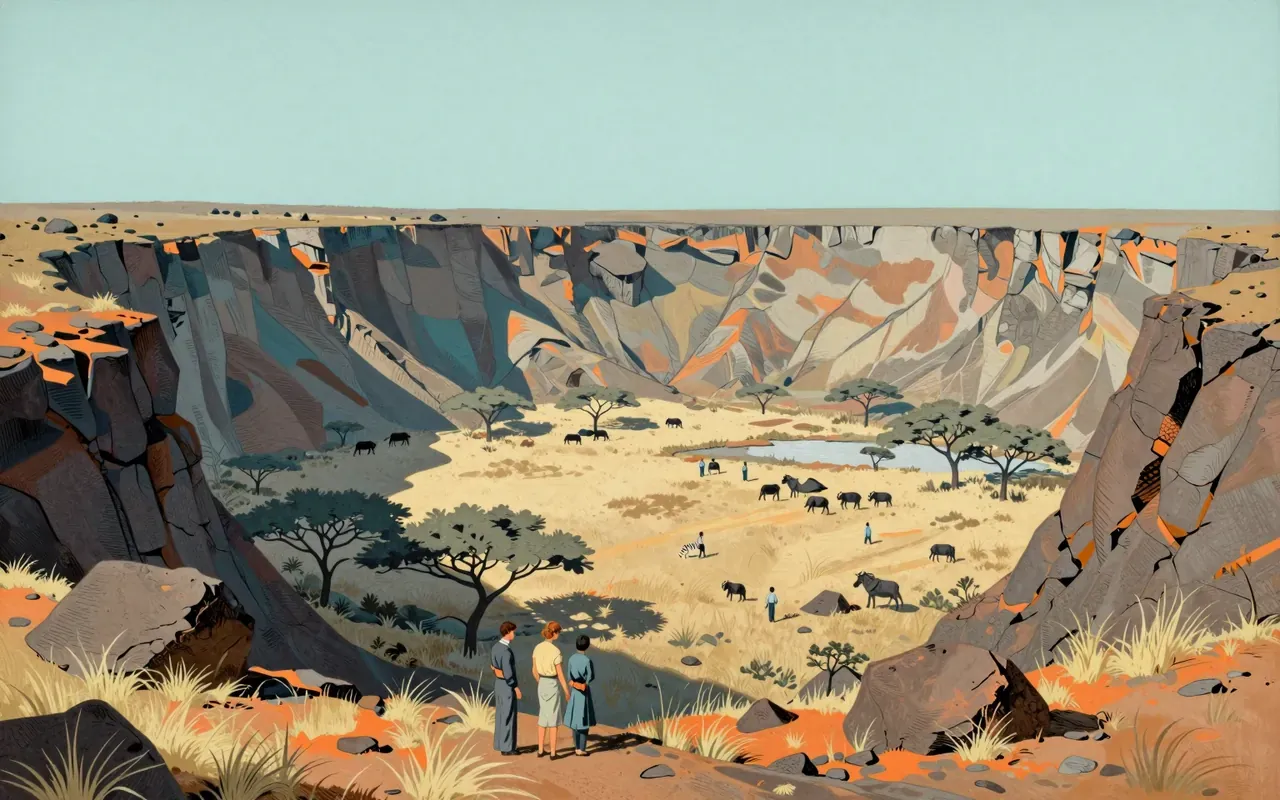
Ngorongoro Conservation Area1959The Ngorongoro Conservation Area is a Tanzanian multi-use protected area centred on the Ngorongoro Crater. It permits Maasai pastoralism alongside wildlife conservation—a model that enables tourism, supports the Great Migration, and safeguards Olduvai Gorge. But it also enforces displacement through legislation like the 2009 Wildlife Conservation Act, revealing structural tension between conservation authority and Indigenous land rights.
Up next in Nature

Mimicry

· 8:07

Mimicry isn’t about looking alike—it’s about fooling someone who matters.

8:07